Zalacain Marta, Bunuales María, Marrodan Lucía, Labiano Sara, Gonzalez-Huarriz Marisol, Martinez-Vélez Naiara, Laspidea Virginia, Puigdelloses Montse, García-Moure Marc, Gonzalez-Aparicio Manuela, Hernandez-Alcoceba Rubén, Alonso Marta M, Patiño-García Ana
Health Research Institute of Navarra (IDISNA), 31008 Pamplona, Navarra, Spain.
Program in Solid Tumors, Center for Applied Medical Research (CIMA), University of Navarra, 31008 Pamplona, Navarra, Spain.
Mol Ther Oncolytics. 2020 Nov 20;20:23-33. doi: 10.1016/j.omto.2020.11.003. eCollection 2021 Mar 26.
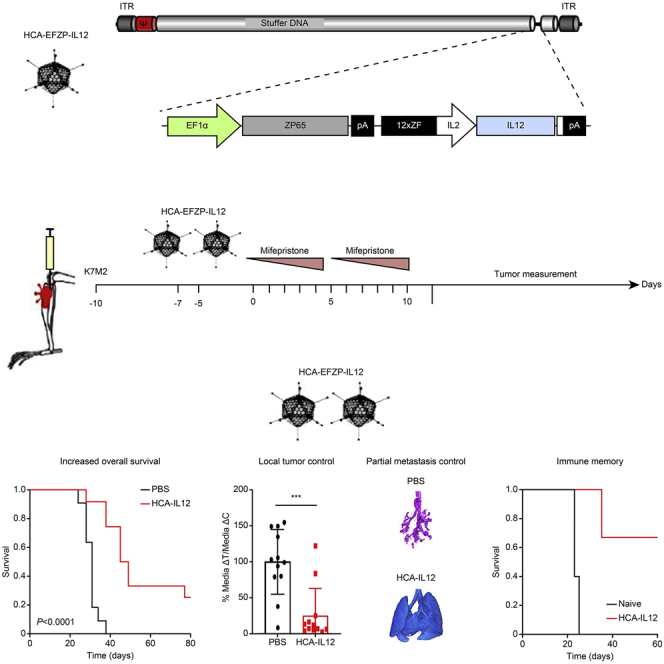
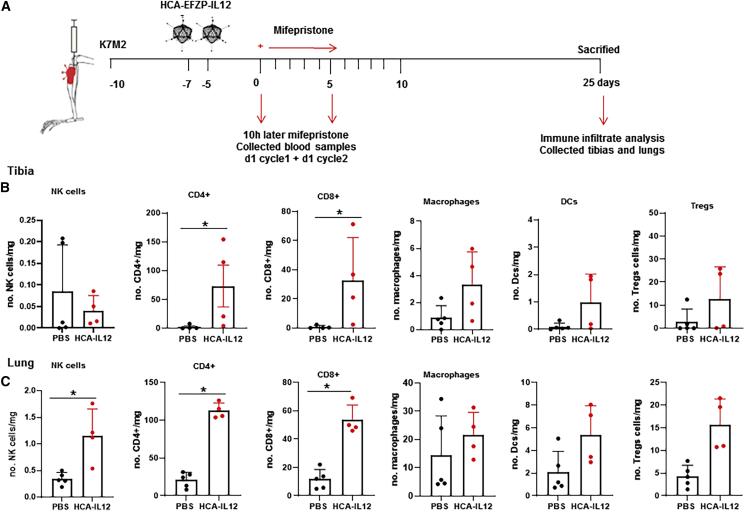
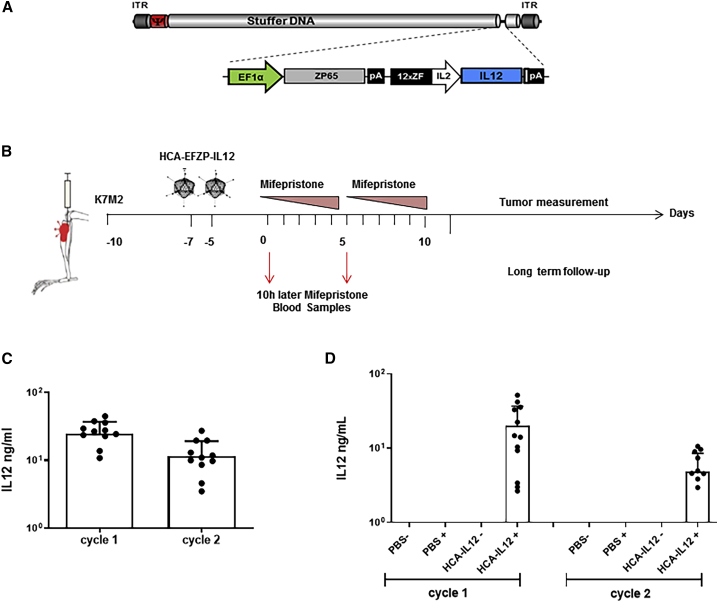
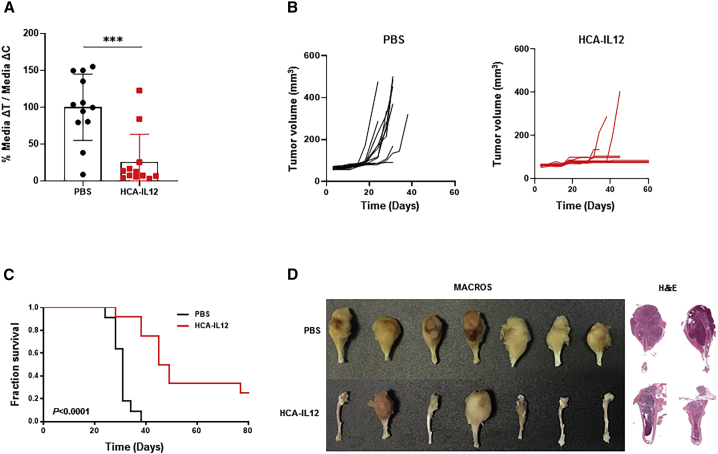
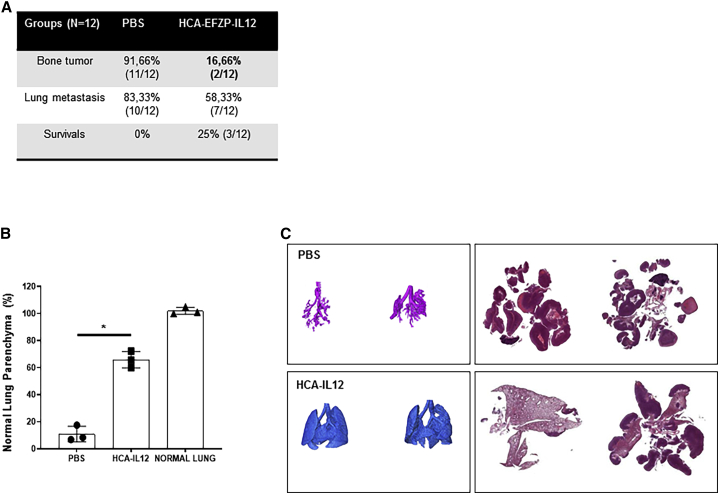
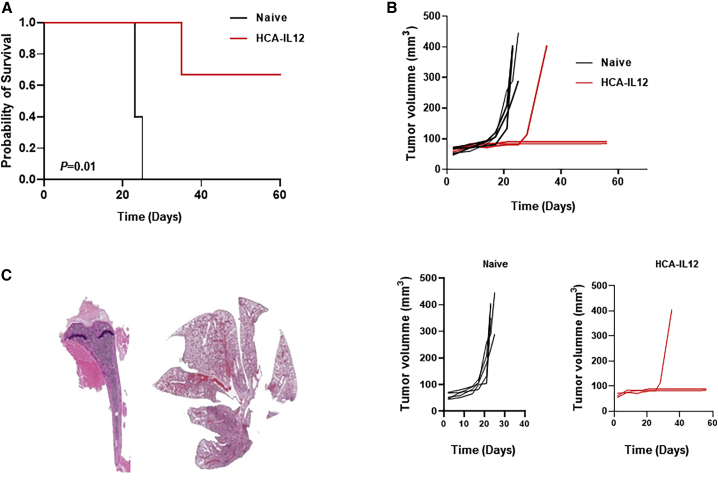
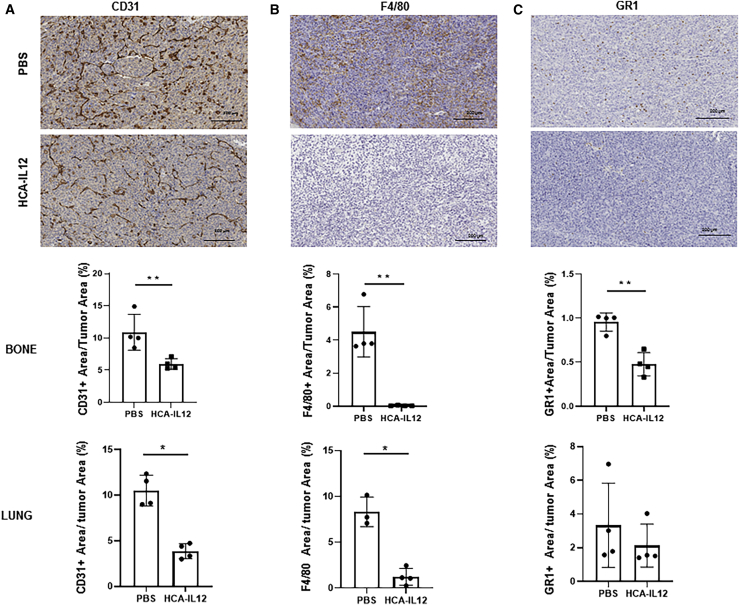
Osteosarcoma is the most frequent and aggressive bone tumor in children and adolescents, with a long-term survival rate of 30%. Interleukin-12 (IL-12) is a potent cytokine that bridges innate and adaptive immunity, triggers antiangiogenic responses, and achieves potent antitumor effects. In this work, we evaluated the antisarcoma effect of a high-capacity adenoviral vector encoding mouse IL-12. This vector harbored a mifepristone-inducible system for controlled expression of IL-12 (High-Capacity adenoviral vector enconding the EF1α promoter [HCA-EFZP]-IL-12). We found that local administration of the vector resulted in a reduction in the tumor burden, extended overall survival, and tumor eradication. Moreover, long-term survivors exhibited immunological memory when rechallenged with the same tumor cells. Treatment with HCA-EFZP-IL-12 also resulted in a significant decrease in lung metastasis. Immunohistochemical analyses showed profound remodeling of the osteosarcoma microenvironment with decreases in angiogenesis and macrophage and myeloid cell numbers. In summary, our data underscore the potential therapeutic value of IL-12 in the context of a drug-inducible system that allows controlled expression of this cytokine, which can trigger a potent antitumor immune response in primary and metastatic pediatric osteosarcoma.
骨肉瘤是儿童和青少年中最常见且侵袭性最强的骨肿瘤,其长期生存率为30%。白细胞介素-12(IL-12)是一种强大的细胞因子,它连接先天免疫和适应性免疫,引发抗血管生成反应,并产生强大的抗肿瘤作用。在这项研究中,我们评估了一种编码小鼠IL-12的高容量腺病毒载体的抗肉瘤作用。该载体带有一个米非司酮诱导系统,用于控制IL-12的表达(编码EF1α启动子的高容量腺病毒载体[HCA-EFZP]-IL-12)。我们发现局部给予该载体可减轻肿瘤负担、延长总体生存期并根除肿瘤。此外,长期存活者在用相同肿瘤细胞再次攻击时表现出免疫记忆。用HCA-EFZP-IL-12治疗还可显著减少肺转移。免疫组织化学分析显示骨肉瘤微环境发生深刻重塑,血管生成以及巨噬细胞和髓样细胞数量减少。总之,我们的数据强调了在药物诱导系统中IL-12的潜在治疗价值,该系统允许对这种细胞因子进行可控表达,从而可在原发性和转移性小儿骨肉瘤中引发强大的抗肿瘤免疫反应。