• 文献检索
  • 文档翻译
  • 深度研究
  • 学术资讯
  • Suppr Zotero 插件Zotero 插件
  • 邀请有礼
  • 套餐&价格
  • 历史记录
应用&插件
Suppr Zotero 插件Zotero 插件浏览器插件Mac 客户端Windows 客户端微信小程序
定价
高级版会员购买积分包购买API积分包
服务
文献检索文档翻译深度研究API 文档MCP 服务
关于我们
关于 Suppr公司介绍联系我们用户协议隐私条款
关注我们

Suppr 超能文献

核心技术专利:CN118964589B侵权必究
粤ICP备2023148730 号-1Suppr @ 2026

文献检索

告别复杂PubMed语法,用中文像聊天一样搜索,搜遍4000万医学文献。AI智能推荐,让科研检索更轻松。

立即免费搜索

文件翻译

保留排版,准确专业,支持PDF/Word/PPT等文件格式,支持 12+语言互译。

免费翻译文档

深度研究

AI帮你快速写综述,25分钟生成高质量综述,智能提取关键信息,辅助科研写作。

立即免费体验

保守且多功能染色质重塑蛋白特异性的基础。

Basis of specificity for a conserved and promiscuous chromatin remodeling protein.

机构信息

Institute of Molecular Biology, University of Oregon, Eugene, United States.

Phil and Penny Knight Campus for Accelerating Scientific Impact, University of Oregon, Eugene, United States.

出版信息

Elife. 2021 Feb 12;10:e64061. doi: 10.7554/eLife.64061.

DOI:10.7554/eLife.64061
PMID:33576335
原文链接:https://pmc.ncbi.nlm.nih.gov/articles/PMC7968928/
Abstract

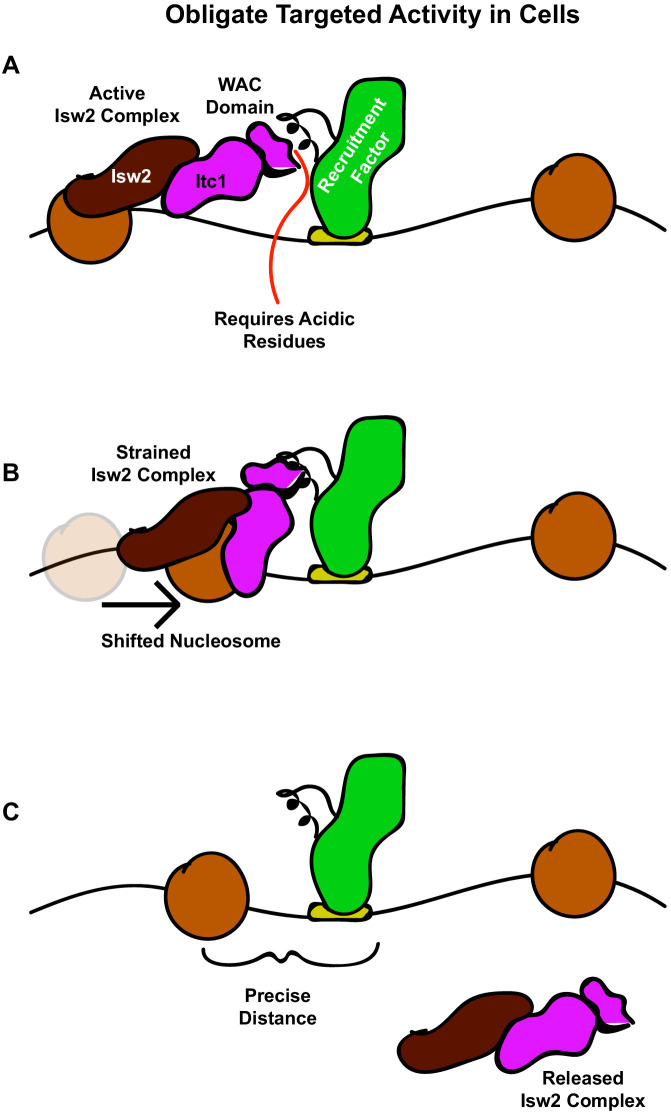
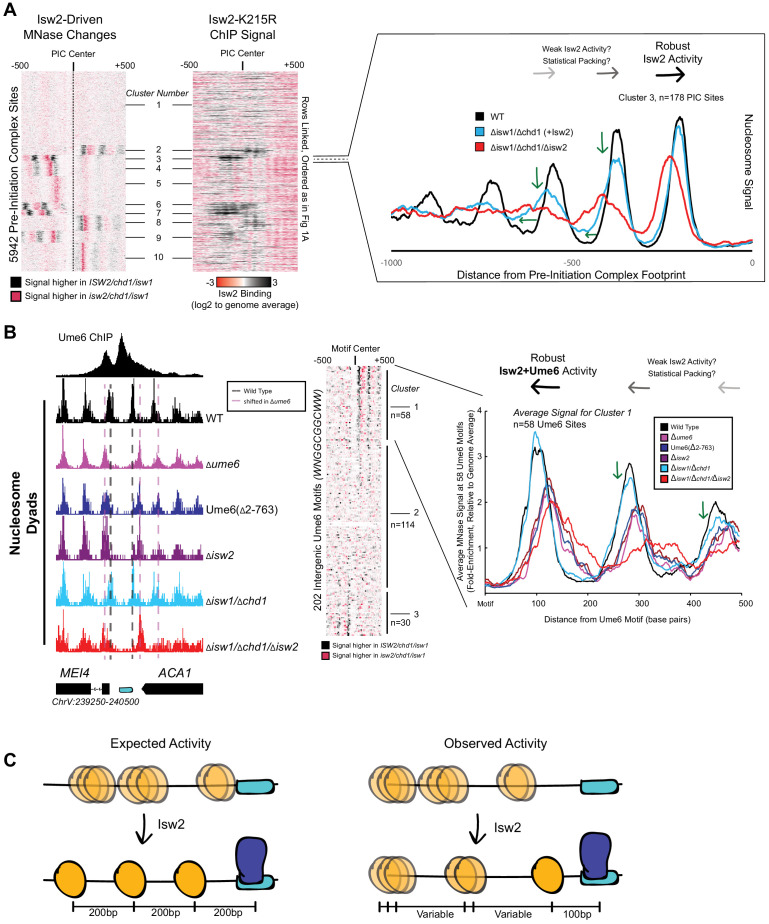
Eukaryotic genomes are organized dynamically through the repositioning of nucleosomes. Isw2 is an enzyme that has been previously defined as a genome-wide, nonspecific nucleosome spacing factor. Here, we show that Isw2 instead acts as an obligately targeted nucleosome remodeler in vivo through physical interactions with sequence-specific factors. We demonstrate that Isw2-recruiting factors use small and previously uncharacterized epitopes, which direct Isw2 activity through highly conserved acidic residues in the Isw2 accessory protein Itc1. This interaction orients Isw2 on target nucleosomes, allowing for precise nucleosome positioning at targeted loci. Finally, we show that these critical acidic residues have been lost in the lineage, potentially explaining the inconsistently characterized function of Isw2-like proteins. Altogether, these data suggest an 'interacting barrier model,' where Isw2 interacts with a sequence-specific factor to accurately and reproducibly position a single, targeted nucleosome to define the precise border of phased chromatin arrays.

摘要

真核基因组通过核小体的重定位进行动态组织。Isw2 是一种先前被定义为全基因组非特异性核小体间隔因子的酶。在这里,我们通过与序列特异性因子的物理相互作用表明,Isw2 实际上是一种必需的靶向核小体重塑因子。我们证明,Isw2 募集因子使用小的和以前未表征的表位,这些表位通过 Isw2 辅助蛋白 Itc1 中的高度保守酸性残基引导 Isw2 活性。这种相互作用使 Isw2 定位于靶核小体上,从而在靶位上实现精确的核小体定位。最后,我们表明,这些关键的酸性残基在 谱系中丢失了,这可能解释了 Isw2 样蛋白功能不一致的特征。总之,这些数据表明了一种“相互作用障碍模型”,其中 Isw2 与序列特异性因子相互作用,以准确和可重复地定位单个靶向核小体,从而定义相分离染色质阵列的精确边界。
https://cdn.ncbi.nlm.nih.gov/pmc/blobs/531c/7968928/143758f9004d/elife-64061-fig7.jpg
https://cdn.ncbi.nlm.nih.gov/pmc/blobs/531c/7968928/9c34c481e1ff/elife-64061-fig1.jpg
https://cdn.ncbi.nlm.nih.gov/pmc/blobs/531c/7968928/4f9ed53d2eaf/elife-64061-fig1-figsupp1.jpg
https://cdn.ncbi.nlm.nih.gov/pmc/blobs/531c/7968928/307f69f867c5/elife-64061-fig1-figsupp2.jpg
https://cdn.ncbi.nlm.nih.gov/pmc/blobs/531c/7968928/16a3dfd1fe00/elife-64061-fig1-figsupp3.jpg
https://cdn.ncbi.nlm.nih.gov/pmc/blobs/531c/7968928/afff2d04e253/elife-64061-fig1-figsupp4.jpg
https://cdn.ncbi.nlm.nih.gov/pmc/blobs/531c/7968928/9d8f3635924a/elife-64061-fig1-figsupp5.jpg
https://cdn.ncbi.nlm.nih.gov/pmc/blobs/531c/7968928/813f519290f6/elife-64061-fig2.jpg
https://cdn.ncbi.nlm.nih.gov/pmc/blobs/531c/7968928/72179901203d/elife-64061-fig2-figsupp1.jpg
https://cdn.ncbi.nlm.nih.gov/pmc/blobs/531c/7968928/c8d4b14c21ef/elife-64061-fig2-figsupp2.jpg
https://cdn.ncbi.nlm.nih.gov/pmc/blobs/531c/7968928/d09851c90a39/elife-64061-fig2-figsupp3.jpg
https://cdn.ncbi.nlm.nih.gov/pmc/blobs/531c/7968928/ab5158213af9/elife-64061-fig2-figsupp4.jpg
https://cdn.ncbi.nlm.nih.gov/pmc/blobs/531c/7968928/f69b2e3dbc63/elife-64061-fig2-figsupp5.jpg
https://cdn.ncbi.nlm.nih.gov/pmc/blobs/531c/7968928/e1a00bee57de/elife-64061-fig2-figsupp6.jpg
https://cdn.ncbi.nlm.nih.gov/pmc/blobs/531c/7968928/79e693e51951/elife-64061-fig2-figsupp7.jpg
https://cdn.ncbi.nlm.nih.gov/pmc/blobs/531c/7968928/c49f861e2f2d/elife-64061-fig3.jpg
https://cdn.ncbi.nlm.nih.gov/pmc/blobs/531c/7968928/23d4d9979a92/elife-64061-fig3-figsupp1.jpg
https://cdn.ncbi.nlm.nih.gov/pmc/blobs/531c/7968928/c6867ba9c438/elife-64061-fig4.jpg
https://cdn.ncbi.nlm.nih.gov/pmc/blobs/531c/7968928/bac8a7253366/elife-64061-fig5.jpg
https://cdn.ncbi.nlm.nih.gov/pmc/blobs/531c/7968928/789a9cf4e407/elife-64061-fig5-figsupp1.jpg
https://cdn.ncbi.nlm.nih.gov/pmc/blobs/531c/7968928/2b5d2673e56b/elife-64061-fig6.jpg
https://cdn.ncbi.nlm.nih.gov/pmc/blobs/531c/7968928/143758f9004d/elife-64061-fig7.jpg
https://cdn.ncbi.nlm.nih.gov/pmc/blobs/531c/7968928/9c34c481e1ff/elife-64061-fig1.jpg
https://cdn.ncbi.nlm.nih.gov/pmc/blobs/531c/7968928/4f9ed53d2eaf/elife-64061-fig1-figsupp1.jpg
https://cdn.ncbi.nlm.nih.gov/pmc/blobs/531c/7968928/307f69f867c5/elife-64061-fig1-figsupp2.jpg
https://cdn.ncbi.nlm.nih.gov/pmc/blobs/531c/7968928/16a3dfd1fe00/elife-64061-fig1-figsupp3.jpg
https://cdn.ncbi.nlm.nih.gov/pmc/blobs/531c/7968928/afff2d04e253/elife-64061-fig1-figsupp4.jpg
https://cdn.ncbi.nlm.nih.gov/pmc/blobs/531c/7968928/9d8f3635924a/elife-64061-fig1-figsupp5.jpg
https://cdn.ncbi.nlm.nih.gov/pmc/blobs/531c/7968928/813f519290f6/elife-64061-fig2.jpg
https://cdn.ncbi.nlm.nih.gov/pmc/blobs/531c/7968928/72179901203d/elife-64061-fig2-figsupp1.jpg
https://cdn.ncbi.nlm.nih.gov/pmc/blobs/531c/7968928/c8d4b14c21ef/elife-64061-fig2-figsupp2.jpg
https://cdn.ncbi.nlm.nih.gov/pmc/blobs/531c/7968928/d09851c90a39/elife-64061-fig2-figsupp3.jpg
https://cdn.ncbi.nlm.nih.gov/pmc/blobs/531c/7968928/ab5158213af9/elife-64061-fig2-figsupp4.jpg
https://cdn.ncbi.nlm.nih.gov/pmc/blobs/531c/7968928/f69b2e3dbc63/elife-64061-fig2-figsupp5.jpg
https://cdn.ncbi.nlm.nih.gov/pmc/blobs/531c/7968928/e1a00bee57de/elife-64061-fig2-figsupp6.jpg
https://cdn.ncbi.nlm.nih.gov/pmc/blobs/531c/7968928/79e693e51951/elife-64061-fig2-figsupp7.jpg
https://cdn.ncbi.nlm.nih.gov/pmc/blobs/531c/7968928/c49f861e2f2d/elife-64061-fig3.jpg
https://cdn.ncbi.nlm.nih.gov/pmc/blobs/531c/7968928/23d4d9979a92/elife-64061-fig3-figsupp1.jpg
https://cdn.ncbi.nlm.nih.gov/pmc/blobs/531c/7968928/c6867ba9c438/elife-64061-fig4.jpg
https://cdn.ncbi.nlm.nih.gov/pmc/blobs/531c/7968928/bac8a7253366/elife-64061-fig5.jpg
https://cdn.ncbi.nlm.nih.gov/pmc/blobs/531c/7968928/789a9cf4e407/elife-64061-fig5-figsupp1.jpg
https://cdn.ncbi.nlm.nih.gov/pmc/blobs/531c/7968928/2b5d2673e56b/elife-64061-fig6.jpg
https://cdn.ncbi.nlm.nih.gov/pmc/blobs/531c/7968928/143758f9004d/elife-64061-fig7.jpg

相似文献

1
Basis of specificity for a conserved and promiscuous chromatin remodeling protein.保守且多功能染色质重塑蛋白特异性的基础。
Elife. 2021 Feb 12;10:e64061. doi: 10.7554/eLife.64061.
2
A novel mechanism of antagonism between ATP-dependent chromatin remodeling complexes regulates RNR3 expression.一种新的 ATP 依赖的染色质重塑复合物拮抗机制调控 RNR3 表达。
Mol Cell Biol. 2009 Jun;29(12):3255-65. doi: 10.1128/MCB.01741-08. Epub 2009 Apr 6.
3
Chromatin remodeling in vivo: evidence for a nucleosome sliding mechanism.体内染色质重塑:核小体滑动机制的证据
Mol Cell. 2003 Nov;12(5):1333-40. doi: 10.1016/s1097-2765(03)00436-2.
4
Sequence-targeted nucleosome sliding in vivo by a hybrid Chd1 chromatin remodeler.通过杂交Chd1染色质重塑剂在体内进行序列靶向核小体滑动。
Genome Res. 2016 May;26(5):693-704. doi: 10.1101/gr.199919.115. Epub 2016 Mar 18.
5
Two distinct mechanisms of chromatin interaction by the Isw2 chromatin remodeling complex in vivo.Isw2染色质重塑复合物在体内进行染色质相互作用的两种不同机制。
Mol Cell Biol. 2005 Nov;25(21):9165-74. doi: 10.1128/MCB.25.21.9165-9174.2005.
6
Histone Octamer Structure Is Altered Early in ISW2 ATP-Dependent Nucleosome Remodeling.组蛋白八聚体结构在 ISW2 ATP 依赖性核小体重塑的早期发生改变。
Cell Rep. 2019 Jul 2;28(1):282-294.e6. doi: 10.1016/j.celrep.2019.05.106.
7
Ssn6-Tup1 requires the ISW2 complex to position nucleosomes in Saccharomyces cerevisiae.Ssn6-Tup1在酿酒酵母中需要ISW2复合物来定位核小体。
EMBO J. 2004 Jun 2;23(11):2246-57. doi: 10.1038/sj.emboj.7600227. Epub 2004 Apr 29.
8
Nucleosome mobilization by ISW2 requires the concerted action of the ATPase and SLIDE domains.ISW2 通过 ATP 酶和 SLIDE 结构域的协同作用来实现核小体的迁移。
Nat Struct Mol Biol. 2013 Feb;20(2):222-9. doi: 10.1038/nsmb.2486. Epub 2013 Jan 20.
9
The ISWI and CHD1 chromatin remodelling activities influence ADH2 expression and chromatin organization.ISWI和CHD1染色质重塑活性影响ADH2表达和染色质组织。
Mol Microbiol. 2006 Mar;59(5):1531-41. doi: 10.1111/j.1365-2958.2005.05031.x.
10
The Dpb4 subunit of ISW2 is anchored to extranucleosomal DNA.ISW2的Dpb4亚基锚定在外核小体DNA上。
J Biol Chem. 2007 Jul 6;282(27):19418-25. doi: 10.1074/jbc.M700640200. Epub 2007 May 9.

引用本文的文献

1
Regulation of the developmental programs in Toxoplasma by a novel SNF2L-containing chromatin remodeling complex.一种新型含SNF2L染色质重塑复合物对弓形虫发育程序的调控
Nat Commun. 2025 Jul 1;16(1):5757. doi: 10.1038/s41467-025-60795-1.
2
The WAC-downWAC domain in the yeast ISW2 nucleosome remodeling complex forms a structural module essential for ISW2 function but not cell viability.酵母ISW2核小体重塑复合物中的WAC-downWAC结构域形成了一个对ISW2功能至关重要但对细胞活力并非必需的结构模块。
Epigenetics Chromatin. 2025 May 21;18(1):30. doi: 10.1186/s13072-025-00593-7.
3
Yeast heterochromatin stably silences only weak regulatory elements by altering burst duration.

本文引用的文献

1
Engineered Chromatin Remodeling Proteins for Precise Nucleosome Positioning.工程化染色质重塑蛋白用于精确的核小体定位。
Cell Rep. 2019 Nov 19;29(8):2520-2535.e4. doi: 10.1016/j.celrep.2019.10.046.
2
Opposing chromatin remodelers control transcription initiation frequency and start site selection.相反的染色质重塑因子控制转录起始频率和起始位点选择。
Nat Struct Mol Biol. 2019 Aug;26(8):744-754. doi: 10.1038/s41594-019-0273-3. Epub 2019 Aug 5.
3
Genome-wide Rules of Nucleosome Phasing in Drosophila.果蝇中核小体相位的全基因组规则。
酵母异染色质通过改变爆发持续时间来稳定地沉默仅弱的调控元件。
Cell Rep. 2024 Apr 23;43(4):113983. doi: 10.1016/j.celrep.2024.113983. Epub 2024 Mar 21.
4
Dynamic 1D search and processive nucleosome translocations by RSC and ISW2 chromatin remodelers.RSC 和 ISW2 染色质重塑因子对核小体的动态 1D 搜索和连续易位。
Elife. 2024 Mar 18;12:RP91433. doi: 10.7554/eLife.91433.
5
Dynamic 1D Search and Processive Nucleosome Translocations by RSC and ISW2 Chromatin Remodelers.RSC和ISW2染色质重塑因子的动态一维搜索与连续性核小体易位
bioRxiv. 2024 Jan 15:2023.06.13.544671. doi: 10.1101/2023.06.13.544671.
6
Yeast Heterochromatin Only Stably Silences Weak Regulatory Elements by Altering Burst Duration.酵母异染色质仅通过改变爆发持续时间来稳定沉默弱调控元件。
bioRxiv. 2023 Oct 5:2023.10.05.561072. doi: 10.1101/2023.10.05.561072.
7
The transcriptional regulator Ume6 is a major driver of early gene expression during gametogenesis.转录调节因子 Ume6 是配子发生过程中早期基因表达的主要驱动因子。
Genetics. 2023 Oct 4;225(2). doi: 10.1093/genetics/iyad123.
8
Profilin-1 regulates DNA replication forks in a context-dependent fashion by interacting with SNF2H and BOD1L.原肌球蛋白-1 通过与 SNF2H 和 BOD1L 相互作用,以依赖于上下文的方式调节 DNA 复制叉。
Nat Commun. 2022 Nov 1;13(1):6531. doi: 10.1038/s41467-022-34310-9.
9
Developmental and housekeeping transcriptional programs in Drosophila require distinct chromatin remodelers.果蝇发育和管家转录程序需要不同的染色质重塑因子。
Mol Cell. 2022 Oct 6;82(19):3598-3612.e7. doi: 10.1016/j.molcel.2022.08.019. Epub 2022 Sep 15.
10
Partitioned usage of chromatin remodelers by nucleosome-displacing factors.核小体移位因子对染色质重塑因子的分区使用。
Cell Rep. 2022 Aug 23;40(8):111250. doi: 10.1016/j.celrep.2022.111250.
Mol Cell. 2018 Nov 15;72(4):661-672.e4. doi: 10.1016/j.molcel.2018.09.032. Epub 2018 Nov 1.
4
Systematic Study of Nucleosome-Displacing Factors in Budding Yeast.系统研究出芽酵母中的核小体位移因子。
Mol Cell. 2018 Jul 19;71(2):294-305.e4. doi: 10.1016/j.molcel.2018.06.017. Epub 2018 Jul 12.
5
Understanding nucleosome dynamics and their links to gene expression and DNA replication.了解核小体动力学及其与基因表达和DNA复制的联系。
Nat Rev Mol Cell Biol. 2017 Sep;18(9):548-562. doi: 10.1038/nrm.2017.47. Epub 2017 May 24.
6
Mechanisms of action and regulation of ATP-dependent chromatin-remodelling complexes.ATP依赖型染色质重塑复合体的作用机制与调控
Nat Rev Mol Cell Biol. 2017 Jul;18(7):407-422. doi: 10.1038/nrm.2017.26. Epub 2017 May 17.
7
Concerted regulation of ISWI by an autoinhibitory domain and the H4 N-terminal tail.由自抑制结构域和H4 N端尾巴对ISWI进行协同调节。
Elife. 2017 Jan 21;6:e21477. doi: 10.7554/eLife.21477.
8
Structure and regulation of the chromatin remodeller ISWI.染色质重塑因子 ISWI 的结构与调控。
Nature. 2016 Dec 15;540(7633):466-469. doi: 10.1038/nature20590. Epub 2016 Dec 5.
9
Sequence-specific targeting of chromatin remodelers organizes precisely positioned nucleosomes throughout the genome.染色质重塑因子的序列特异性靶向作用在整个基因组中组织精确定位的核小体。
Bioessays. 2017 Jan;39(1):1-8. doi: 10.1002/bies.201600183. Epub 2016 Nov 16.
10
Genomic Nucleosome Organization Reconstituted with Pure Proteins.用纯蛋白质重构的基因组核小体组织
Cell. 2016 Oct 20;167(3):709-721.e12. doi: 10.1016/j.cell.2016.09.045.