Universidade Estadual de Campinas, Faculdade de Ciências Farmacêuticas, Campinas, SP, Brazil.
Universidade Federal do Paraná, Departamento de Nutrição, Curitiba, PR, Brazil.
J Pediatr (Rio J). 2021 Sep-Oct;97(5):490-499. doi: 10.1016/j.jped.2020.12.003. Epub 2021 Feb 9.
To estimate the prevalence of childhood obesity in Brazil by means of a systematic review of representative studies.
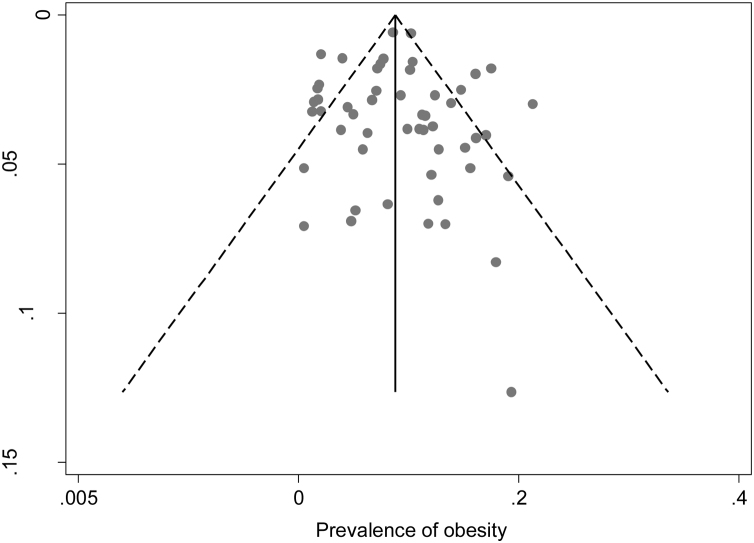
We searched for population-based studies that assessed obesity in Brazilian children aged < 10 years in MEDLINE, EMBASE, Scopus and other sources up to September, 2019. Paired researchers selected studies, extracted data and assessed the quality of these studies. Meta-analysis of prevalence and confidence interval (95% CI) was calculated, weighted by the population sizes using Freeman-Tukey double-arccosine transformation. Heterogeneity (I) and publication bias were investigated by meta-regression and Egger's test, respectively.
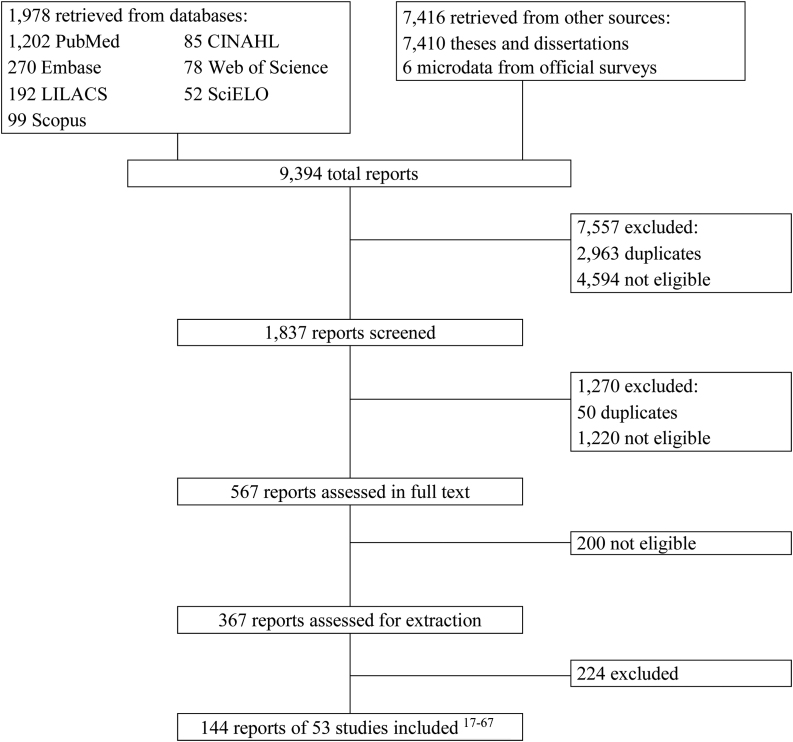
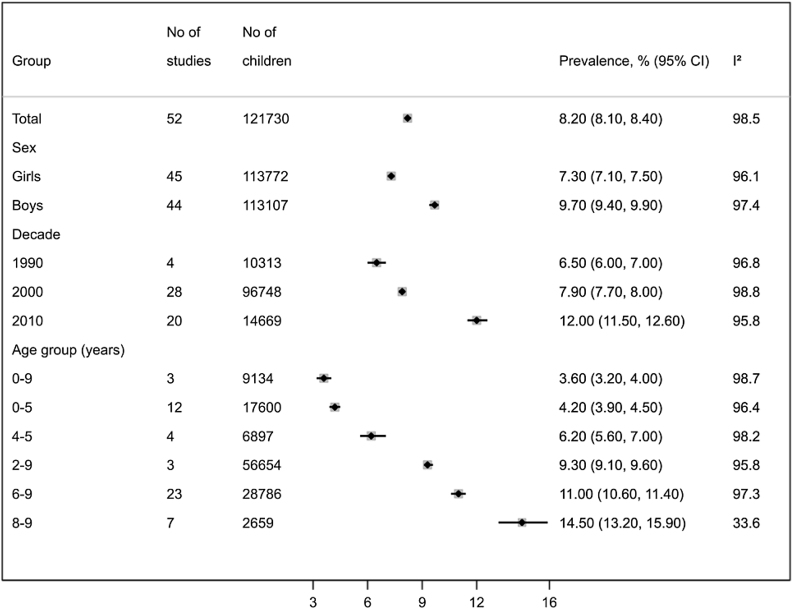
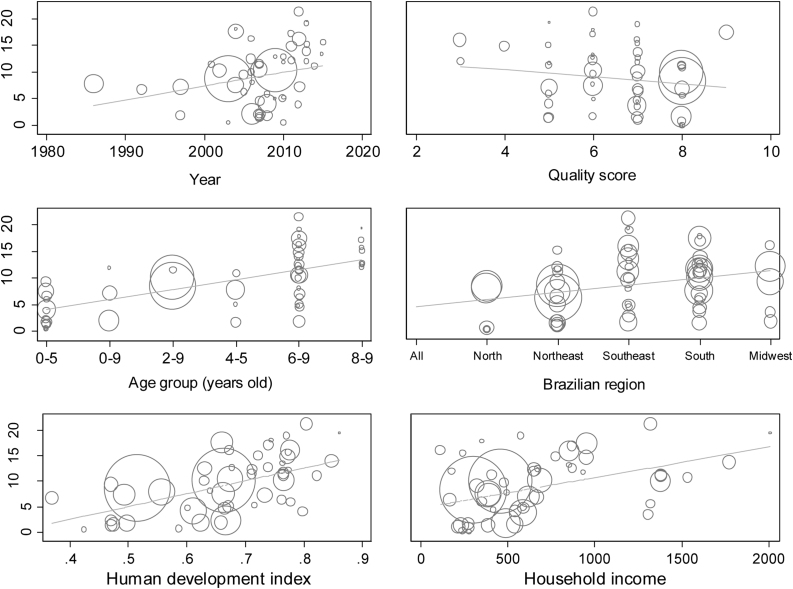
53 studies were included (n = 122,395), which were held from 1986 to 2015 and limited mainly due to inadequate response rates. Prevalence of obesity in the three-decade period was of 8.2% ([95% CI]: 8.1-8.4%, I = 98.5%). Higher prevalence was observed in boys (9.7% [9.4-9.9%], I = 97.4%) than girls (7.3% [7.1-7.5%], I = 96.1%). Prevalence increased according to the decade (1990: 6.5% [6.0-7.0 %], I = 96.8%; 2000: 7.9% [7.7-8.0 %], I = 98.8%; 2010: 12.0% [11.5-12.6 %], I = 95.8%), and Brazilian region (Northeast: 6.4% [6.2-6.7%], I = 98.1%; North: 6.7% [6.3-7.2%], I = 98.8%; Southeast:10.6% [10.2-11.0%], I = 98.2%; South: 10.1 [9.7-10.4%], I = 97.7%). Heterogeneity was affected by age and region (p < 0.05) and publication bias was discarded (p = 0.746).
For every 100 Brazilian children, over eight had obesity in the three-decade period and 12 in each 100 had childhood obesity in more recent estimates. Higher prevalence occurred in boys, recent decades and more developed Brazilian regions.
通过对具有代表性的研究进行系统评价,估算巴西儿童肥胖症的流行率。
我们在 MEDLINE、EMBASE、Scopus 和其他资源中搜索了评估巴西 10 岁以下儿童肥胖症的基于人群的研究,检索截至 2019 年 9 月。经过配对的研究人员选择研究、提取数据并评估这些研究的质量。使用 Freeman-Tukey 双反余弦变换按人口规模对患病率和置信区间(95%CI)进行加权的荟萃分析。通过 meta-regression 和 Egger 检验分别调查异质性(I)和发表偏倚。
纳入了 53 项研究(n=122395),这些研究均于 1986 年至 2015 年开展,主要由于应答率不足而受到限制。在这三十年期间,肥胖症的患病率为 8.2%(95%CI:8.1-8.4%,I=98.5%)。男孩的患病率(9.7%[9.4-9.9%],I=97.4%)高于女孩(7.3%[7.1-7.5%],I=96.1%)。患病率随着十年间的变化而增加(1990 年:6.5%[6.0-7.0%],I=96.8%;2000 年:7.9%[7.7-8.0%],I=98.8%;2010 年:12.0%[11.5-12.6%],I=95.8%),且按巴西地区(东北部:6.4%[6.2-6.7%],I=98.1%;北部:6.7%[6.3-7.2%],I=98.8%;东南部:10.6%[10.2-11.0%],I=98.2%;南部:10.1%[9.7-10.4%],I=97.7%)而有所不同。异质性受到年龄和地区的影响(p<0.05),且排除了发表偏倚(p=0.746)。
在过去三十年中,每 100 名巴西儿童中就有超过 8 人肥胖,每 100 名儿童中就有 12 人患有儿童肥胖症。男孩、最近几十年和巴西较发达地区的患病率较高。