Division of Molecular Medicine, School of Pharmaceutical Sciences, University of Shizuoka, 52-1 Yada, Suruga-ku, Shizuoka, Japan.
Clinical Research Institute, Kyoto Medical Center, National Hospital Organization, 1-1 Fukakusa Mukaihatacho, Fushimi-ku, Kyoto, Japan.
Int J Mol Sci. 2021 Feb 10;22(4):1771. doi: 10.3390/ijms22041771.
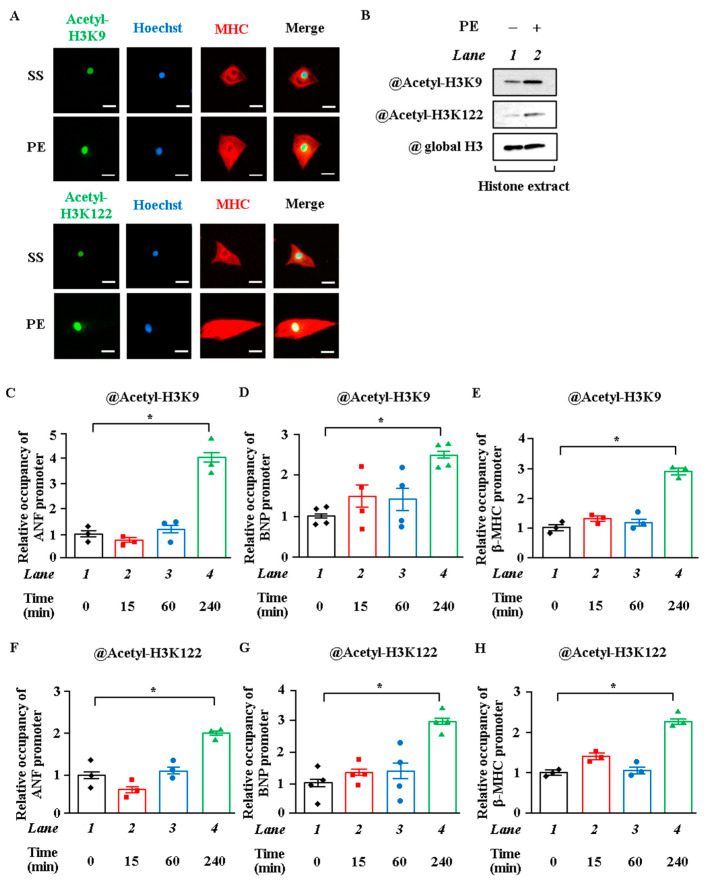
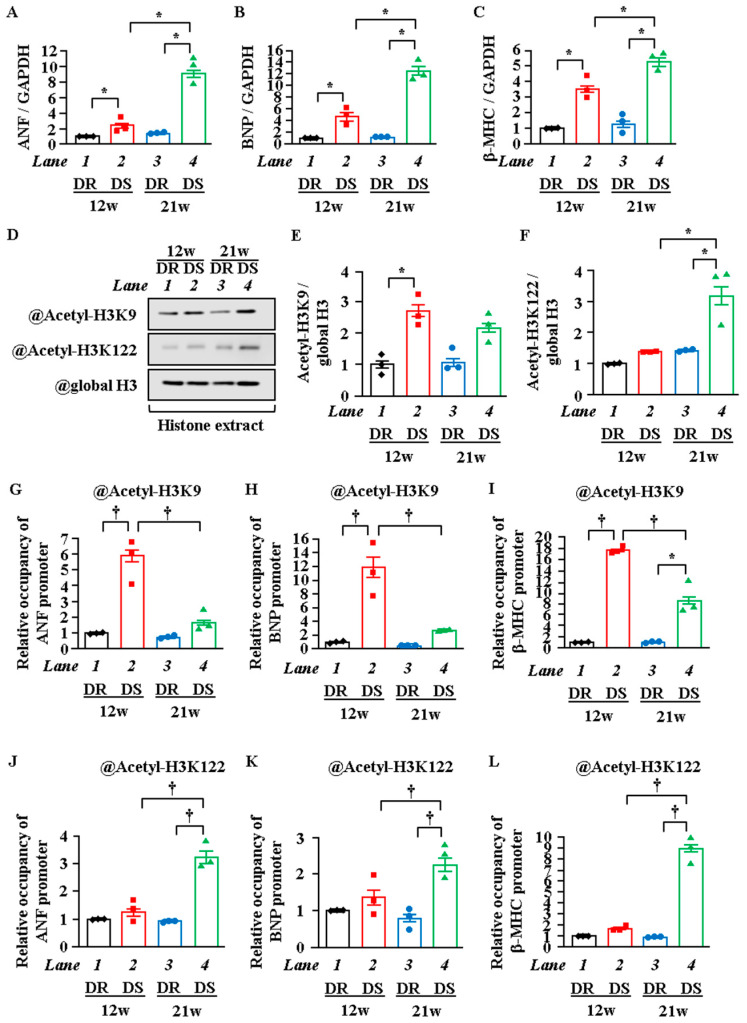
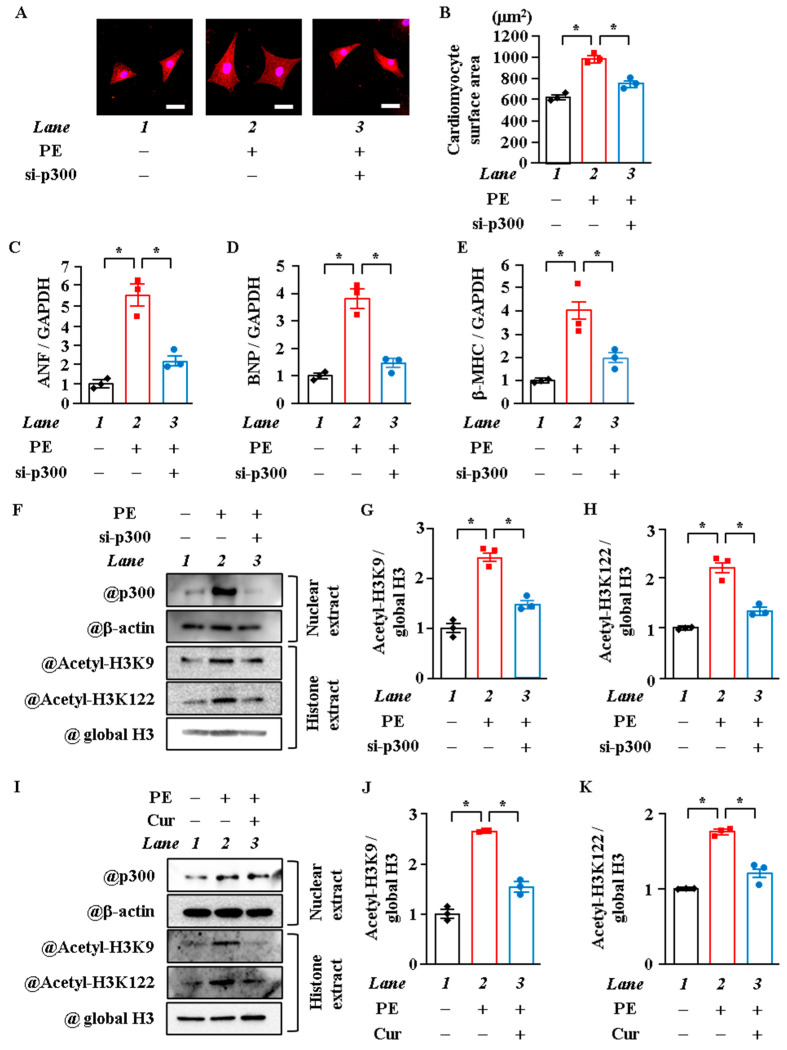
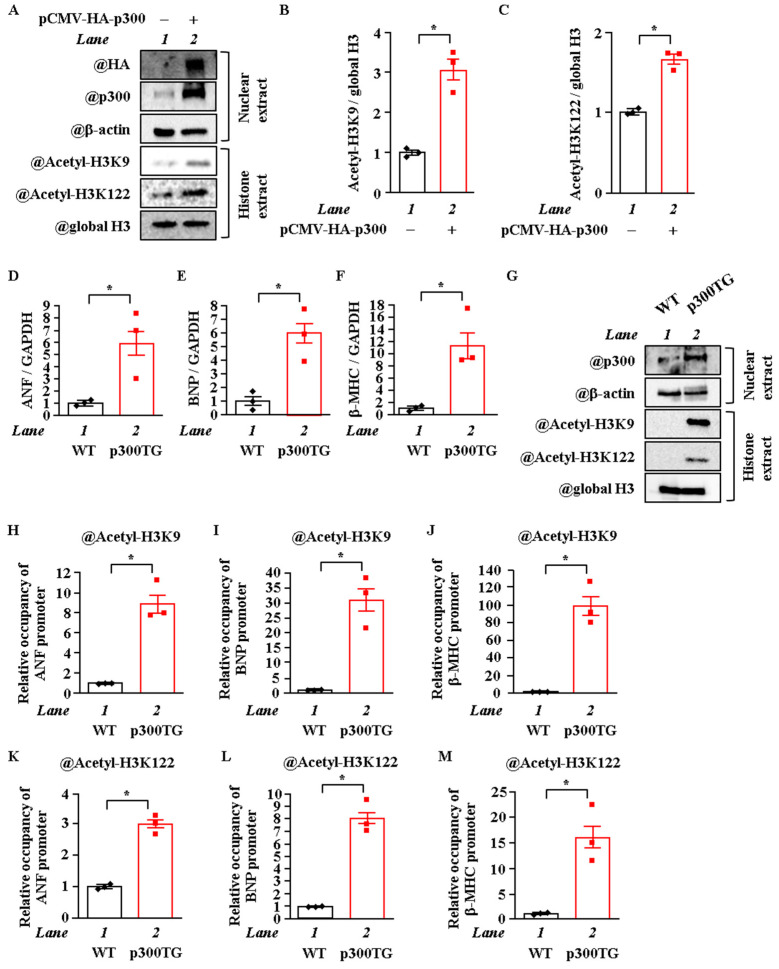
Histone acetylation by epigenetic regulators has been shown to activate the transcription of hypertrophic response genes, which subsequently leads to the development and progression of heart failure. However, nothing is known about the acetylation of the histone tail and globular domains in left ventricular hypertrophy or in heart failure. The acetylation of H3K9 on the promoter of the hypertrophic response gene was significantly increased in the left ventricular hypertrophy stage, whereas the acetylation of H3K122 did not increase in the left ventricular hypertrophy stage but did significantly increase in the heart failure stage. Interestingly, the interaction between the chromatin remodeling factor BRG1 and p300 was significantly increased in the heart failure stage, but not in the left ventricular hypertrophy stage. This study demonstrates that stage-specific acetylation of the histone tail and globular domains occurs during the development and progression of heart failure, providing novel insights into the epigenetic regulatory mechanism governing transcriptional activity in these processes.
组蛋白乙酰化作用由表观遗传调控因子介导,可激活肥大反应基因的转录,进而导致心力衰竭的发生和发展。然而,人们对于左心室肥厚或心力衰竭时组蛋白尾部和球状结构域的乙酰化作用却知之甚少。在左心室肥厚阶段,肥大反应基因启动子上 H3K9 的乙酰化显著增加,而 H3K122 的乙酰化在左心室肥厚阶段并未增加,而在心力衰竭阶段却显著增加。有趣的是,染色质重塑因子 BRG1 和 p300 之间的相互作用在心力衰竭阶段显著增加,而在左心室肥厚阶段则没有。本研究表明,在心力衰竭的发生和发展过程中,组蛋白尾部和球状结构域的特异性乙酰化作用会发生,为这些过程中调控转录活性的表观遗传调控机制提供了新的见解。