Department of Hematology-Oncology, International Cancer Center, Shenzhen University General Hospital, Shenzhen University Health Science Center, 1098 Xueyuan Ave, Shenzhen, 518060, China.
Medicine School, Nankai University, 94 Weijin Road, Tianjin, 300071, China.
J Transl Med. 2021 Feb 12;19(1):65. doi: 10.1186/s12967-021-02733-5.
Rho GTPase activating protein 9 (ARHGAP9) is expressed in various types of cancers and can inactivate Rho GTPases that mainly regulate cytoskeletal dynamics. However, the exact role of ARHGAP9 in acute myeloid leukemia (AML) has yet to be clarified.
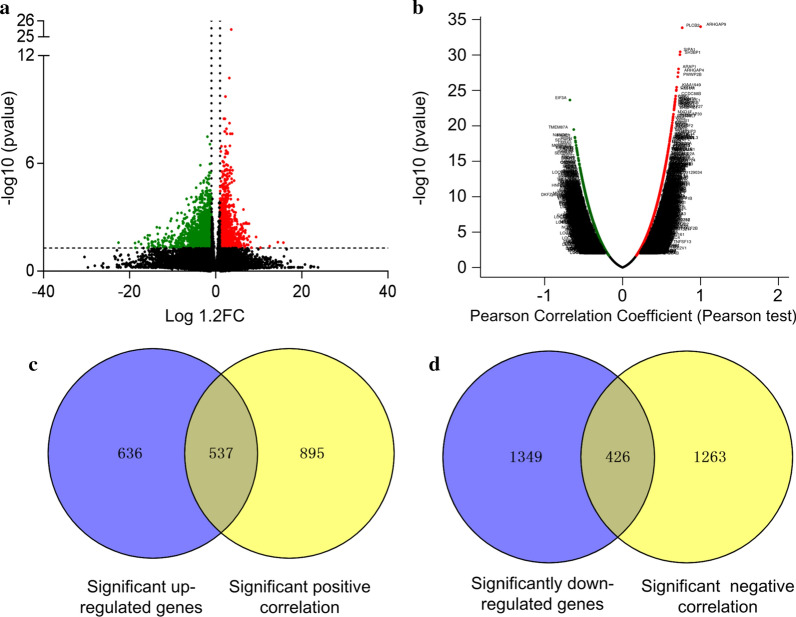
We compared the transcriptional expression, prognosis, differentially expressed genes, functional enrichment, and hub genes in AML patients on the basis of the data published in the following databases: UALCAN, GEPIA, Gene Expression Omnibus, the Human Protein Atlas, Cancer Cell Line Encyclopedia, LinkedOmics, Metascape, and String. Data from the Cancer Genome Atlas database was used to evaluate the correlations between ARHGAP9 expression and various clinicopathological parameters, as well as the significantly different genes associated with ARHGAP9 expression.
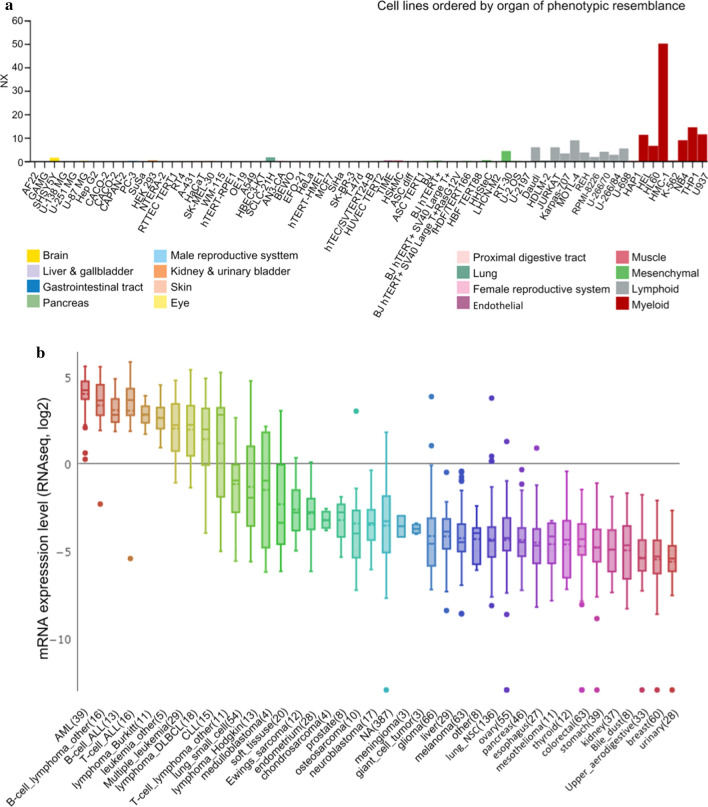
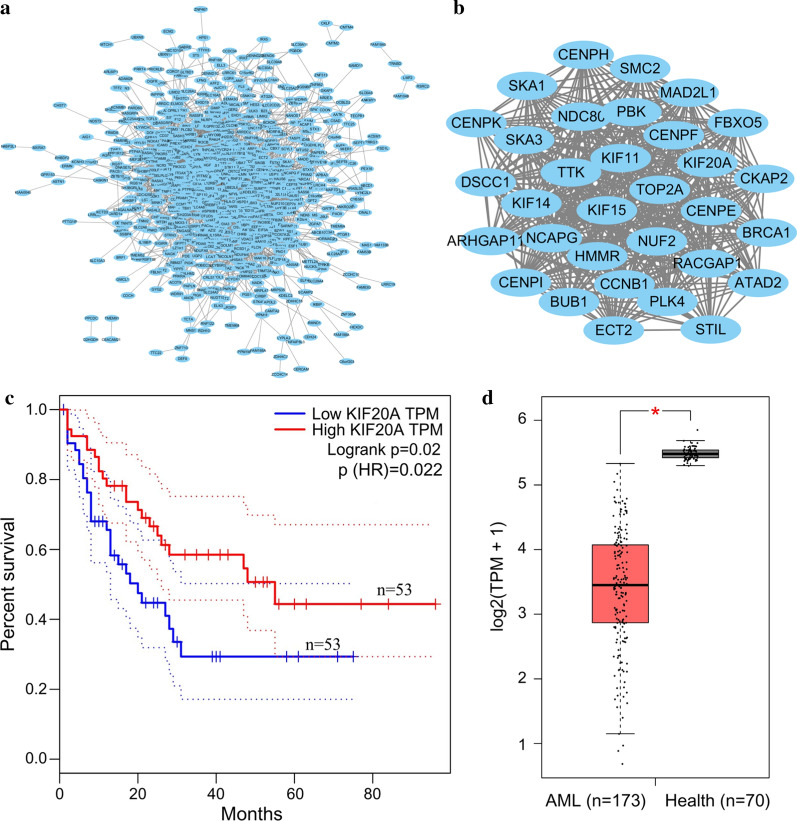
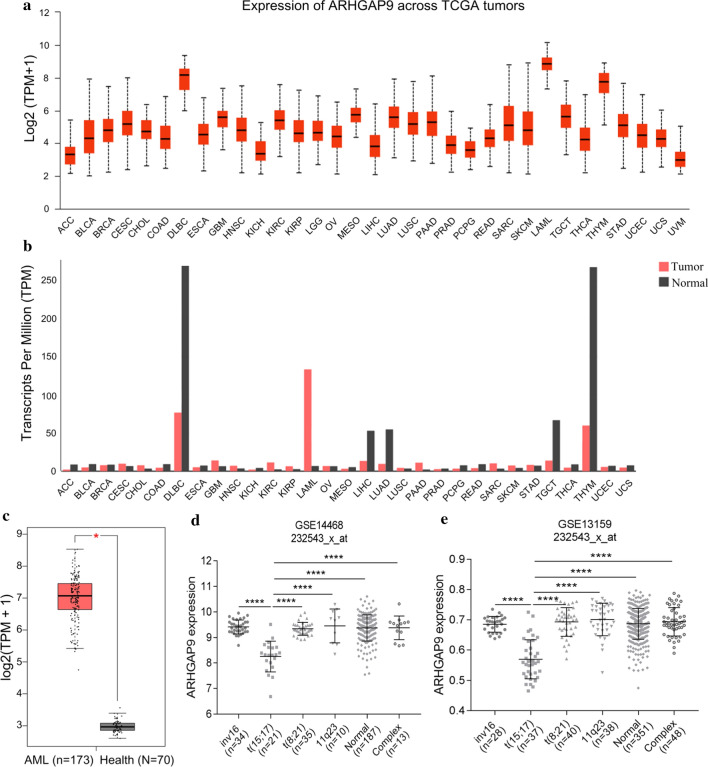
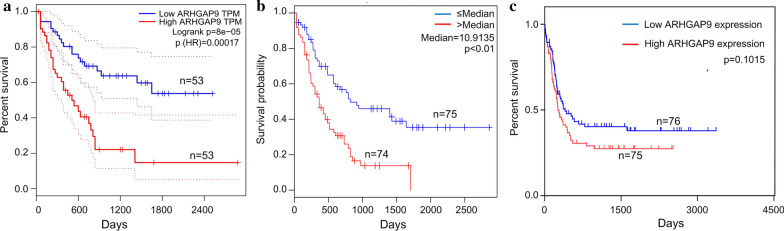
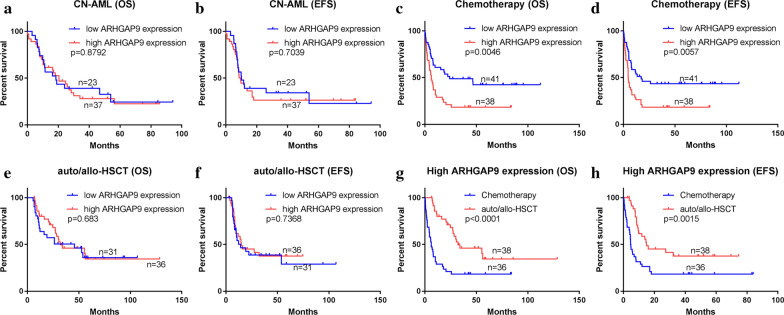
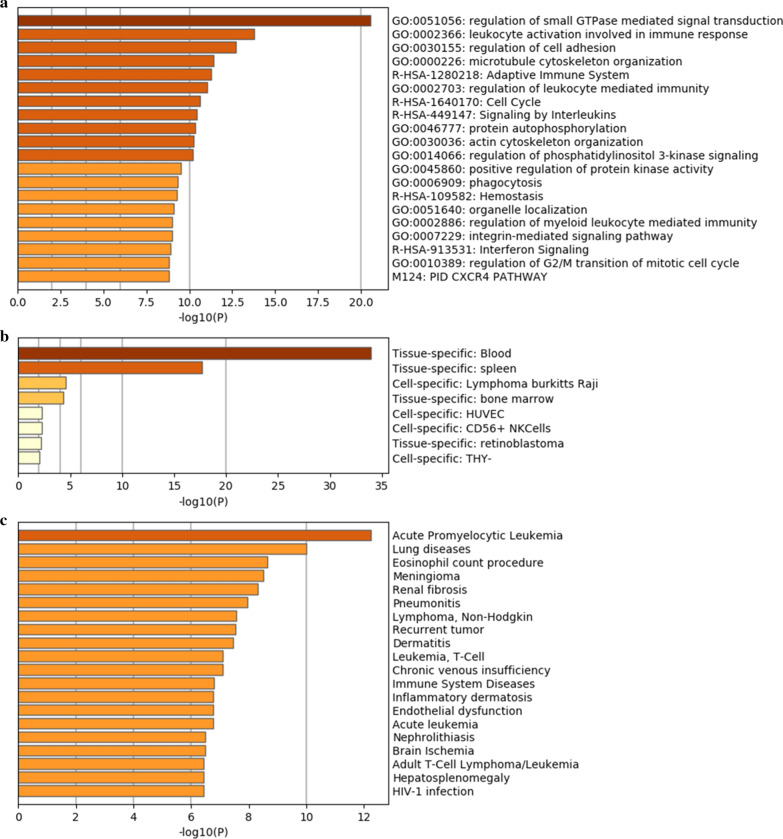
We found that ARHGAP9 expression was higher in the tissues and cell lines extracted from patients with AML than corresponding control tissues and other cancer types. ARHGAP9 overexpression was associated with decreased overall survival (OS) in AML. Compared with the ARHGAP9 group, the ARHGAP9 group, which received only chemotherapy, showed significantly worse OS and event-free survival (EFS); however, no significant difference was observed after treatment with autologous or allogeneic hematopoietic stem cell transplantation (auto/allo-HSCT). The ARHGAP9 patients undergoing auto/allo-HSCT also had a significantly better prognosis with respect to OS and EFS than those receiving only chemotherapy. Most overlapping genes of the significantly different genes and co-expression genes exhibited enriched immune functions, suggesting the immune regulation potential of ARHGAP9 in AML. A total of 32 hub genes were identified from the differentially expressed genes, within which the KIF20A had a significant prognostic value for AML.
ARHGAP9 overexpression was associated with poor OS in AML patients and can be used as a prognostic biomarker. AML patients with ARHGAP9 overexpression can benefit from auto/allo-HSCT rather than chemotherapy.
Rho GTPase 激活蛋白 9(ARHGAP9)在各种类型的癌症中表达,并能使主要调节细胞骨架动态的 Rho GTPases 失活。然而,ARHGAP9 在急性髓细胞白血病(AML)中的确切作用尚未阐明。
我们根据 UALCAN、GEPIA、基因表达综合数据库、人类蛋白质图谱、癌症细胞系百科全书、LinkedOmics、Metascape 和 String 等数据库中发表的数据,比较了 AML 患者的转录表达、预后、差异表达基因、功能富集和枢纽基因。我们使用癌症基因组图谱数据库的数据来评估 ARHGAP9 表达与各种临床病理参数的相关性,以及与 ARHGAP9 表达显著相关的差异基因。
我们发现 ARHGAP9 在 AML 患者的组织和细胞系中的表达高于相应的对照组织和其他癌症类型。ARHGAP9 的过表达与 AML 患者的总生存率(OS)降低相关。与 ARHGAP9 组相比,仅接受化疗的 ARHGAP9 组的 OS 和无事件生存率(EFS)显著更差;然而,在接受自体或同种异体造血干细胞移植(auto/allo-HSCT)后,没有观察到显著差异。接受 auto/allo-HSCT 的 ARHGAP9 患者的 OS 和 EFS 预后也明显优于仅接受化疗的患者。显著差异基因和共表达基因的大多数重叠基因表现出丰富的免疫功能,提示 ARHGAP9 在 AML 中的免疫调节潜力。从差异表达基因中总共鉴定出 32 个枢纽基因,其中 KIF20A 对 AML 具有显著的预后价值。
ARHGAP9 的过表达与 AML 患者的 OS 不良相关,可作为预后生物标志物。ARHGAP9 过表达的 AML 患者可从 auto/allo-HSCT 而不是化疗中获益。