Institute of Protein Biochemistry, Ulm University, Ulm, Germany.
Nat Commun. 2021 Feb 12;12(1):1013. doi: 10.1038/s41467-021-21129-z.
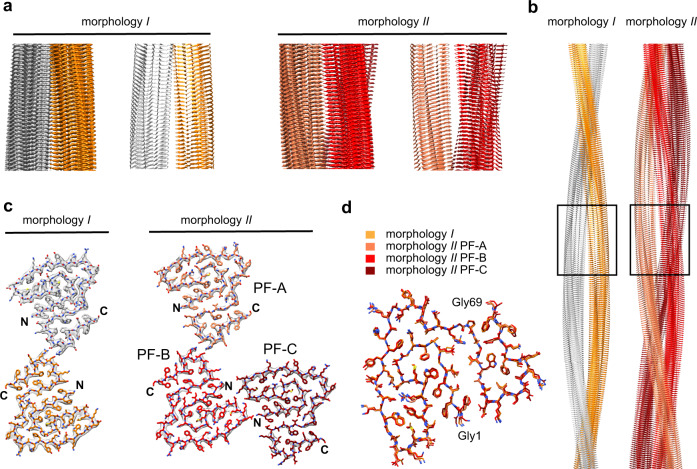
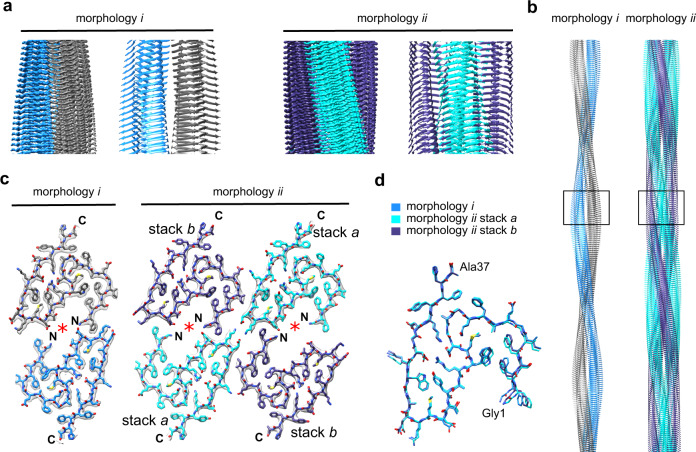
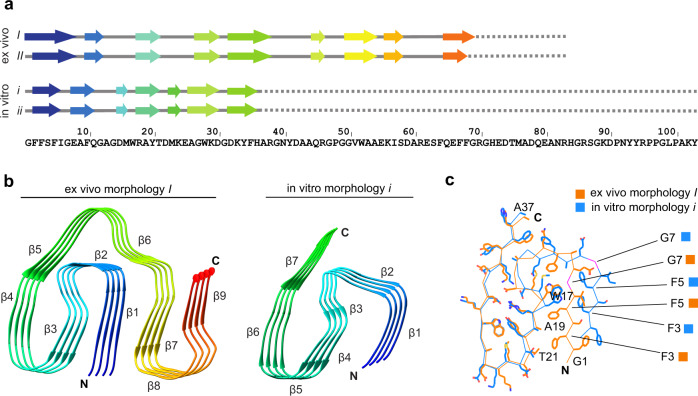
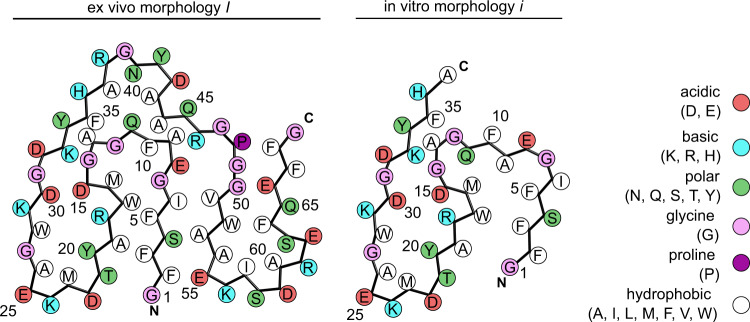
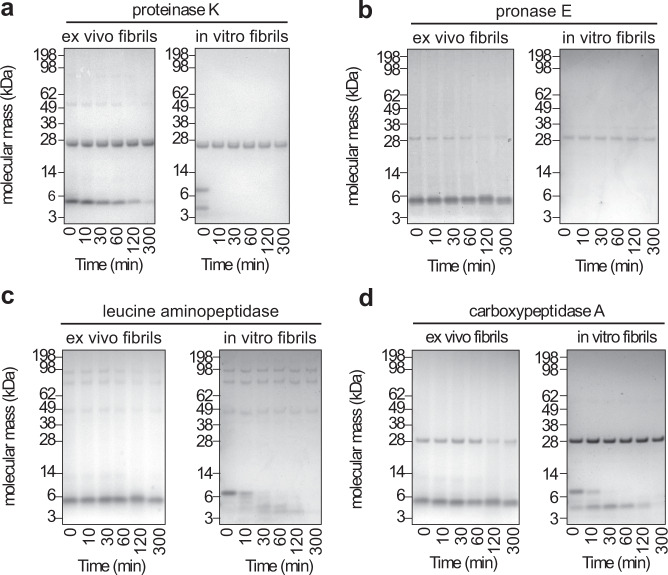
Systemic AA amyloidosis is a world-wide occurring protein misfolding disease of humans and animals. It arises from the formation of amyloid fibrils from serum amyloid A (SAA) protein. Using cryo electron microscopy we here show that amyloid fibrils which were purified from AA amyloidotic mice are structurally different from fibrils formed from recombinant SAA protein in vitro. Ex vivo amyloid fibrils consist of fibril proteins that contain more residues within their ordered parts and possess a higher β-sheet content than in vitro fibril proteins. They are also more resistant to proteolysis than their in vitro formed counterparts. These data suggest that pathogenic amyloid fibrils may originate from proteolytic selection, allowing specific fibril morphologies to proliferate and to cause damage to the surrounding tissue.
系统性 AA 淀粉样变性是一种在人类和动物中广泛存在的蛋白质错误折叠疾病。它是由血清淀粉样 A(SAA)蛋白形成淀粉样纤维引起的。本文使用低温电子显微镜显示,从 AA 淀粉样变性小鼠中纯化的淀粉样纤维在结构上不同于体外重组 SAA 蛋白形成的纤维。在体淀粉样纤维由纤维蛋白组成,其有序部分含有更多的残基,β-折叠含量高于体外纤维蛋白。它们也比体外形成的纤维蛋白更能抵抗蛋白水解。这些数据表明,致病性淀粉样纤维可能源于蛋白水解选择,允许特定的纤维形态增殖,并对周围组织造成损伤。