Institute of Neuroanatomy, RWTH Aachen University, 52074, Aachen, Germany.
Department of Child and Adolescent Psychiatry, Psychosomatics and Psychotherapy, University Hospital, RWTH Aachen University, 52074, Aachen, Germany.
J Mol Neurosci. 2021 Nov;71(11):2368-2382. doi: 10.1007/s12031-021-01800-2. Epub 2021 Feb 12.
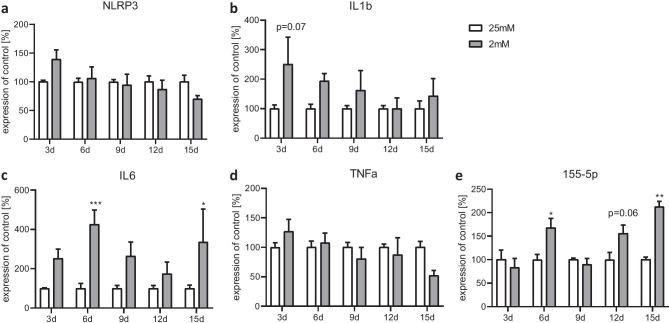
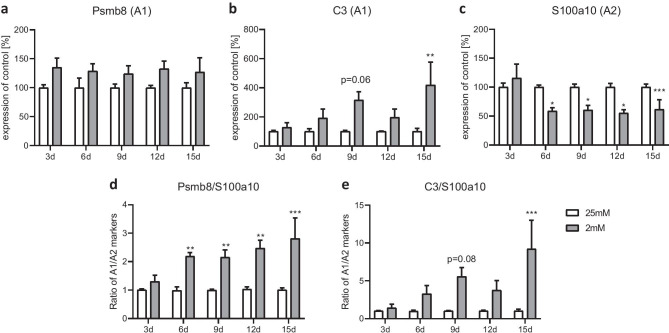
Astrocytes are the most abundant cell type in the brain and crucial to ensure the metabolic supply of neurons and their synapse formation. Overnutrition as present in patients suffering from obesity causes astrogliosis in the hypothalamus. Other diseases accompanied by malnutrition appear to have an impact on the brain and astrocyte function. In the eating disorder anorexia nervosa (AN), patients suffer from undernutrition and develop volume reductions of the cerebral cortex, associated with reduced astrocyte proliferation and cell count. Although an effect on astrocytes and their function has already been shown for overnutrition, their role in long-term undernutrition remains unclear. The present study used primary rat cerebral cortex astrocytes to investigate their response to chronic glucose starvation. Cells were grown with a medium containing a reduced glucose concentration (2 mM) for 15 days. Long-term glucose starvation increased the expression of a subset of pro-inflammatory genes and shifted the primary astrocyte population to the pro-inflammatory A1-like phenotype. Moreover, genes encoding for proteins involved in the unfolded protein response were elevated. Our findings demonstrate that astrocytes under chronic glucose starvation respond with an inflammatory reaction. With respect to the multiple functions of astrocytes, an association between elevated inflammatory responses due to chronic starvation and alterations found in the brain of patients suffering from undernutrition seems possible.
星形胶质细胞是大脑中最丰富的细胞类型,对于确保神经元的代谢供应和突触形成至关重要。肥胖患者中存在的营养过剩会导致下丘脑星形胶质细胞增生。其他伴有营养不良的疾病似乎对大脑和星形胶质细胞功能有影响。在神经性厌食症 (AN) 中,患者遭受营养不良并出现大脑皮层体积缩小,与星形胶质细胞增殖和细胞计数减少有关。尽管已经证明营养过剩会对星形胶质细胞及其功能产生影响,但它们在长期营养不良中的作用仍不清楚。本研究使用原代大鼠大脑皮层星形胶质细胞来研究它们对慢性葡萄糖饥饿的反应。细胞在含有低浓度葡萄糖(2 mM)的培养基中培养 15 天。长期葡萄糖饥饿会增加一组促炎基因的表达,并将原代星形胶质细胞群转变为促炎 A1 样表型。此外,参与未折叠蛋白反应的蛋白编码基因也升高了。我们的研究结果表明,慢性葡萄糖饥饿的星形胶质细胞会发生炎症反应。鉴于星形胶质细胞的多种功能,由于慢性饥饿引起的炎症反应升高与营养不良患者大脑中发现的改变之间似乎存在关联。