Amsterdam UMC, University of Amsterdam, Departments of Experimental Cardiology, Amsterdam Cardiovascular Sciences (A.J.T., L.C.O., Y.J.R., I.v.d.M., S.A., S.C.K., A.v.d.B., Y.M.P.), Amsterdam, The Netherlands.
Imperial College London, South Kensington Campus, London, UK (X.Z., J.S.W.).
Circulation. 2021 Apr 13;143(15):1502-1512. doi: 10.1161/CIRCULATIONAHA.120.050455. Epub 2021 Feb 15.
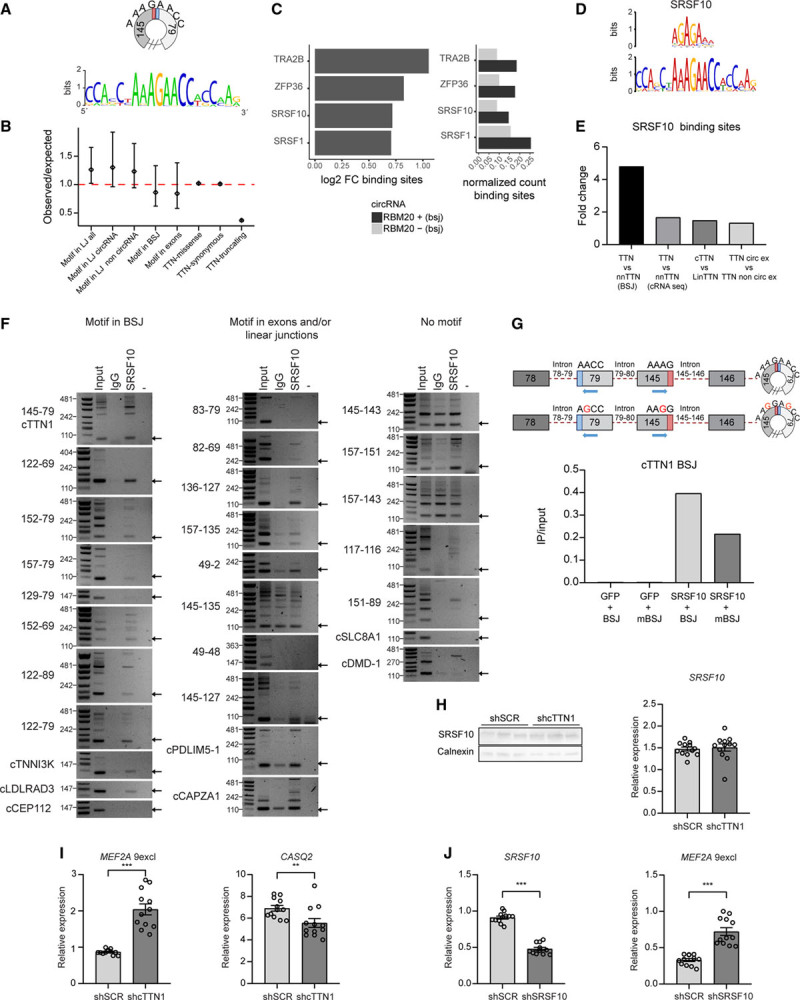
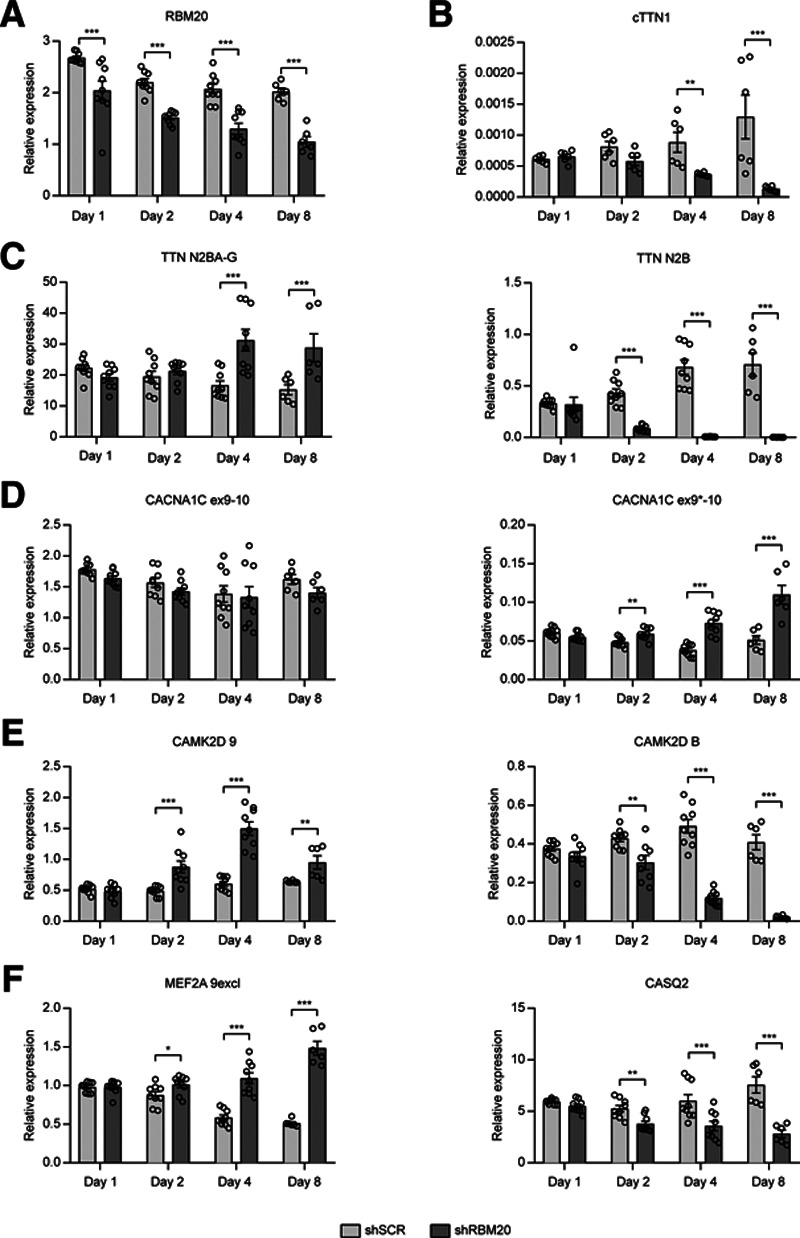
TTN (Titin), the largest protein in humans, forms the molecular spring that spans half of the sarcomere to provide passive elasticity to the cardiomyocyte. Mutations that disrupt the transcript are the most frequent cause of hereditary heart failure. We showed before that produces a class of circular RNAs (circRNAs) that depend on RBM20 to be formed. In this study, we show that the back-splice junction formed by this class of circRNAs creates a unique motif that binds SRSF10 to enable it to regulate splicing. Furthermore, we show that one of these circRNAs (cTTN1) distorts both localization of and splicing by RBM20.
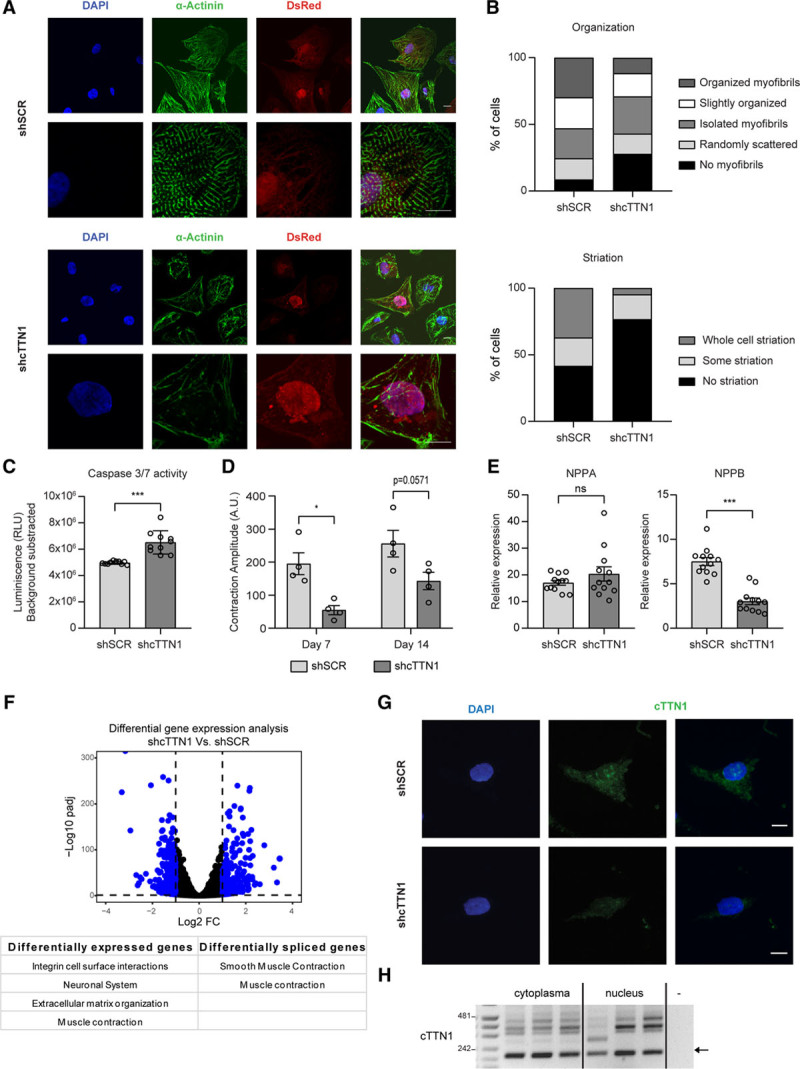
We calculated genetic constraint of the identified motif in 125 748 exomes collected from the gnomAD database. Furthermore, we focused on the highest expressed RBM20-dependent circRNA in the human heart, which we named cTTN1. We used shRNAs directed to the back-splice junction to induce selective loss of cTTN1 in human induced pluripotent stem cell-derived cardiomyocytes.
Human genetics suggests reduced genetic tolerance of the generated motif, indicating that mutations in this motif might lead to disease. RNA immunoprecipitation confirmed binding of circRNAs with this motif to SRSF10. Selective loss of cTTN1 in human induced pluripotent stem cell-derived cardiomyocytes induced structural abnormalities, apoptosis, and reduced contractile force in engineered heart tissue. In line with its SRSF10 binding, loss of cTTN1 caused abnormal splicing of important cardiomyocyte SRSF10 targets such as and . Strikingly, loss of cTTN1 also caused abnormal splicing of itself. Mechanistically, we show that loss of cTTN1 distorts both localization of and splicing by RBM20.
We demonstrate that circRNAs formed from the transcript are essential for normal splicing of key muscle genes by enabling splice regulators RBM20 and SRSF10. This shows that the transcript also has regulatory roles, besides its well-known signaling and structural function. In addition, we demonstrate that the specific sequence created by the back-splice junction of these circRNAs has important functions. This highlights the existence of functionally important sequences that cannot be recognized as such in the human genome but provides an as-yet unrecognized source for functional sequence variation.
TTN(肌联蛋白)是人体内最大的蛋白质,形成了跨越肌节一半的分子弹簧,为心肌细胞提供被动弹性。破坏 转录本的突变是遗传性心力衰竭最常见的原因。我们之前曾表明, 产生一类依赖于 RBM20 形成的环状 RNA(circRNA)。在这项研究中,我们表明,这一类 circRNA 形成的后拼接接头创建了一个独特的基序,该基序可结合 SRSF10 以使其能够调节剪接。此外,我们还表明,这些 circRNAs 之一(cTTN1)会扭曲 RBM20 的定位和剪接。
我们在 gnomAD 数据库中从 125748 个外显子组中计算了所鉴定基序的遗传约束。此外,我们专注于人类心脏中表达最高的依赖于 RBM20 的 circRNA,我们将其命名为 cTTN1。我们使用针对后拼接接头的 shRNA 在人诱导多能干细胞衍生的心肌细胞中诱导选择性缺失 cTTN1。
人类遗传学表明,所产生的基序的遗传耐受性降低,表明该基序中的突变可能导致疾病。RNA 免疫沉淀证实了具有该基序的 circRNA 与 SRSF10 的结合。在人诱导多能干细胞衍生的心肌细胞中选择性缺失 cTTN1 会导致结构异常、凋亡和工程化心脏组织收缩力降低。与 SRSF10 结合一致,cTTN1 的缺失导致重要的心肌细胞 SRSF10 靶标如 和 的异常剪接。引人注目的是,cTTN1 的缺失也导致自身的异常剪接。从机制上讲,我们表明 cTTN1 的缺失会扭曲 RBM20 和 SRSF10 的定位和剪接。
我们证明了由 转录本形成的 circRNA 对于关键肌肉基因的正常剪接是必不可少的,这是通过使剪接调节剂 RBM20 和 SRSF10 发挥作用。这表明 转录本除了具有众所周知的信号和结构功能外,还具有调节作用。此外,我们证明了这些 circRNA 后拼接接头创建的特定序列具有重要功能。这突出了存在功能重要的序列,但这些序列在人类基因组中无法被识别为这样的序列,但为功能序列变异提供了一个尚未被认识的来源。