Muszynski Sarah, Maurer Florian, Henjes Sina, Horn Marcus A, Noll Matthias
Department of Applied Science, Institute of Bioanalysis, University of Coburg, Coburg, Germany.
Institute of Microbiology, Leibniz University of Hannover, Hanover, Germany.
Front Microbiol. 2021 Jan 11;11:548793. doi: 10.3389/fmicb.2020.548793. eCollection 2020.
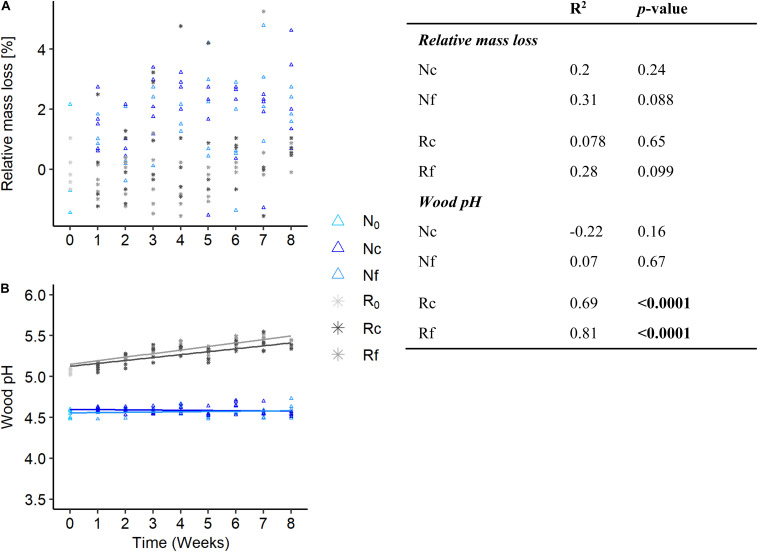
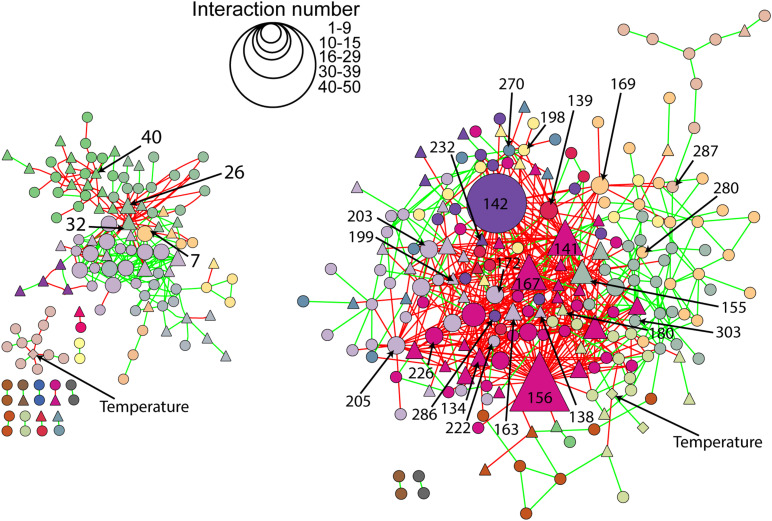
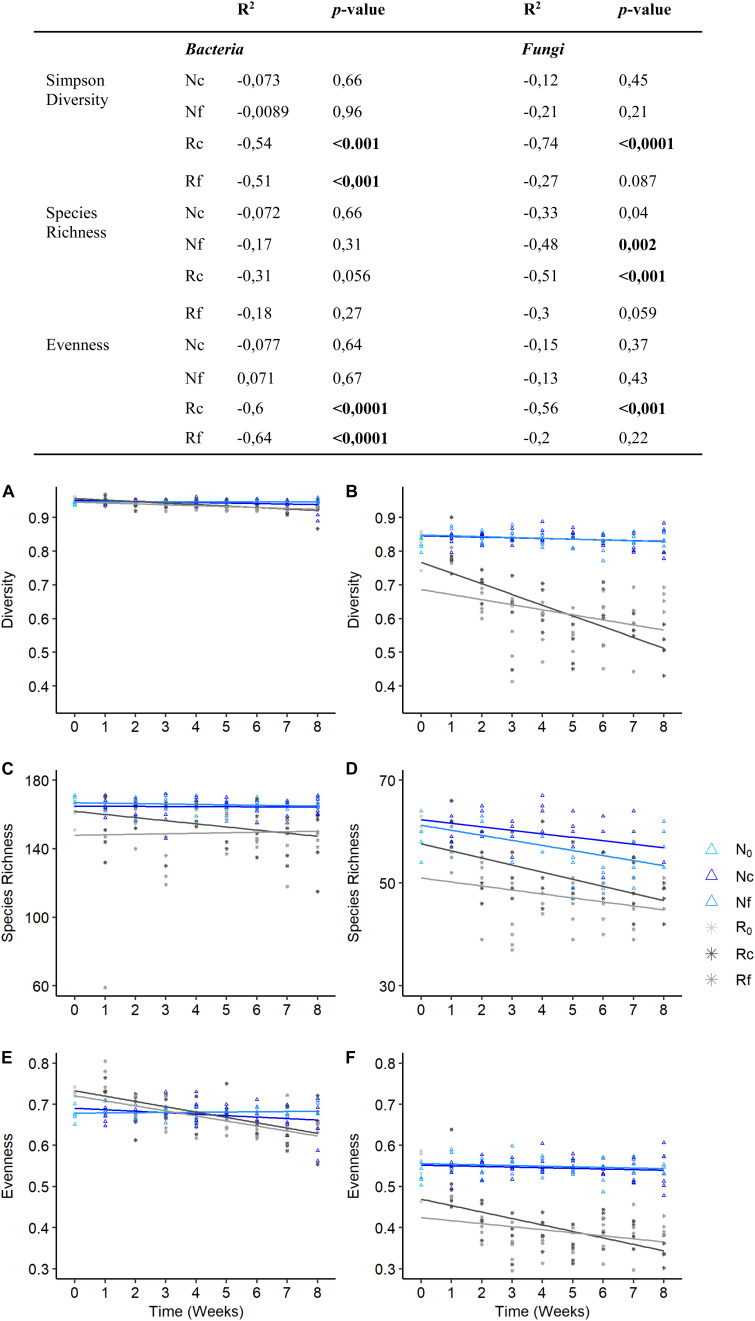
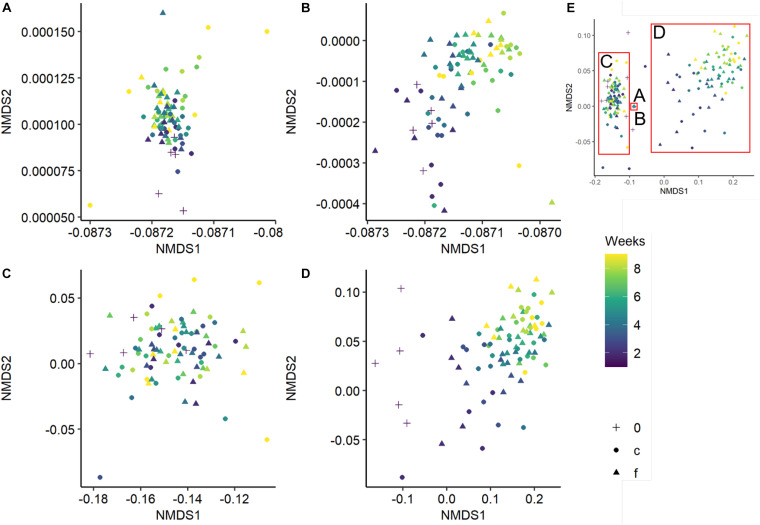
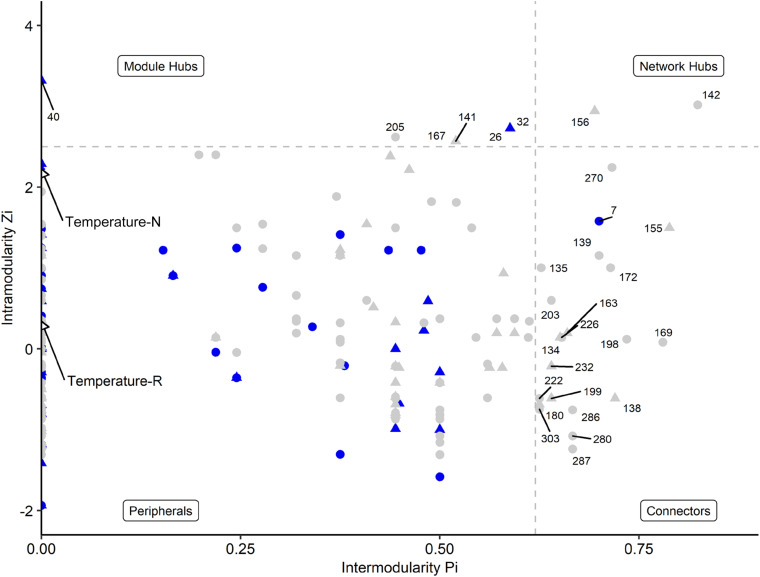
Environmental fluctuations are a common occurrence in an ecosystem, which have an impact on organismic diversity and associated ecosystem services. The aim of this study was to investigate how a natural and a species richness-reduced wood decaying community diversity were capable of decomposing dead wood under a constant and a fluctuating temperature regime. Therefore, microcosms with both diversity levels (natural and species richness-reduced) were prepared and incubated for 8 weeks under both temperature regimes. Relative wood mass loss, wood pH, carbon dioxide, and methane emissions, as well as fungal and bacterial community compositions in terms of Simpson's diversity, richness and evenness were investigated. Community interaction patterns and co-occurrence networks were calculated. Community composition was affected by temperature regime and natural diversity caused significantly higher mass loss than richness-reduced diversity. In contrast, richness-reduced diversity increased wood pH. The bacterial community composition was less affected by richness reduction and temperature regimes than the fungal community composition. Microbial interaction patterns showed more mutual exclusions in richness-reduced compared to natural diversity as the reduction mainly reduced abundant fungal species and disintegrated previous interaction patterns. Microbial communities reassembled in richness-reduced diversity with a focus on nitrate reducing and dinitrogen-fixing bacteria as connectors in the network, indicating their high relevance to reestablish ecosystem functions. Therefore, a stochastic richness reduction was followed by functional trait based reassembly to recover previous ecosystem productivity.
环境波动在生态系统中很常见,它会对生物多样性及相关的生态系统服务产生影响。本研究的目的是调查在恒定温度和波动温度条件下,自然状态下以及物种丰富度降低的木材腐朽群落多样性如何分解枯木。因此,制备了具有两种多样性水平(自然状态和物种丰富度降低)的微观世界,并在两种温度条件下培养8周。研究了相对木材质量损失、木材pH值、二氧化碳和甲烷排放,以及从辛普森多样性、丰富度和均匀度方面考察的真菌和细菌群落组成。计算了群落相互作用模式和共生网络。群落组成受温度条件影响,自然多样性导致的质量损失显著高于丰富度降低的多样性。相比之下,丰富度降低的多样性会使木材pH值升高。与真菌群落组成相比,细菌群落组成受丰富度降低和温度条件的影响较小。与自然多样性相比,丰富度降低的微生物相互作用模式表现出更多的相互排斥,因为这种降低主要减少了丰富的真菌物种并瓦解了先前的相互作用模式。丰富度降低的多样性中的微生物群落重新组装,重点是网络中作为连接者的硝酸盐还原菌和固氮菌,这表明它们与恢复生态系统功能高度相关。因此,随机的丰富度降低之后是基于功能性状的重新组装,以恢复先前的生态系统生产力。