Li Hang, Li Bin, Pan Yunjian, Zhang Yang, Xiang Jiaqing, Zhang Yawei, Sun Yihua, Yu Xiang, He Wei, Hu Hong
Department of Thoracic Surgery and State Key Laboratory of Genetic Engineering, Fudan University Shanghai Cancer Center, Shanghai, China.
Institute of Thoracic Oncology, Fudan University, Shanghai, China.
Front Oncol. 2021 Jan 28;10:621435. doi: 10.3389/fonc.2020.621435. eCollection 2020.
Surgical resection is often the preferred treatment for non-small cell lung cancer (NSCLC) patients. Predictive biomarkers after surgery can help monitoring and treating patients promptly, so as to improve the clinical outcome. In this study, we evaluated one potential candidate biomarker, the folate receptor-positive circulating tumor cell (FRCTC), by investigating its prognostic and predictive significance in NSCLC patients who underwent surgery.
In this prospective, observational study, we enrolled NSCLC patients who were eligible to receive surgery. Prior to operation, peripheral blood was collected from each patient for an FRCTC analysis. FRCTCs were isolated by negative enrichment using immunomagnetic beads to deplete leukocytes and then quantitatively detected by a ligand-targeted polymerase chain reaction (PCR) method. These patients were then given standard care and were actively followed up for seven years. At the end of the follow-up period, the association between the FRCTC level and the prognosis in these patients was evaluated.
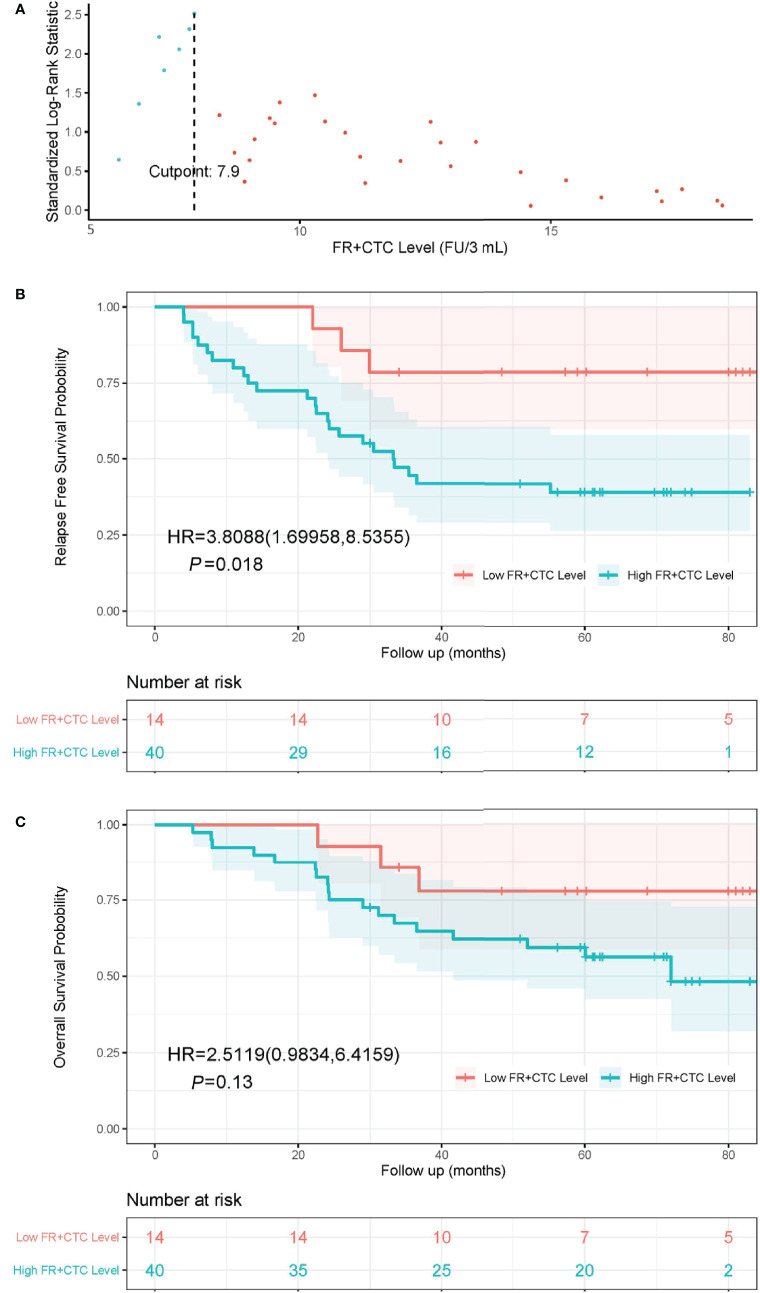
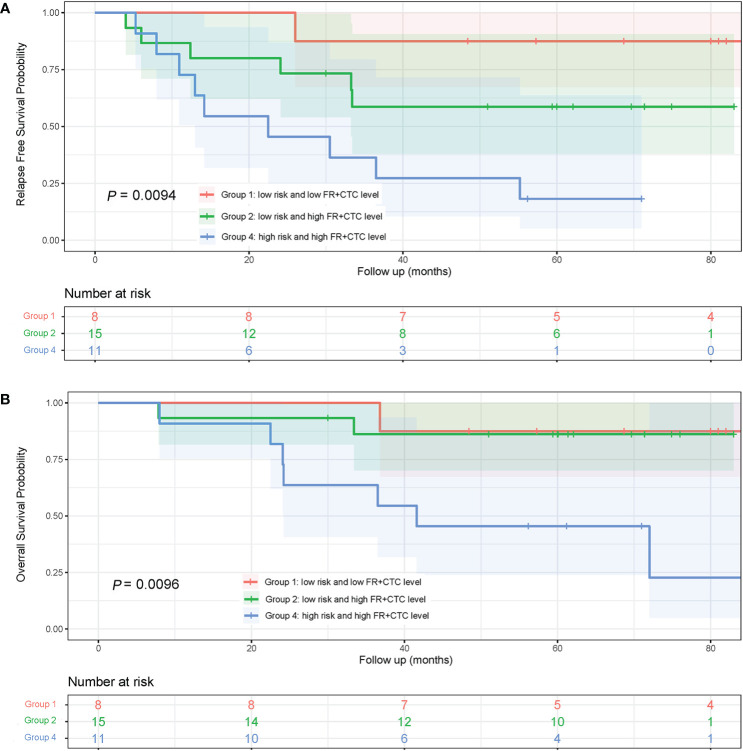
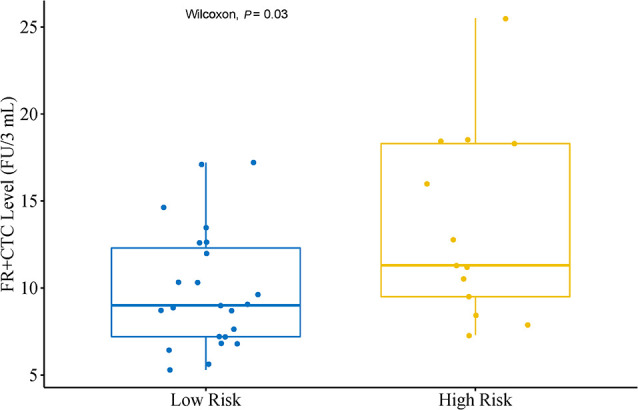
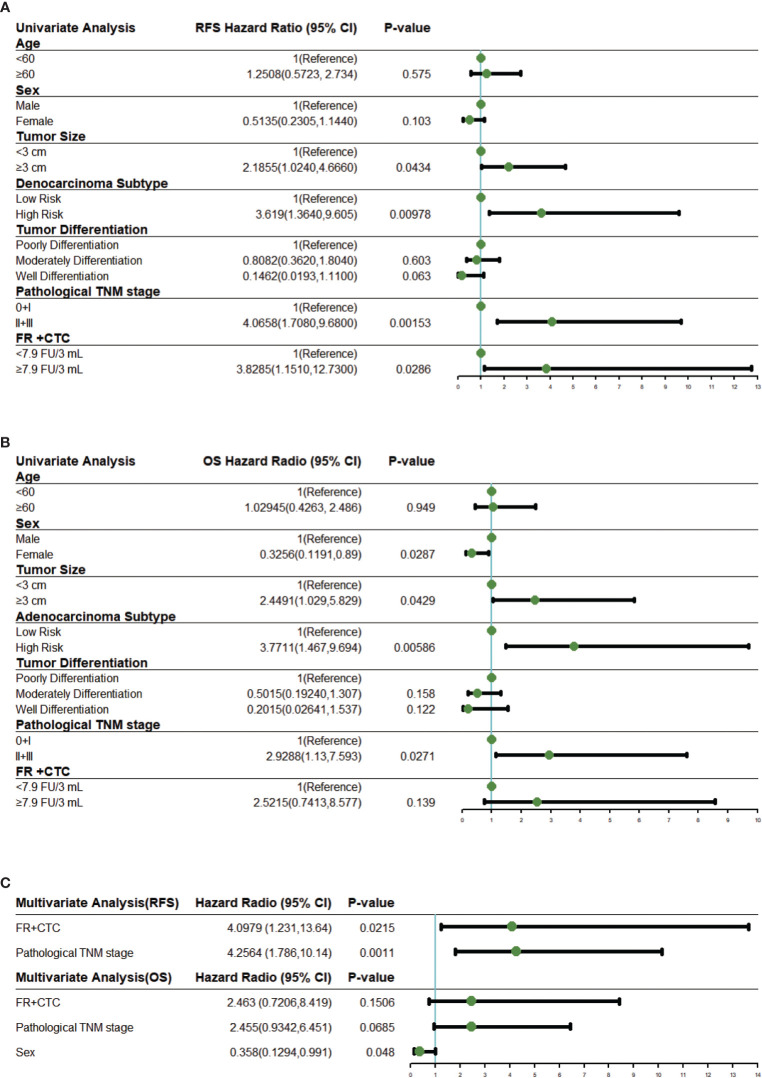
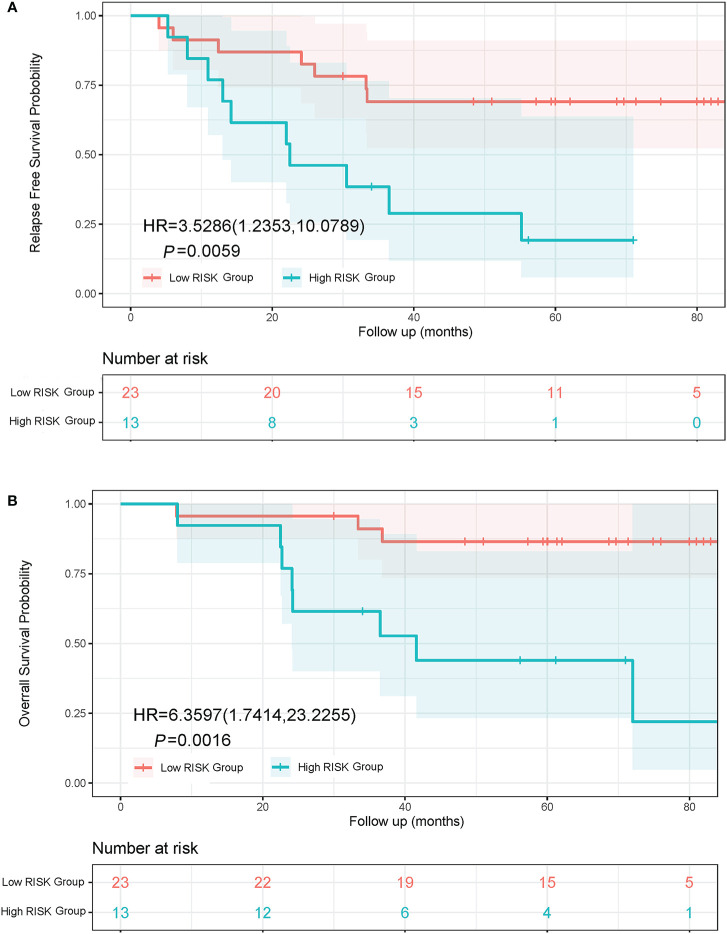
Overall, preoperative FRCTC level was not significantly different among NSCLC patients with adenocarcinoma or non-adenocarcinoma subtypes ( = 0.24). However, between patients with low- and high-risk pathological adenocarcinoma subtypes, the preoperative FRCTC level was significantly different ( = 0.028). Further, patients with lower preoperative FRCTC level had longer relapse-free survival (RFS) and overall survival (OS) than those with higher preoperative FRCTC level (RFS: not reached vs. 33.3 months, = 0.018; OS: not reached vs. 72.0 months, = 0.13). In a multivariate COX regression analysis, FRCTC level (HR = 4.10; 95% CI, 1.23-13.64; =0.022) and pathological stage (HR = 3.16; 95% CI, 1.79-10.14; = 0.0011) were independent prognostic factors of RFS. Moreover, FRCTC level together with adenocarcinoma subtypes provided additional information on risk for disease recurrence compared with FRCTC or adenocarcinoma subtype alone.
Our study demonstrated that the preoperative FRCTC level was a potential predictor for the prognosis of NSCLC patients underwent surgery. Further, when preoperative FRCTC level is considered together with primary tumor proliferation characteristics, its prognostic value supplements that of these conventional pathological features.
手术切除通常是非小细胞肺癌(NSCLC)患者的首选治疗方法。术后预测生物标志物有助于及时监测和治疗患者,从而改善临床结局。在本研究中,我们通过研究叶酸受体阳性循环肿瘤细胞(FRCTC)在接受手术的NSCLC患者中的预后和预测意义,评估了一种潜在的候选生物标志物。
在这项前瞻性观察研究中,我们纳入了符合手术条件的NSCLC患者。术前,从每位患者采集外周血进行FRCTC分析。通过使用免疫磁珠进行阴性富集以去除白细胞来分离FRCTC,然后通过配体靶向聚合酶链反应(PCR)方法进行定量检测。然后给予这些患者标准治疗,并积极随访7年。在随访期结束时,评估这些患者中FRCTC水平与预后之间的关联。
总体而言,腺癌或非腺癌亚型的NSCLC患者术前FRCTC水平无显著差异(P = 0.24)。然而,在低风险和高风险病理腺癌亚型患者之间,术前FRCTC水平存在显著差异(P = 0.028)。此外,术前FRCTC水平较低的患者无复发生存期(RFS)和总生存期(OS)比术前FRCTC水平较高的患者更长(RFS:未达到 vs. 33.3个月,P = 0.018;OS:未达到 vs. 72.0个月,P = 0.13)。在多变量COX回归分析中,FRCTC水平(HR = 4.10;95%CI,1.23 - 13.64;P = 0.022)和病理分期(HR = 3.16;95%CI,1.79 - 10.14;P = 0.0011)是RFS的独立预后因素。此外,与单独的FRCTC或腺癌亚型相比,FRCTC水平与腺癌亚型一起提供了有关疾病复发风险的额外信息。
我们的研究表明,术前FRCTC水平是接受手术的NSCLC患者预后的潜在预测指标。此外,当将术前FRCTC水平与原发性肿瘤增殖特征一起考虑时,其预后价值补充了这些传统病理特征的预后价值。