
一种用于翼外肌附着的颞下颌关节假体的新颖设计:一项初步研究。
A Novel Design of Temporomandibular Joint Prosthesis for Lateral Pterygoid Muscle Attachment: A Preliminary Study.
作者信息
Zou Luxiang, Zhong Yingqian, Xiong Yinze, He Dongmei, Li Xiang, Lu Chuan, Zhu Huimin
机构信息
Department of Oral Surgery, Ninth People's Hospital, Shanghai Jiao Tong University School of Medicine, Shanghai, China.
Shanghai Key Laboratory of Stomatology & Shanghai Research Institute of Stomatology, Shanghai, China.
出版信息
Front Bioeng Biotechnol. 2021 Jan 21;8:630983. doi: 10.3389/fbioe.2020.630983. eCollection 2020.
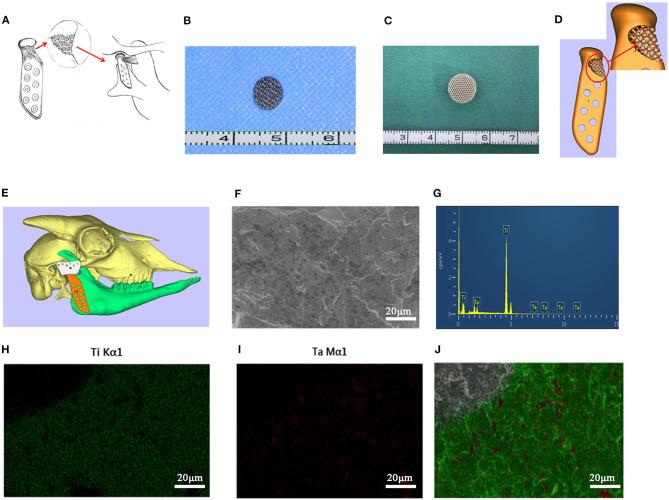
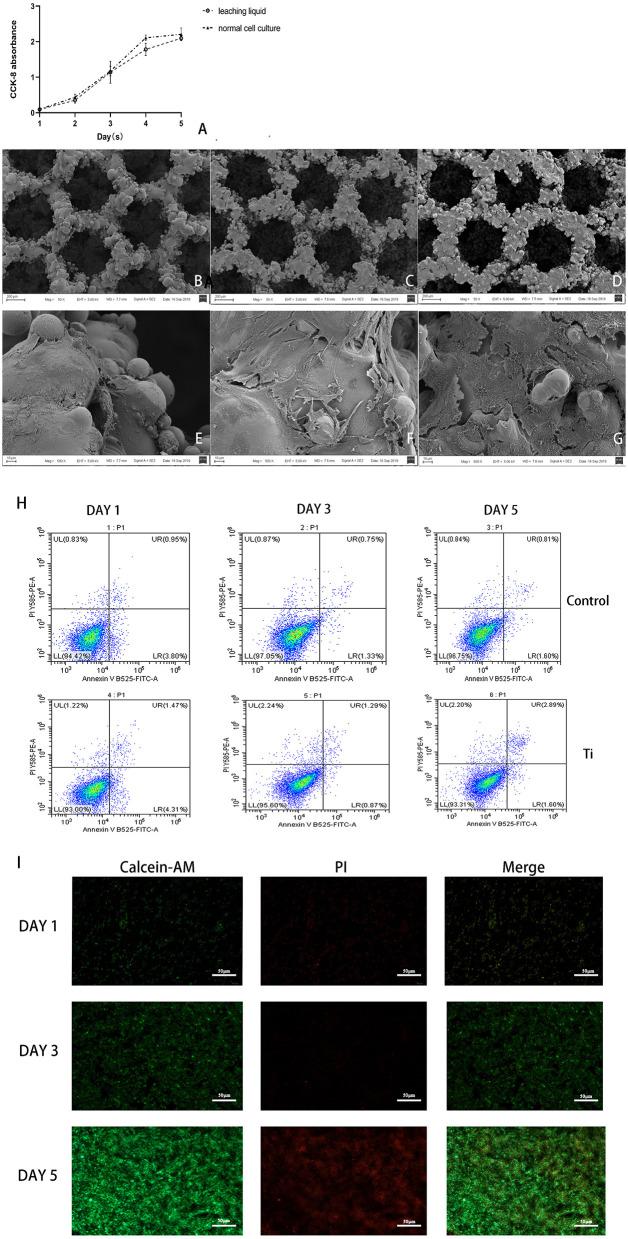
In temporomandibular joint (TMJ) replacement operation, due to the condylectomy, the lateral pterygoid muscle (LPM) lost attachment and had impact on the mandible kinematic function. This study aimed to design a novel TMJ replacement prosthesis for LPM attachment and to verify its feasibility by preliminary and experiments. An artificial TMJ prosthesis designed with a porous structure on the condylar neck region for LPM attachment was fabricated by a 3D printed titanium (Ti) alloy. A rat myoblast cell line (L6) was tested for adhesion and biocompatibility with porous titanium scaffolds by cell counting Kit-8 (CCK-8), scanning electron microscope (SEM), flow cytometry (FCM), real-time quantitative polymerase chain reaction (RT-qPCR), immunocytofluorescense, western blotting, etc. The porous titanium scaffolds were further embedded in the rat intervertebral muscle to analyze muscle growth and biomechanical strength . The novel artificial TMJ prosthesis was implanted to reconstruct the goat's condyle and LPM reattachment was analyzed by hard tissue section and avulsion force test. L6 muscle cells showed good proliferation potential on the porous Ti scaffold under SEM scanning and FCM test. In RT-qPCR, immunocytofluorescense and western blotting tests, the L6 cell lines had good myogenic capacity when cultured on the scaffold with high expression of factors such as Myod1 and myoglobin, etc. In the experiment, muscles penetrated into the porous scaffold in both rats and goats. In rat's intervertebral muscle implantation, the avulsion force was 0.716 N/mm in 4 weeks after operation and was significantly increased to 0.801 N/mm at 8 weeks ( < 0.05). In goat condylar reconstruction with the porous scaffold prosthesis, muscles attached to the prosthesis with the avulsion force of 0.436 N/mm at 8 weeks, but was smaller than the biological muscle-bone attachment force. The novel designed TMJ prosthesis can help LPM attach to its porous titanium scaffold structure area for future function.
在颞下颌关节(TMJ)置换手术中,由于髁突切除术,翼外肌(LPM)失去附着,对下颌运动功能产生影响。本研究旨在设计一种用于LPM附着的新型TMJ置换假体,并通过初步实验验证其可行性。通过3D打印钛(Ti)合金制造了一种在髁突颈部区域设计有用于LPM附着的多孔结构的人工TMJ假体。通过细胞计数试剂盒-8(CCK-8)、扫描电子显微镜(SEM)、流式细胞术(FCM)、实时定量聚合酶链反应(RT-qPCR)、免疫细胞荧光、蛋白质印迹等方法,检测大鼠成肌细胞系(L6)与多孔钛支架的粘附性和生物相容性。将多孔钛支架进一步植入大鼠椎间肌,分析肌肉生长和生物力学强度。植入新型人工TMJ假体以重建山羊髁突,并通过硬组织切片和撕脱力测试分析LPM重新附着情况。在SEM扫描和FCM测试下,L6肌肉细胞在多孔钛支架上显示出良好的增殖潜力。在RT-qPCR、免疫细胞荧光和蛋白质印迹测试中,当L6细胞系在支架上培养时,Myod1和肌红蛋白等因子高表达,具有良好的成肌能力。在实验中,大鼠和山羊的肌肉均长入多孔支架。在大鼠椎间肌植入实验中,术后4周撕脱力为0.716 N/mm,8周时显著增加至0.801 N/mm(P<0.05)。在使用多孔支架假体进行山羊髁突重建时,8周时肌肉附着于假体,撕脱力为0.436 N/mm,但小于生物性肌肉-骨附着力。新设计的TMJ假体可帮助LPM附着于其多孔钛支架结构区域,以恢复未来功能。




 Zotero 插件