Mitsogiannis Manuela D, Pancho Anna, Aerts Tania, Sachse Sonja M, Vanlaer Ria, Noterdaeme Lut, Schmucker Dietmar, Seuntjens Eve
Developmental Neurobiology Group, Animal Physiology and Neurobiology Division, Department of Biology, Katholieke Universiteit Leuven, Leuven, Belgium.
Neuronal Wiring Laboratory, Department of Neurosciences, VIB-KU Leuven Center for Brain & Disease Research, Katholieke Universiteit Leuven, Leuven, Belgium.
Front Cell Dev Biol. 2021 Jan 28;8:624181. doi: 10.3389/fcell.2020.624181. eCollection 2020.
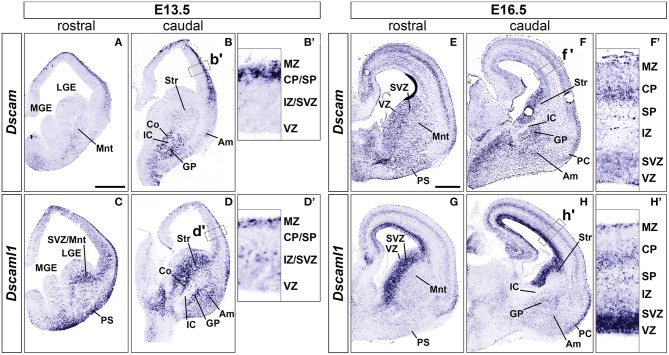
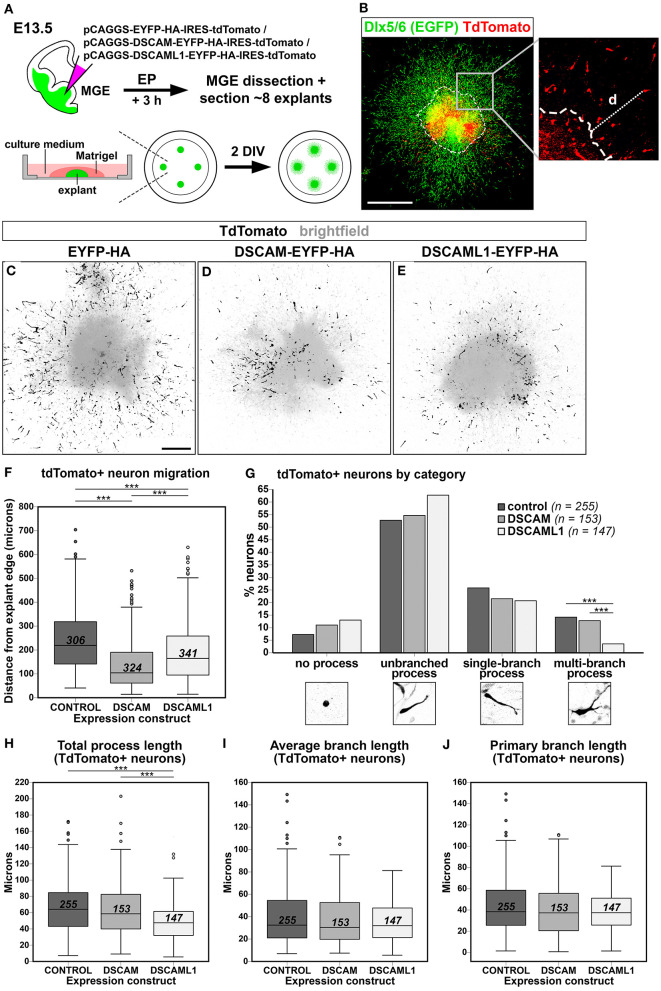
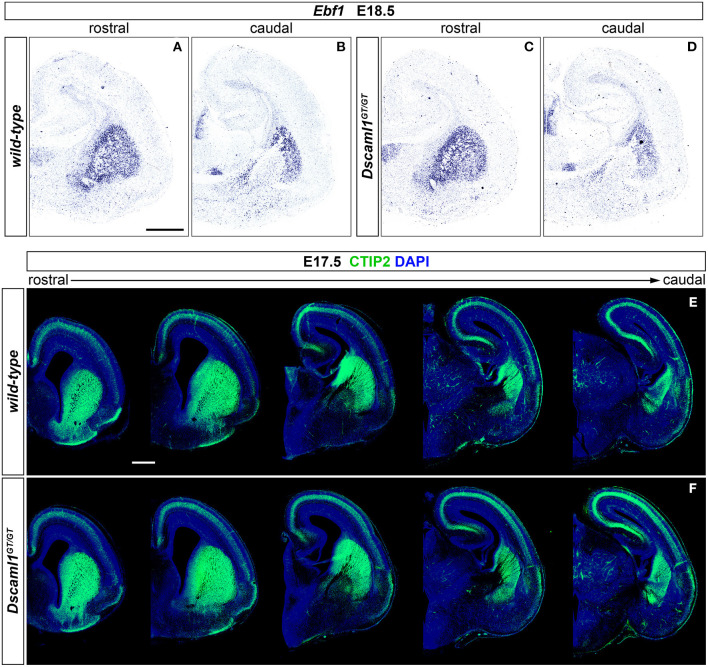
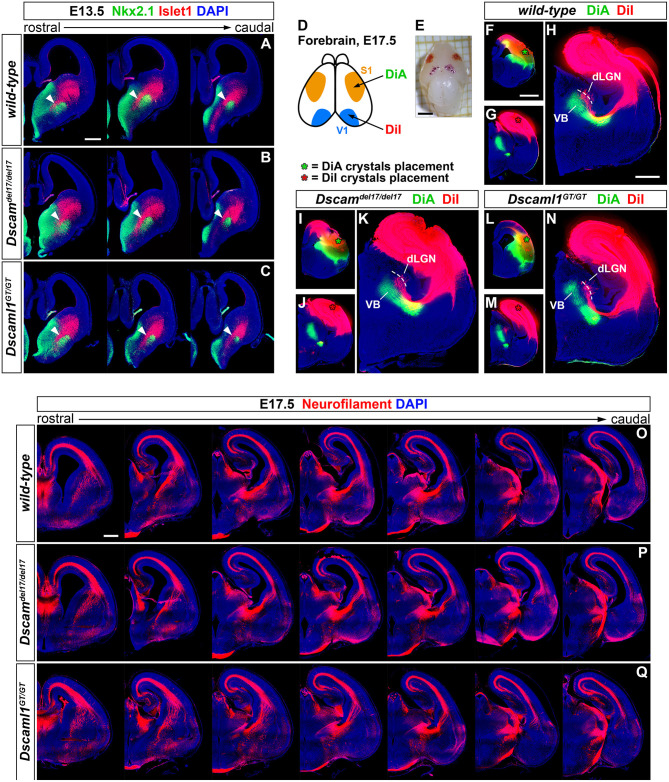
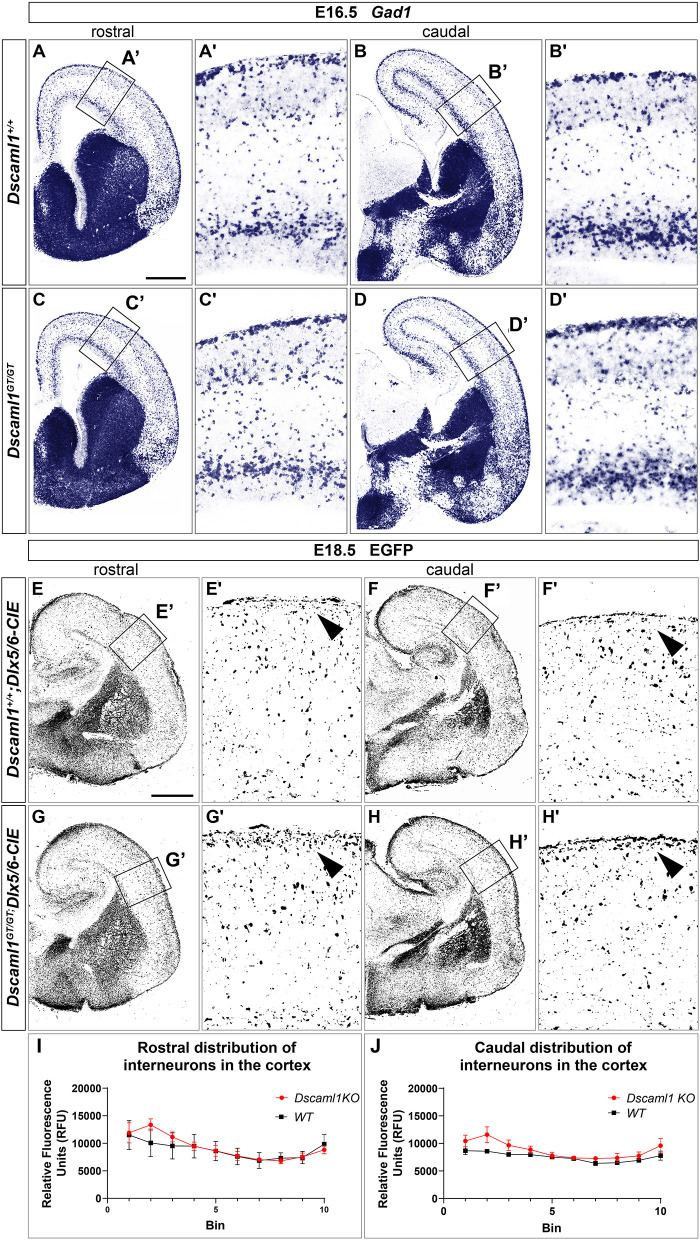
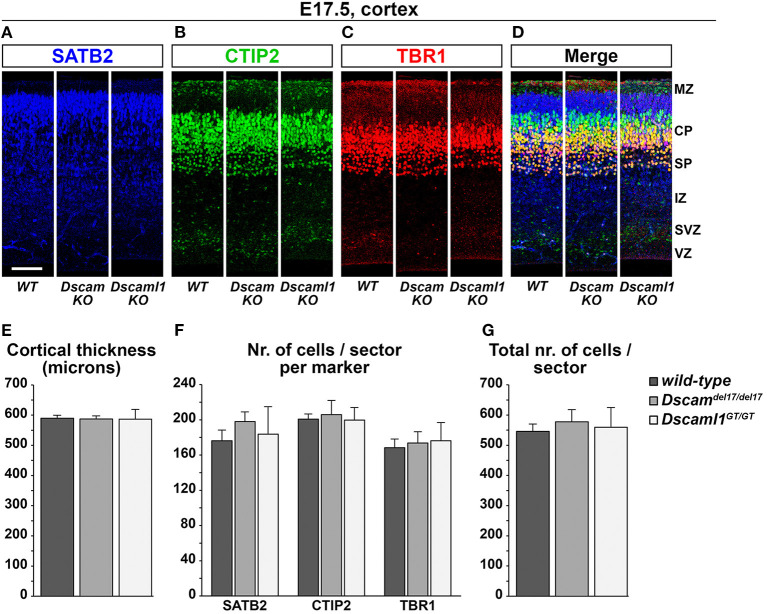
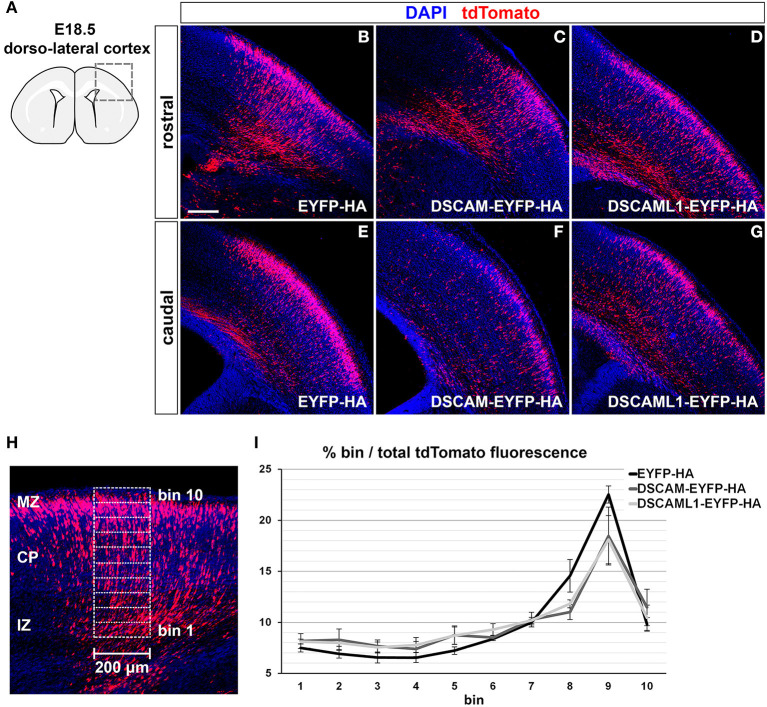
Down Syndrome (DS) Cell Adhesion Molecules (DSCAMs) are transmembrane proteins of the immunoglobulin superfamily. Human DSCAM is located within the DS critical region of chromosome 21 (duplicated in Down Syndrome patients), and mutations or copy-number variations of this gene have also been associated to Fragile X syndrome, intellectual disability, autism, and bipolar disorder. The DSCAM paralogue DSCAM-like 1 (DSCAML1) maps to chromosome 11q23, implicated in the development of Jacobsen and Tourette syndromes. Additionally, a spontaneous mouse DSCAM deletion leads to motor coordination defects and seizures. Previous research has revealed roles for DSCAMs in several neurodevelopmental processes, including synaptogenesis, dendritic self-avoidance, cell sorting, axon growth and branching. However, their functions in embryonic mammalian forebrain development have yet to be completely elucidated. In this study, we revealed highly dynamic spatiotemporal patterns of and expression in definite cortical layers of the embryonic mouse brain, as well as in structures and ganglionic eminence-derived neural populations within the embryonic subpallium. However, an in-depth histological analysis of cortical development, ventral forebrain morphogenesis, cortical interneuron migration, and cortical-subcortical connectivity formation processes in Dscam and Dscaml1 knockout mice ( and ) at several embryonic stages indicated that constitutive loss of and does not affect these developmental events in a significant manner. Given that several - and -linked neurodevelopmental disorders are associated to chromosomal region duplication events, we furthermore sought to examine the neurodevelopmental effects of and gain of function (GOF). , and GOF negatively impacted neural migration processes important to cortical development, and affected the morphology of maturing neurons. Overall, these findings contribute to existing knowledge on the molecular etiology of human neurodevelopmental disorders by elucidating how dosage variations of genes encoding adhesive cues can disrupt cell-cell or cell-environment interactions crucial for neuronal migration.
唐氏综合征(DS)细胞黏附分子(DSCAMs)是免疫球蛋白超家族的跨膜蛋白。人类DSCAM定位于21号染色体的唐氏综合征关键区域(唐氏综合征患者该区域会重复),该基因的突变或拷贝数变异还与脆性X综合征、智力障碍、自闭症和双相情感障碍有关。DSCAM旁系同源基因DSCAM样1(DSCAML1)定位于11号染色体q23区域,与雅各布森综合征和图雷特综合征的发生有关。此外,小鼠自发的DSCAM缺失会导致运动协调缺陷和癫痫发作。先前的研究揭示了DSCAMs在多个神经发育过程中的作用,包括突触形成、树突自我回避、细胞分选、轴突生长和分支。然而,它们在胚胎期哺乳动物前脑发育中的功能尚未完全阐明。在本研究中,我们揭示了 和 在胚胎小鼠大脑特定皮质层以及胚胎下丘脑内的结构和神经节隆起衍生的神经群体中的高度动态时空表达模式。然而,对几个胚胎阶段的Dscam和Dscaml1基因敲除小鼠( 和 )的皮质发育、腹侧前脑形态发生、皮质中间神经元迁移以及皮质 - 皮质下连接形成过程进行的深入组织学分析表明, 和 的组成性缺失并未对这些发育事件产生显著影响。鉴于几种与 和 相关的神经发育障碍与染色体区域重复事件有关,我们进一步试图研究 和 功能获得(GOF)的神经发育效应。 、 和 的功能获得对皮质发育重要的神经迁移过程产生负面影响,并影响成熟神经元的形态。总体而言,这些发现通过阐明编码黏附信号的基因剂量变化如何破坏对神经元迁移至关重要的细胞 - 细胞或细胞 - 环境相互作用,为人类神经发育障碍的分子病因学现有知识做出了贡献。