From the Department of Pharmacology and Toxicology School of Medicine University of Mississippi Medical Center Jackson MS.
J Am Heart Assoc. 2021 Feb;10(5):e018913. doi: 10.1161/JAHA.120.018913. Epub 2021 Feb 15.
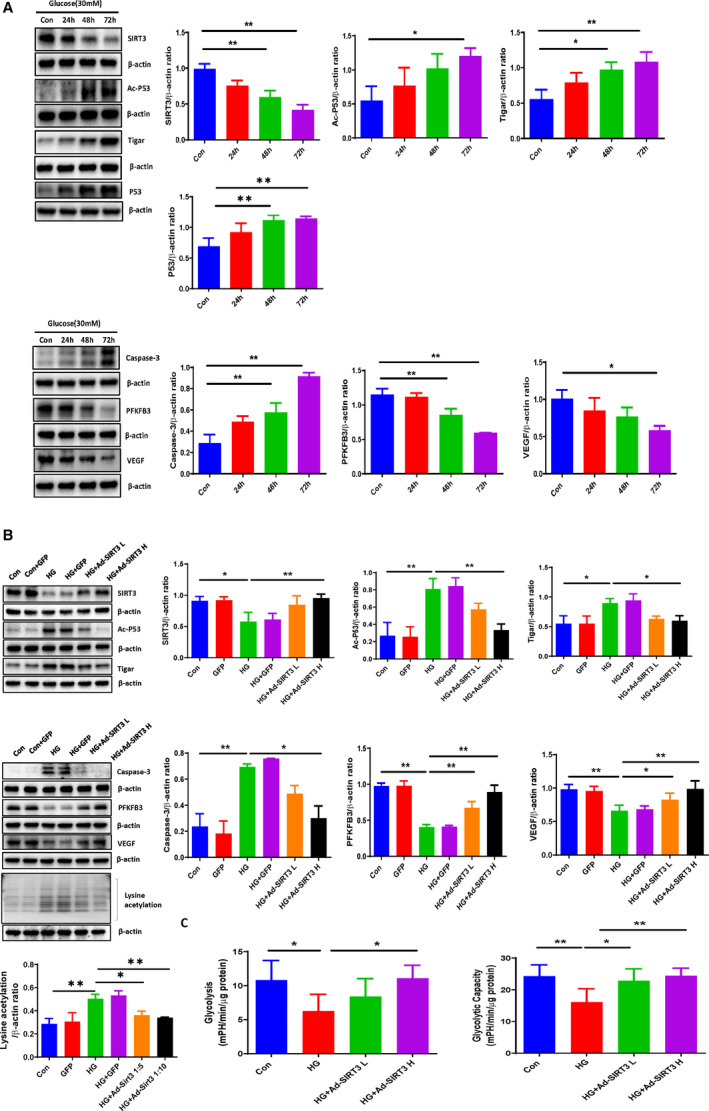
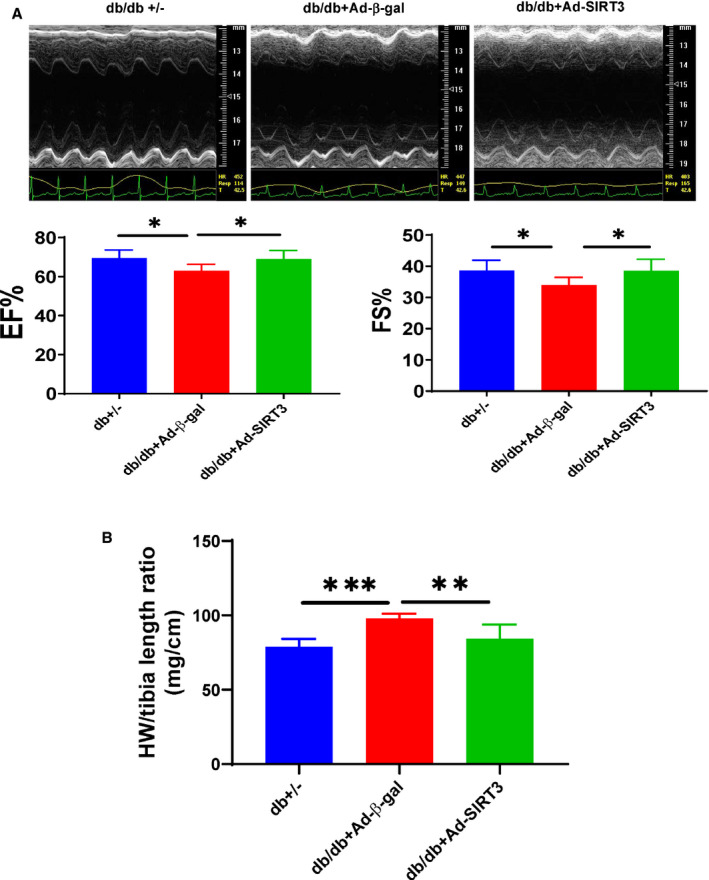
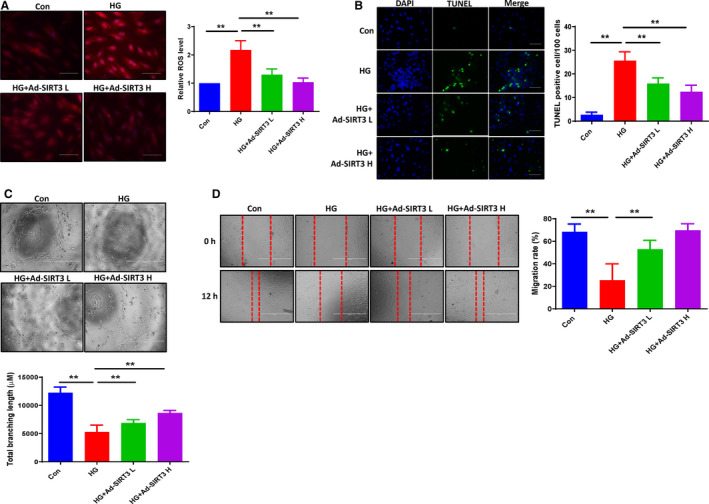
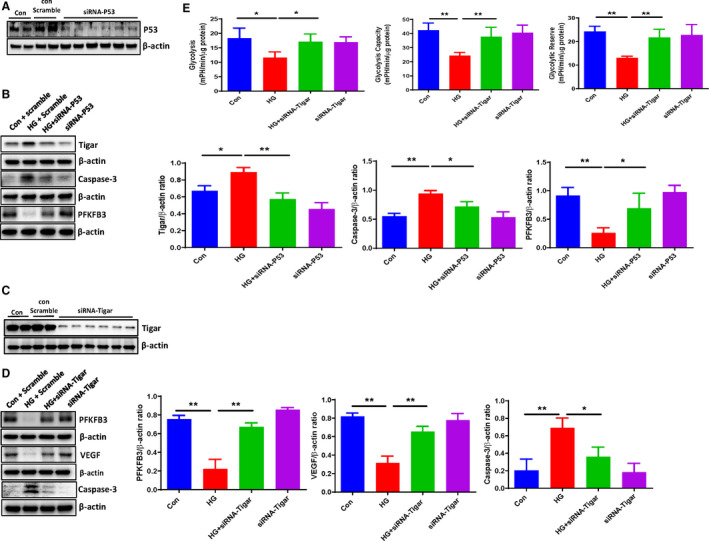
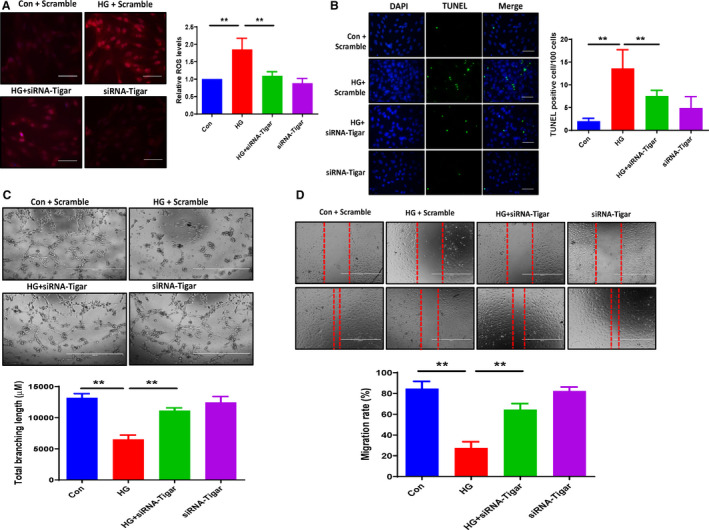
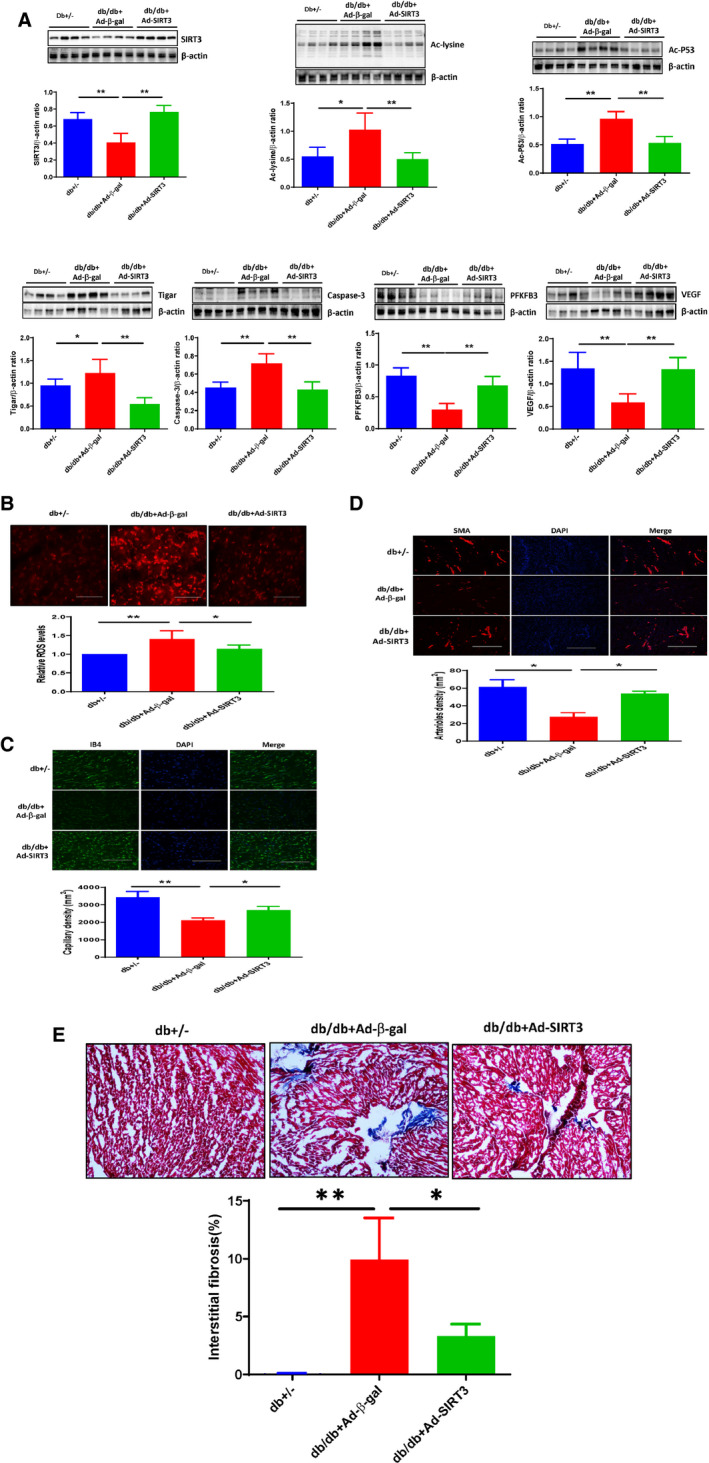
Background Impairment of glycolytic metabolism is suggested to contribute to diabetic cardiomyopathy. In this study, we explored the roles of SIRT3 (Sirtuin 3) on cardiomyocyte glucose metabolism and cardiac function. Methods and Results Exposure of H9c2 cardiomyocyte cell lines to high glucose (HG) (30 mmol/L) resulted in a gradual decrease in SIRT3 and 6-phosphofructo-2-kinase/fructose-2,6-bisphosphatase isoform 3 (PFKFB3) expression together with increases in p53 acetylation and TP53-induced glycolysis and apoptosis regulator (TIGAR) expression. Glycolysis was significantly reduced in the cardiomyocyte exposed to HG. Transfection with adenovirus-SIRT3 significantly increased PFKFB3 expression and reduced HG-induced p53 acetylation and TIGAR expression. Overexpression of SIRT3 rescued impaired glycolysis and attenuated HG-induced reactive oxygen species formation and apoptosis. Knockdown of TIGAR in cardiomyocytes by using siRNA significantly increased PFKFB3 expression and glycolysis under hyperglycemic conditions. This was accompanied by a significant suppression of HG-induced reactive oxygen species formation and apoptosis. In vivo, overexpression of SIRT3 by an intravenous jugular vein injection of adenovirus-SIRT3 resulted in a significant reduction of p53 acetylation and TIGAR expression together with upregulation of PFKFB3 expression in the heart of diabetic db/db mice at day 14. Overexpression of SIRT3 further reduced reactive oxygen species formation and blunted microvascular rarefaction in the diabetic db/db mouse hearts. Overexpression of SIRT3 significantly blunted cardiac fibrosis and hypertrophy and improved cardiac function at day 14. Conclusions Our study demonstrated that SIRT3 attenuated diabetic cardiomyopathy via regulating p53 acetylation and TIGAR expression. Therefore, SIRT3 may be a novel target for abnormal energy metabolism in diabetes mellitus.
糖酵解代谢受损被认为与糖尿病心肌病有关。在这项研究中,我们探讨了 SIRT3(沉默信息调节因子 3)在心肌细胞葡萄糖代谢和心脏功能中的作用。
将 H9c2 心肌细胞系暴露于高葡萄糖(HG)(30mmol/L)中导致 SIRT3 和 6-磷酸果糖-2-激酶/果糖-2,6-二磷酸酶同工酶 3(PFKFB3)表达逐渐减少,同时 p53 乙酰化和 TP53 诱导的糖酵解和凋亡调节因子(TIGAR)表达增加。HG 处理的心肌细胞中的糖酵解明显减少。腺病毒-SIRT3 转染可显著增加 PFKFB3 表达,并降低 HG 诱导的 p53 乙酰化和 TIGAR 表达。SIRT3 的过表达可恢复受损的糖酵解,并减轻 HG 诱导的活性氧形成和凋亡。用 siRNA 在心肌细胞中敲低 TIGAR 可显著增加高糖条件下的 PFKFB3 表达和糖酵解。这伴随着 HG 诱导的活性氧形成和凋亡的显著抑制。在体内,通过颈静脉注射腺病毒-SIRT3 过表达 SIRT3 可显著降低 db/db 糖尿病小鼠心脏中 p53 乙酰化和 TIGAR 表达,同时上调 PFKFB3 表达。SIRT3 的过表达进一步减少了糖尿病 db/db 小鼠心脏中的活性氧形成,并减轻了微血管稀疏。SIRT3 的过表达可显著减轻心脏纤维化和肥大,并改善心脏功能。
我们的研究表明,SIRT3 通过调节 p53 乙酰化和 TIGAR 表达来减轻糖尿病心肌病。因此,SIRT3 可能是糖尿病中异常能量代谢的一个新靶点。