
维生素 A 转运和储存对肠道类视黄醇内稳态和功能的影响。
Impact of vitamin A transport and storage on intestinal retinoid homeostasis and functions.
机构信息
Department of Food Science, Rutgers University, New Brunswick, NJ, USA.
Department of Veterinary Pathobiology, University of Missouri Metagenomics Center, University of Missouri, Columbia, MO, USA.
出版信息
J Lipid Res. 2021;62:100046. doi: 10.1016/j.jlr.2021.100046. Epub 2021 Feb 13.
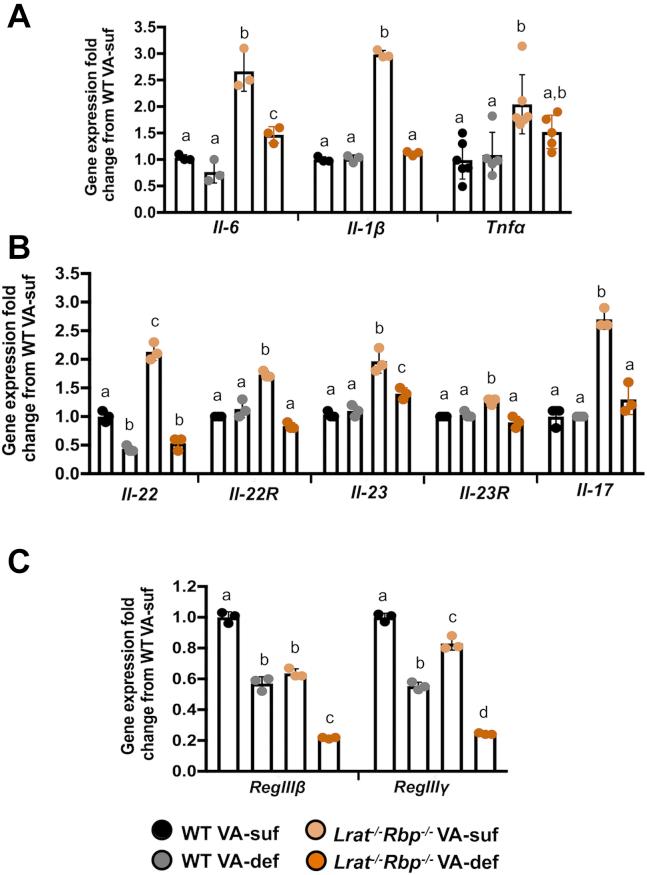
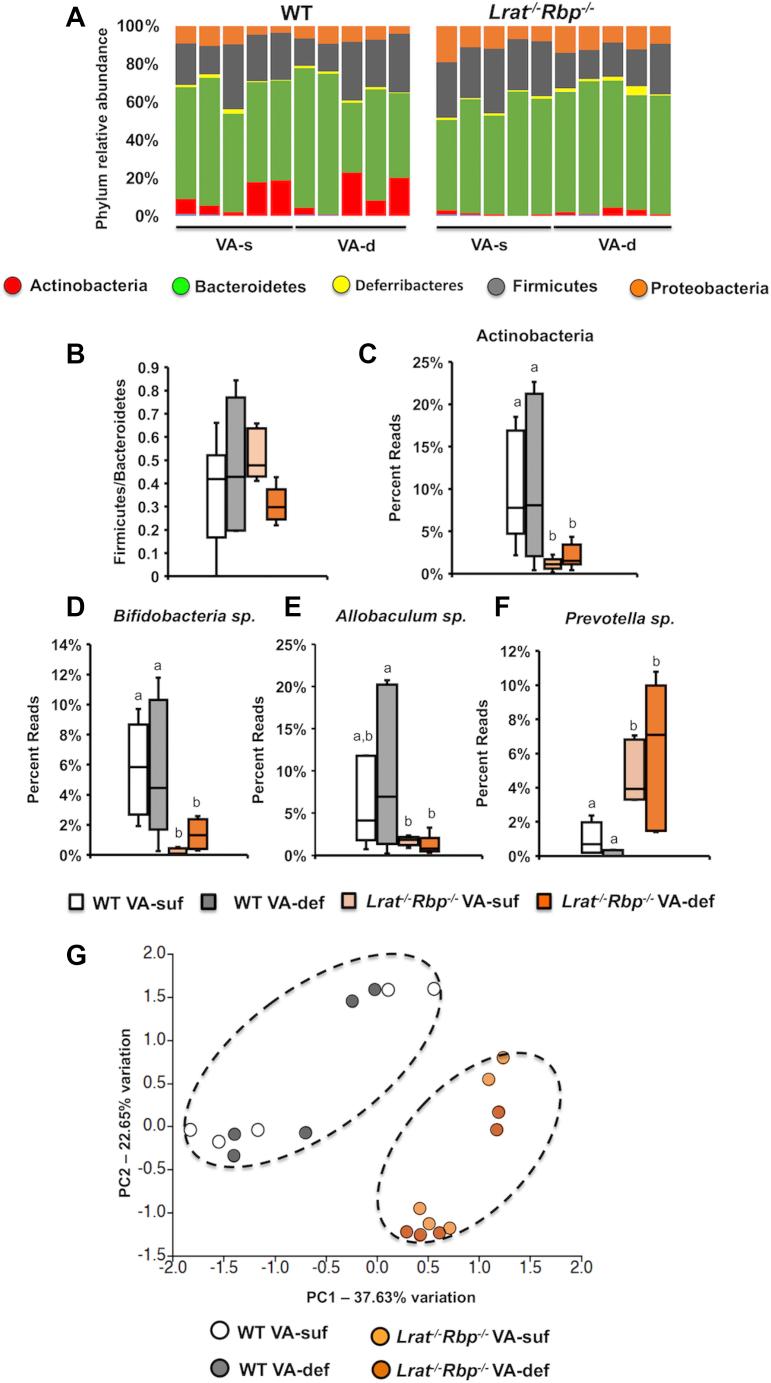
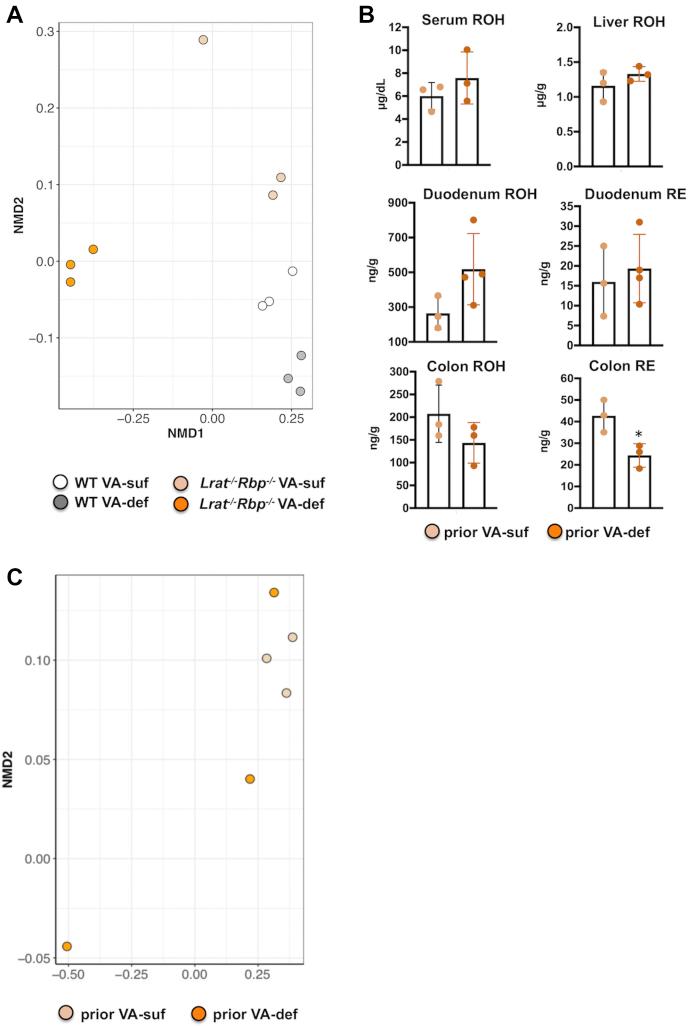
Lecithin:retinol acyltransferase and retinol-binding protein enable vitamin A (VA) storage and transport, respectively, maintaining tissue homeostasis of retinoids (VA derivatives). The precarious VA status of the lecithin:retinol acyltransferase-deficient (Lrat) retinol-binding protein-deficient (Rbp) mice rapidly deteriorates upon dietary VA restriction, leading to signs of severe vitamin A deficiency (VAD). As retinoids impact gut morphology and functions, VAD is often linked to intestinal pathological conditions and microbial dysbiosis. Thus, we investigated the contribution of VA storage and transport to intestinal retinoid homeostasis and functionalities. We showed the occurrence of intestinal VAD in LratRbp mice, demonstrating the critical role of both pathways in preserving gut retinoid homeostasis. Moreover, in the mutant colon, VAD resulted in a compromised intestinal barrier as manifested by reduced mucins and antimicrobial defense, leaky gut, increased inflammation and oxidative stress, and altered mucosal immunocytokine profiles. These perturbations were accompanied by fecal dysbiosis, revealing that the VA status (sufficient vs. deficient), rather than the amount of dietary VA per se, is likely a major initial discriminant of the intestinal microbiome. Our data also pointed to a specific fecal taxonomic profile and distinct microbial functionalities associated with VAD. Overall, our findings revealed the suitability of the LratRbp mice as a model to study intestinal dysfunctions and dysbiosis promoted by changes in tissue retinoid homeostasis induced by the host VA status and/or intake.
卵磷脂
视黄醇酰基转移酶和视黄醇结合蛋白分别能够实现维生素 A(VA)的储存和转运,从而维持类视黄醇(VA 衍生物)的组织内稳态。在缺乏卵磷脂:视黄醇酰基转移酶(Lrat)和视黄醇结合蛋白(Rbp)的情况下,饮食 VA 限制会迅速导致小鼠出现不稳定的 VA 状态,进而出现严重的维生素 A 缺乏症(VAD)的迹象。由于类视黄醇会影响肠道形态和功能,因此 VAD 通常与肠道病理状况和微生物失调有关。因此,我们研究了 VA 储存和转运对肠道类视黄醇内稳态和功能的影响。我们发现 LratRbp 小鼠出现了肠道 VAD,表明这两种途径在维持肠道类视黄醇内稳态方面都具有关键性作用。此外,在突变结肠中,VAD 导致肠道屏障受损,表现为粘蛋白和抗菌防御减少、肠漏、炎症和氧化应激增加,以及黏膜免疫细胞因子谱改变。这些变化伴随着粪便微生物失调,表明 VA 状态(充足与缺乏)而不是饮食中 VA 的绝对含量,可能是肠道微生物组的主要初始判别因素。我们的数据还表明,VAD 与特定粪便分类群的特征以及与微生物功能相关的特定粪便分类群有关。总的来说,我们的研究结果揭示了 LratRbp 小鼠适合作为研究由组织类视黄醇内稳态变化引起的宿主 VA 状态和/或摄入变化所导致的肠道功能障碍和失调的模型。




 Zotero 插件