Univ Rennes, CHU Rennes, Pôle Odontologie, 2 av. du Professeur Léon Bernard, Bât. 15, 35043, Rennes Cedex, France.
Univ Rennes, ISCR, CNRS-UMR 6226, CHU Rennes, Pôle Odontologie, 2 av. du Professeur Léon Bernard, Bât. 15, 35043, Rennes Cedex, France.
Trials. 2021 Feb 15;22(1):144. doi: 10.1186/s13063-021-05093-z.
Fixed orthodontic appliances hamper oral hygiene procedures. The consequences are gingivitis and white spot lesions. Fifty to 70% of patients treated with braces encounter these problems. Their care in the USA represents an annual cost of five hundred million dollars. Initial education and motivation for oral hygiene depend on two categories of factors: firstly, practical prophylactic measures (instruments and medication, professional care) and secondly, the educational component: choice of communication technique, frequency, and nature of hygiene instructions. This trial aims to study this last component. Its main objective is to compare three methods' effectiveness of oral hygiene education in adolescent patients treated with braces in terms of biofilm (plaque) control. The secondary objectives are the evaluation of these methods' effectiveness regarding gingival inflammation and the maintenance of hygiene during the first 6 months of treatment.
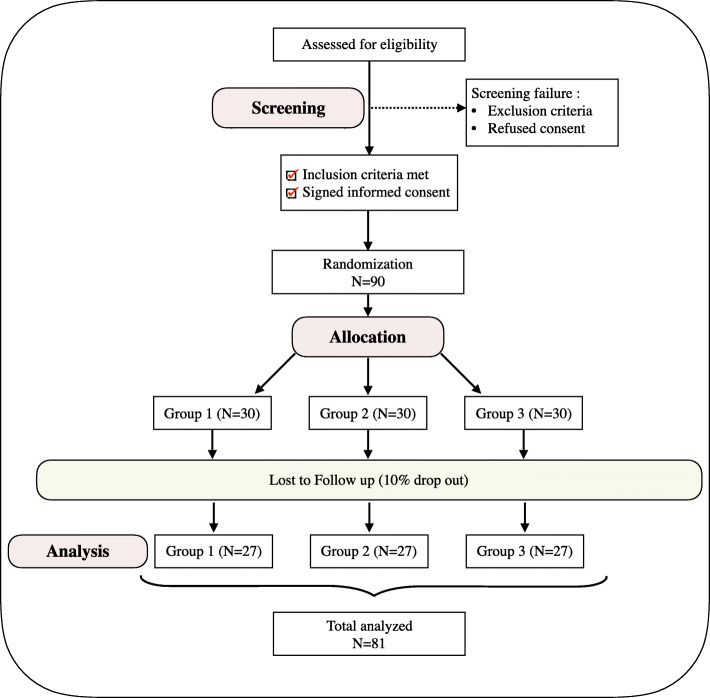
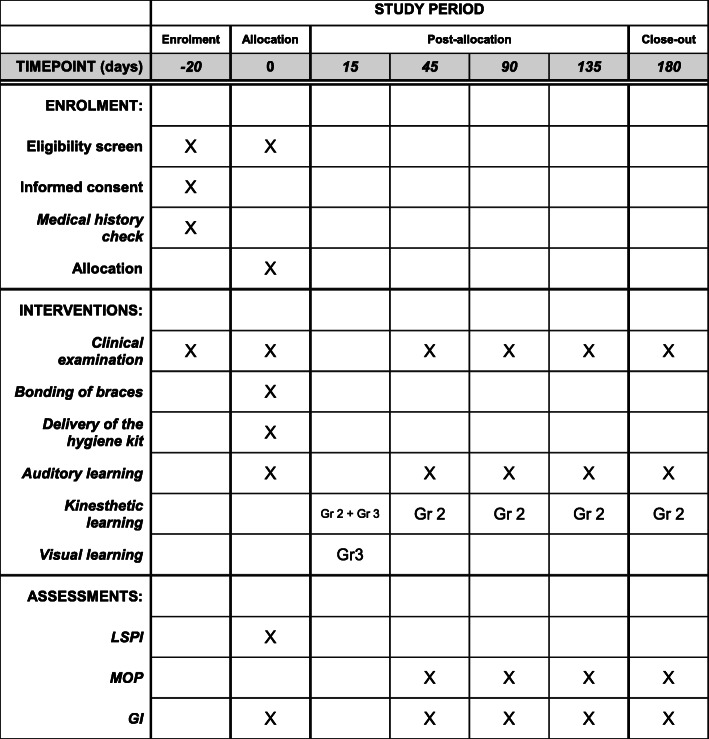
This study is a prospective randomized controlled trial of superiority. It evaluates the effectiveness of three hygiene education techniques. A total of 90 patients from the University Hospital Center of Rennes will be randomized into 3 parallel groups with a 1:1:1 ratio. Each will benefit from a different educational method: oral and/or practical. The main outcome will be the average plaque index for each group after 6 months of treatment. Additional outcomes will be the average gingival index for each group and the plaque and gingival indices over 6 months.
The effectiveness of preventive procedures for optimizing oral hygiene during orthodontics is based on ambiguous literature. As a result, it is difficult to draw conclusions and to translate them into everyday practice. Sixty-eight percent of the orthodontists support the development of guidelines for education. The aim of this study is to standardize methods of oral hygiene education during orthodontic fixed treatment. The purpose of this study would be to provide practitioners with a concrete education program through guidelines dedicated to the method having the best results.
ClinicalTrials.gov NCT04444154 . Registered on 22 June 2020. SI CNRIPH ID 8011N° 20.04.27.58337. Registered on 29 July 2020.
固定正畸矫治器妨碍口腔卫生程序。后果是牙龈炎和白斑病。接受牙套治疗的患者中有 50%至 70%会遇到这些问题。他们在美国的护理费用每年达 5 亿美元。口腔卫生的初始教育和激励取决于两类因素:首先,实用的预防措施(器械和药物、专业护理),其次,教育因素:沟通技巧的选择、卫生指导的频率和性质。本试验旨在研究最后一个因素。其主要目的是比较三种方法在控制牙菌斑(牙垢)方面对接受牙套治疗的青少年患者口腔卫生教育的效果。次要目标是评估这些方法在治疗开始后 6 个月内对牙龈炎症和保持口腔卫生的效果。
这是一项关于青少年患者接受牙套治疗的前瞻性随机对照优效性试验。评估了三种口腔卫生教育技术的有效性。雷恩大学医院中心的 90 名患者将被随机分为 3 组,每组 1:1:1 比例。每组将接受不同的教育方法:口头和/或实践。主要结果将是治疗 6 个月后每组的平均菌斑指数。次要结果将是每组的平均牙龈指数以及 6 个月内的菌斑和牙龈指数。
优化正畸期间口腔卫生的预防措施的有效性基于文献中的不确定因素。因此,很难得出结论并将其转化为日常实践。68%的正畸医生支持制定教育指南。本研究的目的是标准化正畸固定治疗期间口腔卫生教育的方法。本研究的目的是通过为最佳结果的方法提供具体的教育计划,为从业者提供指导。
ClinicalTrials.gov NCT04444154。于 2020 年 6 月 22 日注册。SI CNRIPH ID 8011N° 20.04.27.58337。于 2020 年 7 月 29 日注册。