• 文献检索
  • 文档翻译
  • 深度研究
  • 学术资讯
  • Suppr Zotero 插件Zotero 插件
  • 邀请有礼
  • 套餐&价格
  • 历史记录
应用&插件
Suppr Zotero 插件Zotero 插件浏览器插件Mac 客户端Windows 客户端微信小程序
定价
高级版会员购买积分包购买API积分包
服务
文献检索文档翻译深度研究API 文档MCP 服务
关于我们
关于 Suppr公司介绍联系我们用户协议隐私条款
关注我们

Suppr 超能文献

核心技术专利:CN118964589B侵权必究
粤ICP备2023148730 号-1Suppr @ 2026

文献检索

告别复杂PubMed语法,用中文像聊天一样搜索,搜遍4000万医学文献。AI智能推荐,让科研检索更轻松。

立即免费搜索

文件翻译

保留排版,准确专业,支持PDF/Word/PPT等文件格式,支持 12+语言互译。

免费翻译文档

深度研究

AI帮你快速写综述,25分钟生成高质量综述,智能提取关键信息,辅助科研写作。

立即免费体验

将全基因组 CRISPR 免疫筛选与多组学临床数据相结合,揭示了肿瘤内在免疫调节因子的不同类别。

Integrating genome-wide CRISPR immune screen with multi-omic clinical data reveals distinct classes of tumor intrinsic immune regulators.

机构信息

Department of Biology and Biochemistry, University of Houston, Houston, Texas, USA.

Department of Melanoma Medical Oncology, The University of Texas MD Anderson Cancer Center, Houston, Texas, USA.

出版信息

J Immunother Cancer. 2021 Feb;9(2). doi: 10.1136/jitc-2020-001819.

DOI:10.1136/jitc-2020-001819
PMID:33589527
原文链接:https://pmc.ncbi.nlm.nih.gov/articles/PMC7887353/
Abstract

BACKGROUND

Despite approval of immunotherapy for a wide range of cancers, the majority of patients fail to respond to immunotherapy or relapse following initial response. These failures may be attributed to immunosuppressive mechanisms co-opted by tumor cells. However, it is challenging to use conventional methods to systematically evaluate the potential of tumor intrinsic factors to act as immune regulators in patients with cancer.

METHODS

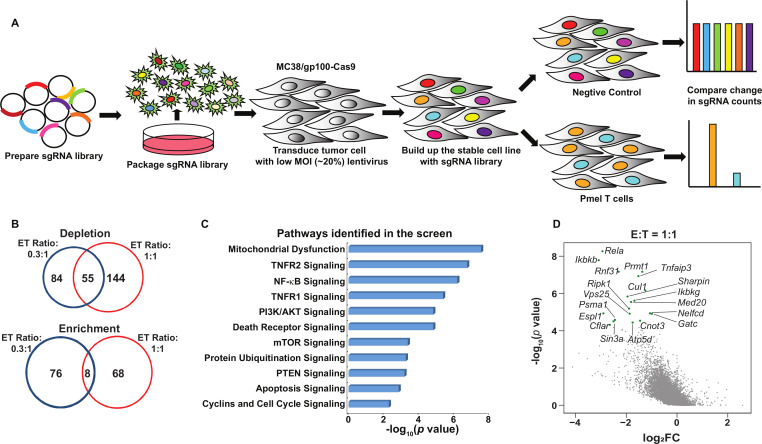
To identify immunosuppressive mechanisms in non-responders to cancer immunotherapy in an unbiased manner, we performed genome-wide CRISPR immune screens and integrated our results with multi-omics clinical data to evaluate the role of tumor intrinsic factors in regulating two rate-limiting steps of cancer immunotherapy, namely, T cell tumor infiltration and T cell-mediated tumor killing.

RESULTS

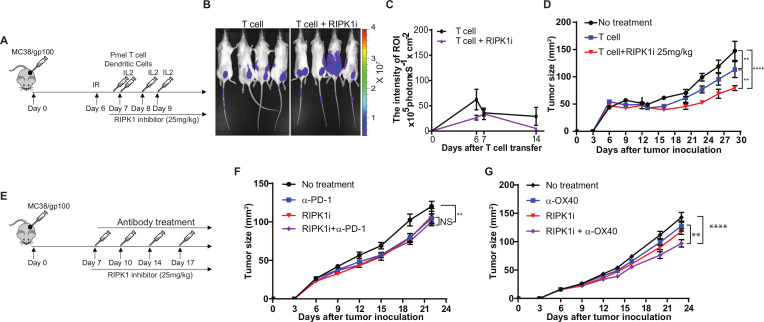
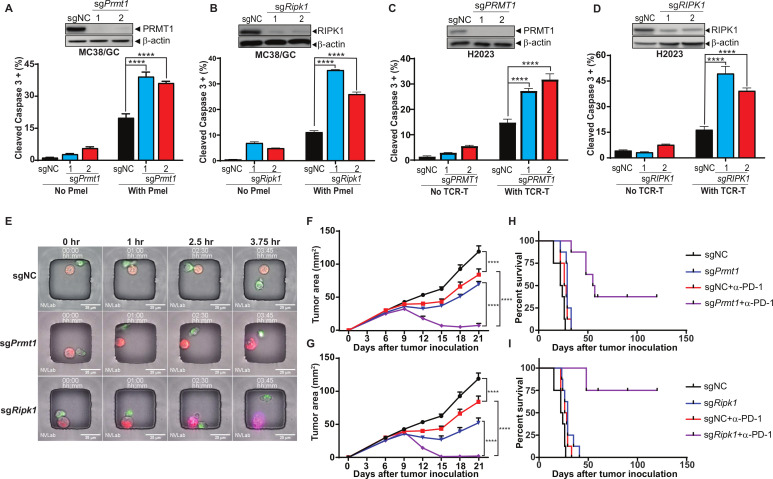
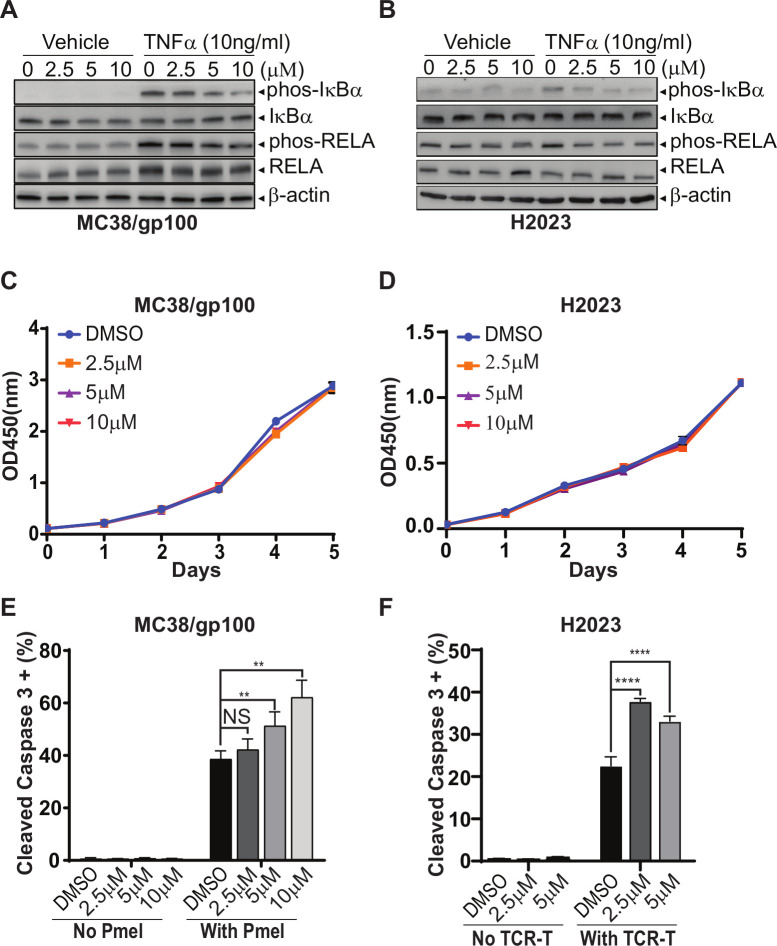
Our studies revealed two distinct types of immune resistance regulators and demonstrated their potential as therapeutic targets to improve the efficacy of immunotherapy. Among them, PRMT1 and RIPK1 were identified as a dual immune resistance regulator and a cytotoxicity resistance regulator, respectively. Although the magnitude varied between different types of immunotherapy, genetically targeting and sensitized tumors to T-cell killing and anti-PD-1/OX40 treatment. Interestingly, a RIPK1-specific inhibitor enhanced the antitumor activity of T cell-based and anti-OX40 therapy, despite limited impact on T cell tumor infiltration.

CONCLUSIONS

Collectively, the data provide a rich resource of novel targets for rational immuno-oncology combinations.

摘要

背景

尽管免疫疗法已被广泛应用于多种癌症的治疗,但大多数患者对免疫疗法无反应或在初始反应后复发。这些失败可能归因于肿瘤细胞采用的免疫抑制机制。然而,使用常规方法系统评估肿瘤内在因素作为癌症患者免疫调节剂的潜力具有挑战性。

方法

为了以无偏倚的方式确定癌症免疫治疗无应答者的免疫抑制机制,我们进行了全基因组 CRISPR 免疫筛选,并将我们的结果与多组学临床数据相结合,以评估肿瘤内在因素在调节癌症免疫治疗的两个限速步骤中的作用,即 T 细胞肿瘤浸润和 T 细胞介导的肿瘤杀伤。

结果

我们的研究揭示了两种不同类型的免疫抵抗调节剂,并证明它们具有作为治疗靶点的潜力,可以提高免疫疗法的疗效。其中,PRMT1 和 RIPK1 分别被鉴定为双重免疫抵抗调节剂和细胞毒性抵抗调节剂。尽管不同类型免疫疗法的幅度不同,但基因靶向和敏化肿瘤对 T 细胞杀伤和抗 PD-1/OX40 治疗的敏感性。有趣的是,尽管对 T 细胞肿瘤浸润的影响有限,但 RIPK1 特异性抑制剂增强了基于 T 细胞的和抗 OX40 治疗的抗肿瘤活性。

结论

总的来说,这些数据为合理的免疫肿瘤学联合治疗提供了丰富的新型靶点资源。
https://cdn.ncbi.nlm.nih.gov/pmc/blobs/cb59/7887353/c4a4d600e791/jitc-2020-001819f05.jpg
https://cdn.ncbi.nlm.nih.gov/pmc/blobs/cb59/7887353/f5b4a48a88f5/jitc-2020-001819f01.jpg
https://cdn.ncbi.nlm.nih.gov/pmc/blobs/cb59/7887353/31322c703e98/jitc-2020-001819f02.jpg
https://cdn.ncbi.nlm.nih.gov/pmc/blobs/cb59/7887353/0b8a4f6e9176/jitc-2020-001819f03.jpg
https://cdn.ncbi.nlm.nih.gov/pmc/blobs/cb59/7887353/1fbb626c7421/jitc-2020-001819f04.jpg
https://cdn.ncbi.nlm.nih.gov/pmc/blobs/cb59/7887353/c4a4d600e791/jitc-2020-001819f05.jpg
https://cdn.ncbi.nlm.nih.gov/pmc/blobs/cb59/7887353/f5b4a48a88f5/jitc-2020-001819f01.jpg
https://cdn.ncbi.nlm.nih.gov/pmc/blobs/cb59/7887353/31322c703e98/jitc-2020-001819f02.jpg
https://cdn.ncbi.nlm.nih.gov/pmc/blobs/cb59/7887353/0b8a4f6e9176/jitc-2020-001819f03.jpg
https://cdn.ncbi.nlm.nih.gov/pmc/blobs/cb59/7887353/1fbb626c7421/jitc-2020-001819f04.jpg
https://cdn.ncbi.nlm.nih.gov/pmc/blobs/cb59/7887353/c4a4d600e791/jitc-2020-001819f05.jpg

相似文献

1
Integrating genome-wide CRISPR immune screen with multi-omic clinical data reveals distinct classes of tumor intrinsic immune regulators.将全基因组 CRISPR 免疫筛选与多组学临床数据相结合,揭示了肿瘤内在免疫调节因子的不同类别。
J Immunother Cancer. 2021 Feb;9(2). doi: 10.1136/jitc-2020-001819.
2
A Systematic Review of the Tumor-Infiltrating CD8 T-Cells/PD-L1 Axis in High-Grade Glial Tumors: Toward Personalized Immuno-Oncology.高等级神经胶质瘤中肿瘤浸润 CD8 T 细胞/PD-L1 轴的系统评价:迈向个体化免疫肿瘤学。
Front Immunol. 2021 Sep 17;12:734956. doi: 10.3389/fimmu.2021.734956. eCollection 2021.
3
Natural Killer Cells Suppress T Cell-Associated Tumor Immune Evasion.自然杀伤细胞抑制 T 细胞相关的肿瘤免疫逃逸。
Cell Rep. 2019 Sep 10;28(11):2784-2794.e5. doi: 10.1016/j.celrep.2019.08.017.
4
Tumors attenuating the mitochondrial activity in T cells escape from PD-1 blockade therapy.肿瘤细胞降低 T 细胞中的线粒体活性,从而逃避 PD-1 阻断疗法。
Elife. 2020 Mar 3;9:e52330. doi: 10.7554/eLife.52330.
5
Molecular correlates and therapeutic targets in T cell-inflamed versus non-T cell-inflamed tumors across cancer types.不同癌症类型中 T 细胞炎症型与非 T 细胞炎症型肿瘤的分子相关性和治疗靶点。
Genome Med. 2020 Oct 27;12(1):90. doi: 10.1186/s13073-020-00787-6.
6
Cancer immunotherapy resistance based on immune checkpoints inhibitors: Targets, biomarkers, and remedies.基于免疫检查点抑制剂的癌症免疫治疗耐药性:靶点、生物标志物和治疗方法。
Drug Resist Updat. 2020 Dec;53:100718. doi: 10.1016/j.drup.2020.100718. Epub 2020 Jul 15.
7
Epigenetic and Transcriptional Control of the Epidermal Growth Factor Receptor Regulates the Tumor Immune Microenvironment in Pancreatic Cancer.表观遗传和转录控制的表皮生长因子受体调节胰腺癌的肿瘤免疫微环境。
Cancer Discov. 2021 Mar;11(3):736-753. doi: 10.1158/2159-8290.CD-20-0519. Epub 2020 Nov 6.
8
Chimeric antigen receptor engineered NK cellular immunotherapy overcomes the selection of T-cell escape variant cancer cells.嵌合抗原受体工程化 NK 细胞免疫疗法克服了 T 细胞逃逸变异癌细胞的选择。
J Immunother Cancer. 2021 Mar;9(3). doi: 10.1136/jitc-2020-002128.
9
Tackling Resistance to Cancer Immunotherapy: What Do We Know?攻克癌症免疫疗法耐药性:我们了解多少?
Molecules. 2020 Sep 8;25(18):4096. doi: 10.3390/molecules25184096.
10
Multi-Omics Perspective Reveals the Different Patterns of Tumor Immune Microenvironment Based on Programmed Death Ligand 1 (PD-L1) Expression and Predictor of Responses to Immune Checkpoint Blockade across Pan-Cancer.多组学视角揭示基于程序性死亡配体 1(PD-L1)表达的肿瘤免疫微环境的不同模式和免疫检查点阻断反应的预测因子在泛癌中的差异。
Int J Mol Sci. 2021 May 13;22(10):5158. doi: 10.3390/ijms22105158.

引用本文的文献

1
Targeted protein degradation with small molecules for cancer immunotherapy.用于癌症免疫治疗的小分子靶向蛋白质降解
Asian J Pharm Sci. 2025 Aug;20(4):101058. doi: 10.1016/j.ajps.2025.101058. Epub 2025 Apr 22.
2
PPP2R1A mutations portend improved survival after cancer immunotherapy.PPP2R1A突变预示着癌症免疫治疗后生存率提高。
Nature. 2025 Jul 2. doi: 10.1038/s41586-025-09203-8.
3
Exploitable mechanisms of antibody and CAR mediated macrophage cytotoxicity.抗体和嵌合抗原受体(CAR)介导的巨噬细胞细胞毒性的可利用机制。

本文引用的文献

1
PRMT5 control of cGAS/STING and NLRC5 pathways defines melanoma response to antitumor immunity.PRMT5对cGAS/STING和NLRC5通路的调控决定了黑色素瘤对抗肿瘤免疫的反应。
Sci Transl Med. 2020 Jul 8;12(551). doi: 10.1126/scitranslmed.aaz5683.
2
Genome-wide CRISPR/Cas9 library screening identified PHGDH as a critical driver for Sorafenib resistance in HCC.全基因组 CRISPR/Cas9 文库筛选鉴定 PHGDH 是 HCC 索拉非尼耐药的关键驱动因素。
Nat Commun. 2019 Oct 15;10(1):4681. doi: 10.1038/s41467-019-12606-7.
3
Nivolumab plus Ipilimumab in Advanced Non-Small-Cell Lung Cancer.
Nat Commun. 2025 Jul 1;16(1):5616. doi: 10.1038/s41467-025-60745-x.
4
Arginine methylation patterns in LUAD: defining prognostic subtypes and relevance to immunotherapy.肺腺癌中的精氨酸甲基化模式:定义预后亚型及其与免疫治疗的相关性
Discov Oncol. 2025 May 21;16(1):853. doi: 10.1007/s12672-025-02549-5.
5
Development of a RIPK1 degrader to enhance antitumor immunity.开发一种RIPK1降解剂以增强抗肿瘤免疫力。
Nat Commun. 2024 Dec 16;15(1):10683. doi: 10.1038/s41467-024-55006-2.
6
Identification of TUBB3 as an immunotherapy target in lung cancer by genome wide in vivo CRISPR screening.通过全基因组体内CRISPR筛选鉴定TUBB3作为肺癌免疫治疗靶点
Neoplasia. 2025 Feb;60:101100. doi: 10.1016/j.neo.2024.101100. Epub 2024 Dec 12.
7
High-throughput screening for optimizing adoptive T cell therapies.用于优化过继性T细胞疗法的高通量筛选
Exp Hematol Oncol. 2024 Nov 13;13(1):113. doi: 10.1186/s40164-024-00580-w.
8
Tumor-intrinsic kinase: A promising target for overcoming resistance to immune checkpoint blockade therapies.肿瘤内在激酶:克服免疫检查点阻断疗法耐药性的一个有前景的靶点。
Mol Ther. 2024 Oct 2;32(10):3209-3210. doi: 10.1016/j.ymthe.2024.09.013. Epub 2024 Sep 20.
9
Tumor-intrinsic CDC42BPB confers resistance to anti-PD-1 immune checkpoint blockade in breast cancer.肿瘤内在的 CDC42BPB 赋予乳腺癌对抗 PD-1 免疫检查点阻断的耐药性。
Mol Ther. 2024 Oct 2;32(10):3669-3682. doi: 10.1016/j.ymthe.2024.07.021. Epub 2024 Jul 31.
10
Development of a First-in-Class RIPK1 Degrader to Enhance Antitumor Immunity.开发首款RIPK1降解剂以增强抗肿瘤免疫力。
Res Sq. 2024 Apr 8:rs.3.rs-4156736. doi: 10.21203/rs.3.rs-4156736/v1.
纳武利尤单抗联合伊匹单抗治疗晚期非小细胞肺癌。
N Engl J Med. 2019 Nov 21;381(21):2020-2031. doi: 10.1056/NEJMoa1910231. Epub 2019 Sep 28.
4
Natural Killer Cells Suppress T Cell-Associated Tumor Immune Evasion.自然杀伤细胞抑制 T 细胞相关的肿瘤免疫逃逸。
Cell Rep. 2019 Sep 10;28(11):2784-2794.e5. doi: 10.1016/j.celrep.2019.08.017.
5
Determining cell type abundance and expression from bulk tissues with digital cytometry.利用数字细胞术从组织样本中测定细胞类型丰度和表达。
Nat Biotechnol. 2019 Jul;37(7):773-782. doi: 10.1038/s41587-019-0114-2. Epub 2019 May 6.
6
Targeting RIPK1 for the treatment of human diseases.靶向 RIPK1 治疗人类疾病。
Proc Natl Acad Sci U S A. 2019 May 14;116(20):9714-9722. doi: 10.1073/pnas.1901179116. Epub 2019 May 2.
7
Tumor cell oxidative metabolism as a barrier to PD-1 blockade immunotherapy in melanoma.肿瘤细胞氧化代谢作为黑色素瘤 PD-1 阻断免疫治疗的障碍。
JCI Insight. 2019 Mar 7;4(5). doi: 10.1172/jci.insight.124989.
8
Increased Tumor Glycolysis Characterizes Immune Resistance to Adoptive T Cell Therapy.肿瘤糖酵解增加是对过继性 T 细胞治疗产生免疫抵抗的特征。
Cell Metab. 2018 May 1;27(5):977-987.e4. doi: 10.1016/j.cmet.2018.02.024. Epub 2018 Apr 5.
9
The Immune Landscape of Cancer.癌症的免疫全景。
Immunity. 2018 Apr 17;48(4):812-830.e14. doi: 10.1016/j.immuni.2018.03.023. Epub 2018 Apr 5.
10
Oncogenic Signaling Pathways in The Cancer Genome Atlas.癌症基因组图谱中的致癌信号通路。
Cell. 2018 Apr 5;173(2):321-337.e10. doi: 10.1016/j.cell.2018.03.035.