Biomedical Sciences Research Complex, School of Biology, University of St Andrews, St Andrews KY16 9ST, UK.
Nucleic Acids Res. 2021 Mar 18;49(5):2777-2789. doi: 10.1093/nar/gkab073.
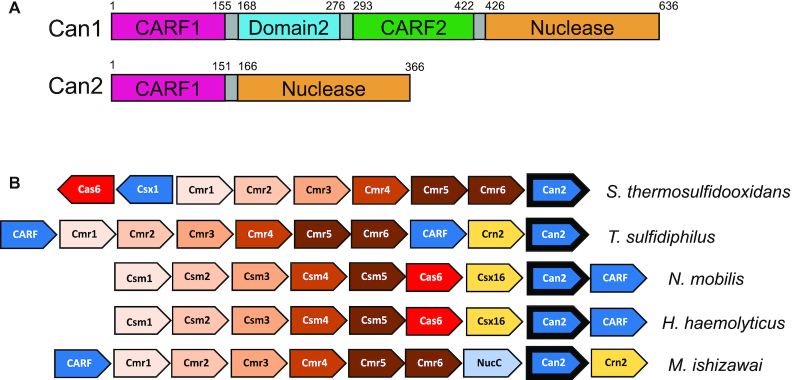
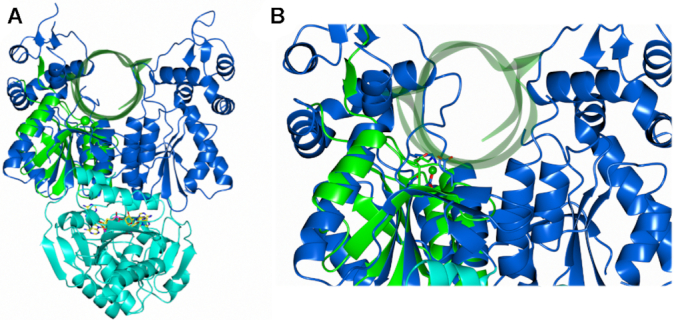
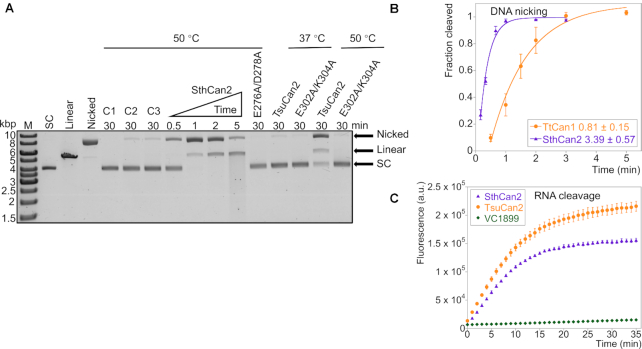
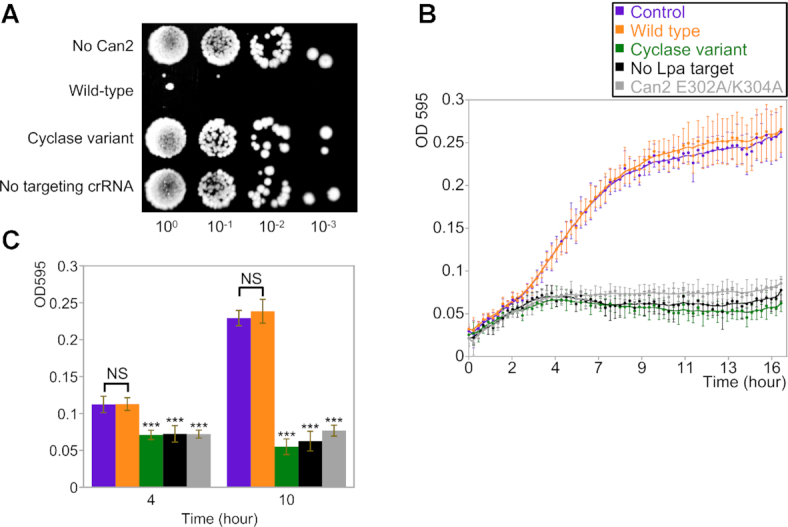
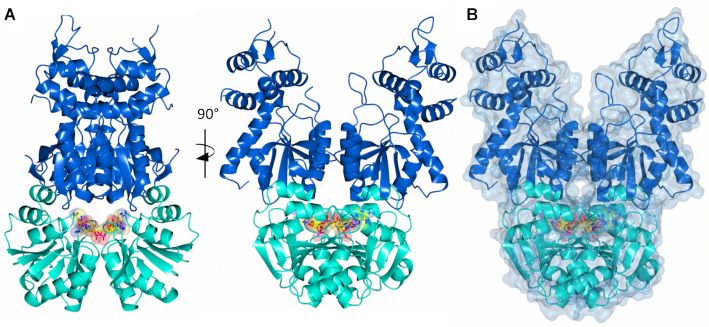
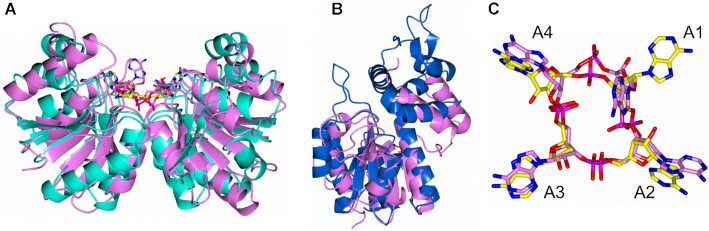
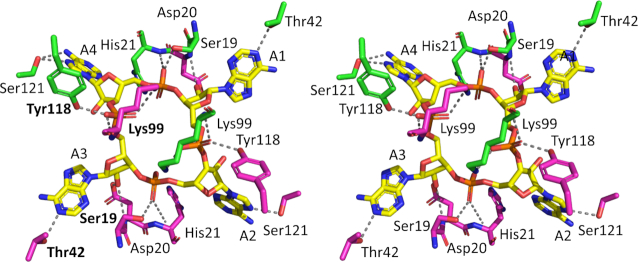
Cells and organisms have a wide range of mechanisms to defend against infection by viruses and other mobile genetic elements (MGE). Type III CRISPR systems detect foreign RNA and typically generate cyclic oligoadenylate (cOA) second messengers that bind to ancillary proteins with CARF (CRISPR associated Rossman fold) domains. This results in the activation of fused effector domains for antiviral defence. The best characterised CARF family effectors are the Csm6/Csx1 ribonucleases and DNA nickase Can1. Here we investigate a widely distributed CARF family effector with a nuclease domain, which we name Can2 (CRISPR ancillary nuclease 2). Can2 is activated by cyclic tetra-adenylate (cA4) and displays both DNase and RNase activity, providing effective immunity against plasmid transformation and bacteriophage infection in Escherichia coli. The structure of Can2 in complex with cA4 suggests a mechanism for the cA4-mediated activation of the enzyme, whereby an active site cleft is exposed on binding the activator. These findings extend our understanding of type III CRISPR cOA signalling and effector function.
细胞和生物拥有广泛的机制来抵御病毒和其他移动遗传元件(MGE)的感染。III 型 CRISPR 系统检测外来 RNA,并通常产生环状寡聚腺苷酸(cOA)第二信使,与具有 CARF(CRISPR 相关罗斯曼折叠)结构域的辅助蛋白结合。这导致抗病毒防御的融合效应物结构域的激活。最具特征性的 CARF 家族效应物是 Csm6/Csx1 核糖核酸酶和 DNA 尼克酰胺酶 Can1。在这里,我们研究了一种广泛分布的具有核酸酶结构域的 CARF 家族效应物,我们将其命名为 Can2(CRISPR 辅助核酸酶 2)。Can2 被环状四腺苷酸(cA4)激活,并显示出 DNA 酶和 RNA 酶活性,在大肠杆菌中提供了针对质粒转化和噬菌体感染的有效免疫。Can2 与 cA4 复合物的结构提出了一种酶的 cA4 介导激活机制,其中在结合激活剂时暴露活性位点裂缝。这些发现扩展了我们对 III 型 CRISPR cOA 信号转导和效应物功能的理解。