Xing Dong, Tan Longzhi, Chang Chi-Han, Li Heng, Xie X Sunney
Department of Chemistry and Chemical Biology, Harvard University, Cambridge, MA 02138.
Department of Data Sciences, Dana-Farber Cancer Institute, Boston, MA 02215;
Proc Natl Acad Sci U S A. 2021 Feb 23;118(8). doi: 10.1073/pnas.2013106118.
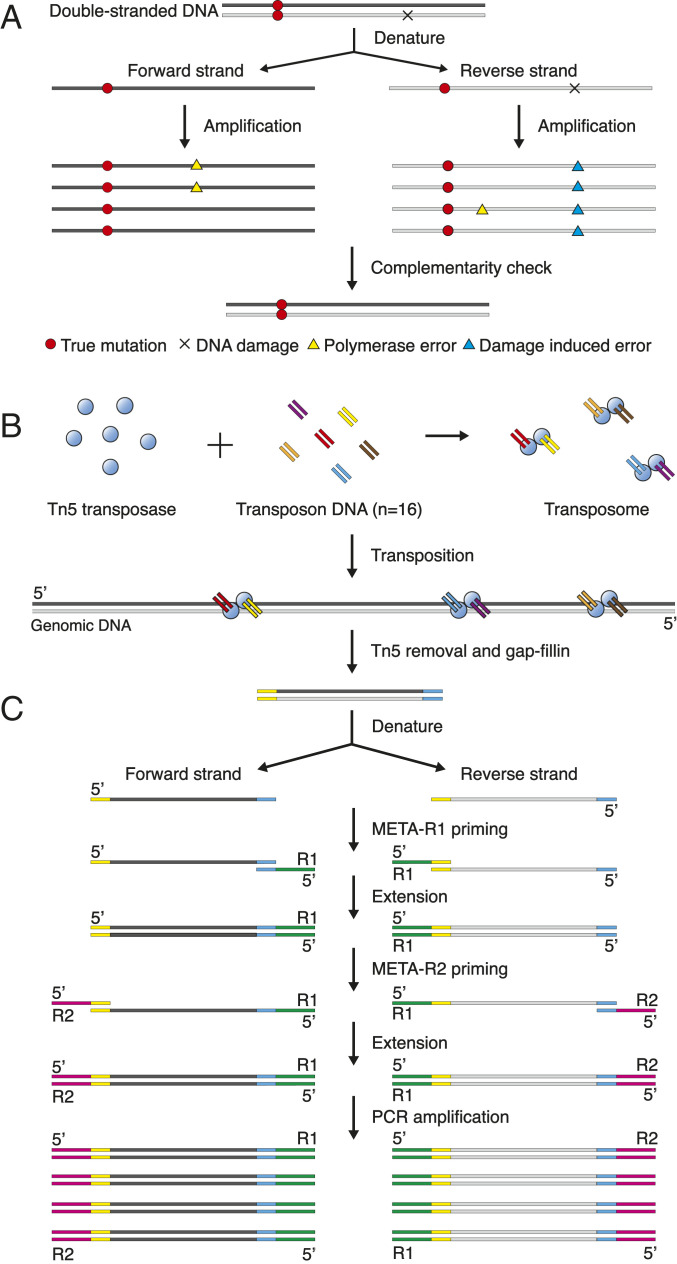
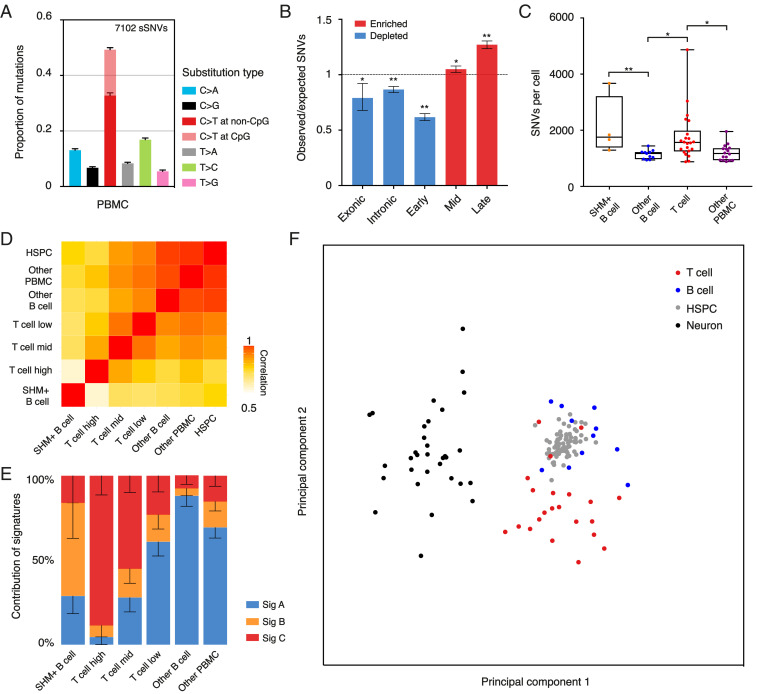
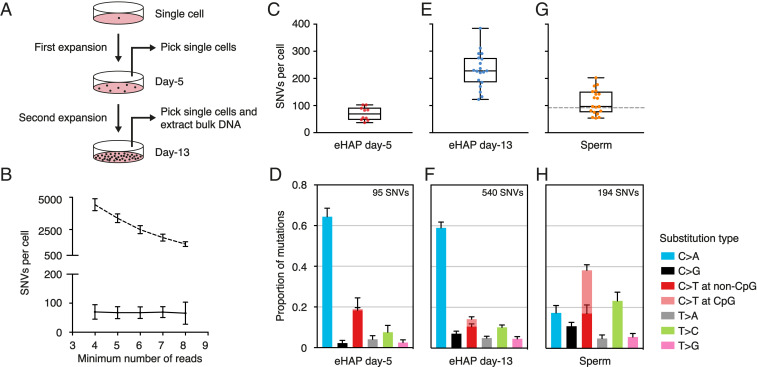
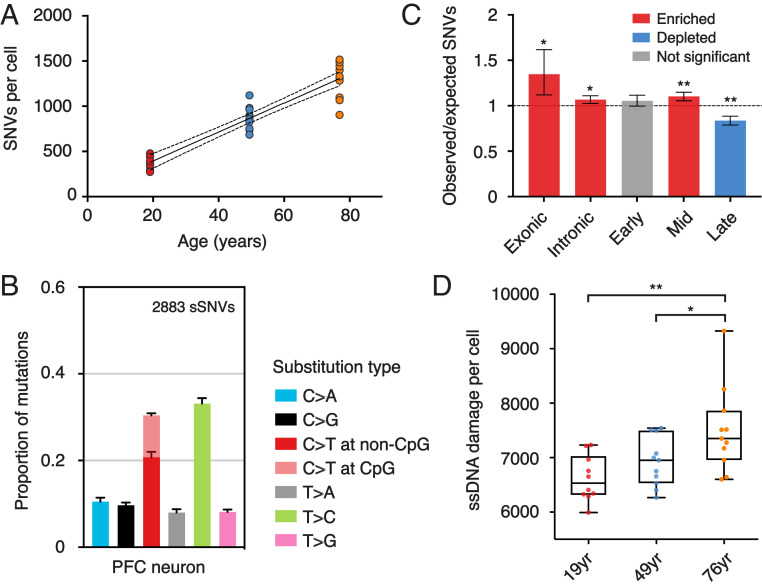
Single-nucleotide variants (SNVs), pertinent to aging and disease, occur sporadically in the human genome, hence necessitating single-cell measurements. However, detection of single-cell SNVs suffers from false positives (FPs) due to intracellular single-stranded DNA damage and the process of whole-genome amplification (WGA). Here, we report a single-cell WGA method termed multiplexed end-tagging amplification of complementary strands (META-CS), which eliminates nearly all FPs by virtue of DNA complementarity, and achieved the highest accuracy thus far. We validated META-CS by sequencing kindred cells and human sperm, and applied it to other human tissues. Investigation of mature single human neurons revealed increasing SNVs with age and potentially unrepaired strand-specific oxidative guanine damage. We determined SNV frequencies along the genome in differentiated single human blood cells, and identified cell type-dependent mutational patterns for major types of lymphocytes.
与衰老和疾病相关的单核苷酸变异(SNV)在人类基因组中偶尔出现,因此需要进行单细胞测量。然而,由于细胞内单链DNA损伤和全基因组扩增(WGA)过程,单细胞SNV的检测存在假阳性(FP)。在这里,我们报告了一种单细胞WGA方法,称为互补链多重末端标记扩增(META-CS),该方法借助DNA互补性消除了几乎所有的FP,并达到了迄今为止的最高准确性。我们通过对亲属细胞和人类精子进行测序验证了META-CS,并将其应用于其他人类组织。对成熟的单个人类神经元的研究表明,随着年龄的增长,SNV增加,并且可能存在未修复的链特异性氧化鸟嘌呤损伤。我们确定了分化的单个人类血细胞沿基因组的SNV频率,并确定了主要类型淋巴细胞的细胞类型依赖性突变模式。