Rai Devesh, Tahir Muhammad Waqas, Chowdhury Medhat, Ali Hammad, Buttar Rupinder, Abtahian Farhad, Bhatt Deepak L, Depta Jeremiah P
Department of Internal Medicine, Rochester General Hospital, Rochester, NY, USA.
Department of Internal Medicine, Detroit Medical Center, Wayne State University, Detroit, MI, USA.
Eur Heart J Case Rep. 2021 Jan 12;5(2):ytaa556. doi: 10.1093/ehjcr/ytaa556. eCollection 2021 Feb.
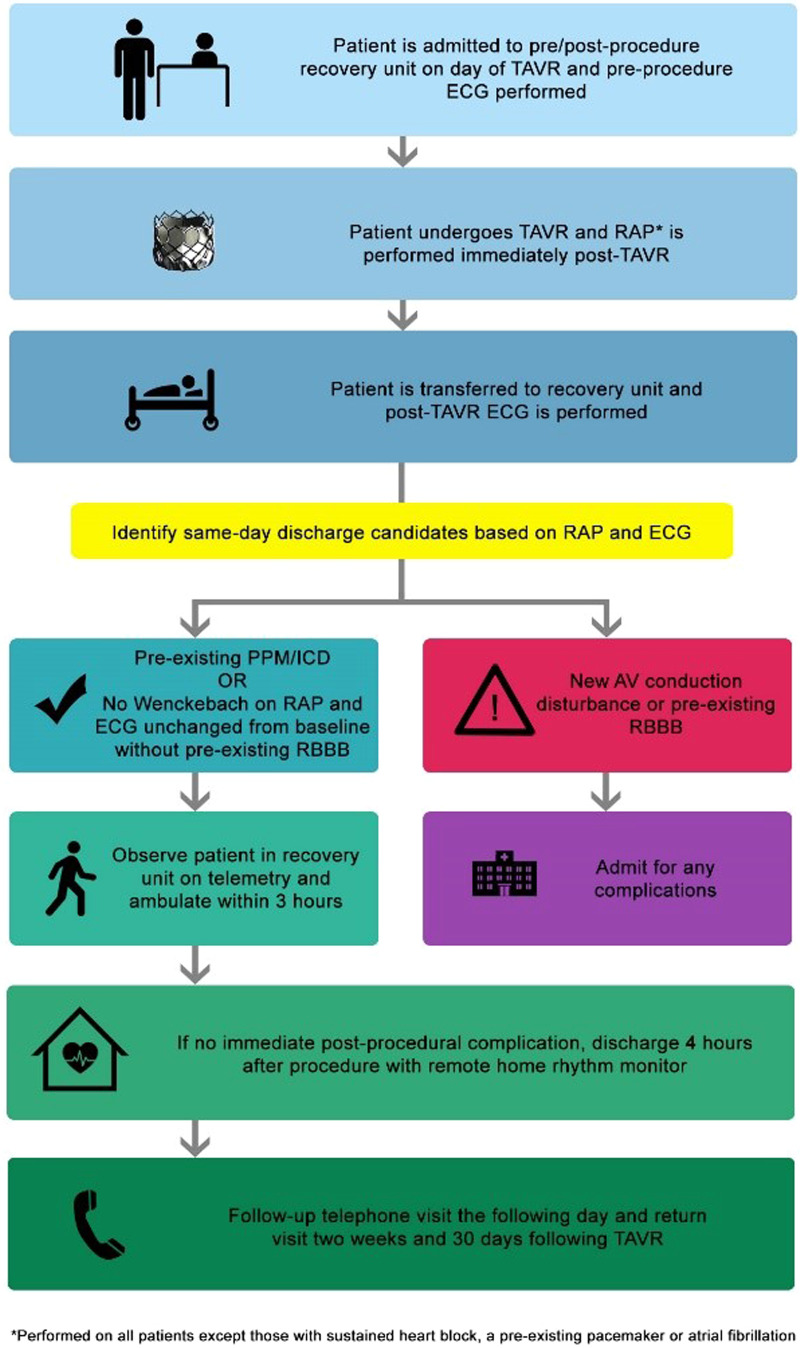
The coronavirus disease 2019 (COVID-19) pandemic has resulted in drastic changes to the practice of medicine, requiring healthcare systems to find solutions to reduce the risk of infection. Using a case series, we propose a protocol for same-day discharge (SDD) for selected patients undergoing transcatheter aortic valve replacement (TAVR) using real-time remote cardiac monitoring. Six patients with severe symptomatic aortic stenosis underwent TAVR and were discharged on the same day.
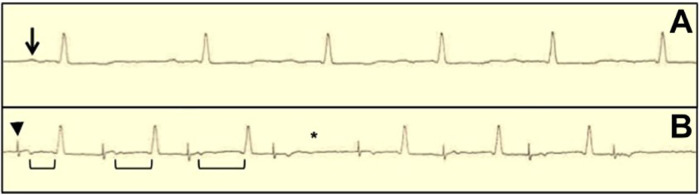
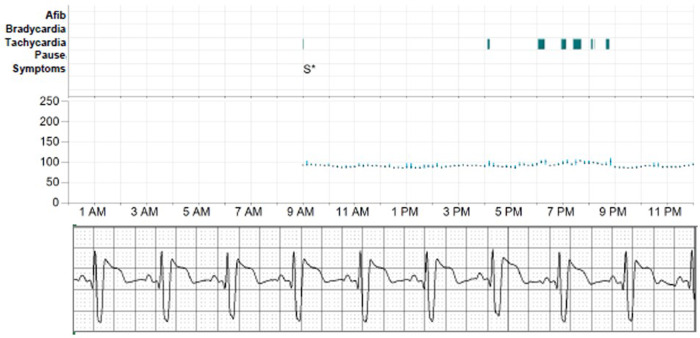
Six patients with symptomatic severe native or bioprosthetic aortic valve stenosis underwent a successful transfemoral TAVR using standard procedures, including the use of rapid atrial pacing to assess the need for permanent pacemaker implantation. Following TAVR, patients were monitored on telemetry in the recovery area for 3 h, ambulated to assess vascular access stability, and discharged with real-time remote cardiac monitoring if no new conduction abnormality was observed. The patients were seen by tele-visits within 2 days and 2 weeks after discharge.
Amidst the COVID-19 pandemic, SDD following successful transfemoral TAVR may be feasible for selected patients and reduce potential COVID-19 exposure.
2019年冠状病毒病(COVID-19)大流行给医学实践带来了巨大变化,要求医疗系统找到降低感染风险的解决方案。通过一个病例系列,我们提出了一种针对接受经导管主动脉瓣置换术(TAVR)的特定患者的当日出院(SDD)方案,该方案使用实时远程心脏监测。6例有症状的严重主动脉瓣狭窄患者接受了TAVR并于当日出院。
6例有症状的严重原发性或生物瓣主动脉瓣狭窄患者采用标准程序成功进行了经股动脉TAVR,包括使用快速心房起搏来评估永久起搏器植入的必要性。TAVR术后,患者在恢复区通过遥测监测3小时,进行活动以评估血管通路稳定性,若未观察到新的传导异常,则通过实时远程心脏监测出院。患者在出院后2天和2周内接受远程随访。
在COVID-19大流行期间,成功进行经股动脉TAVR后的当日出院对于特定患者可能是可行的,并可减少潜在的COVID-19暴露。