Department of Disease Control, London School of Hygiene & Tropical Medicine, London, United Kingdom.
Holo Healthcare Limited, Nairobi, Kenya.
PLoS Negl Trop Dis. 2021 Feb 18;15(2):e0009138. doi: 10.1371/journal.pntd.0009138. eCollection 2021 Feb.
Current knowledge on the burden of, and interactions between malaria and helminth co-infections, as well as the impact of the dual infections on anaemia, remains inconclusive. We have conducted a systematic review with meta-analysis to update current knowledge as a first step towards developing and deploying coordinated approaches to the control and, ultimately, elimination of malaria-helminth co-infections among children living in endemic countries.
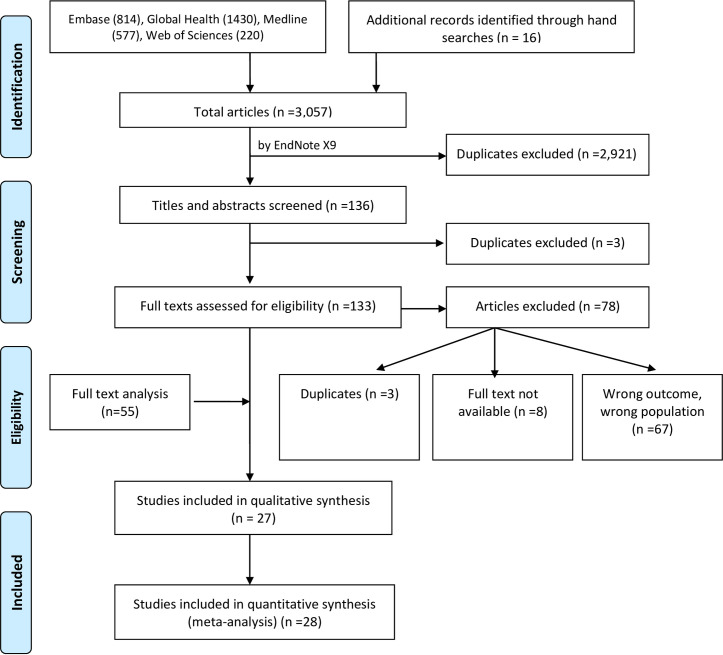
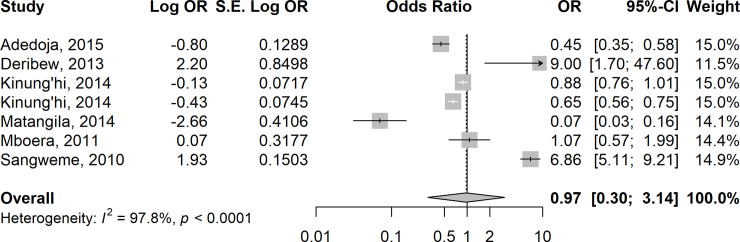
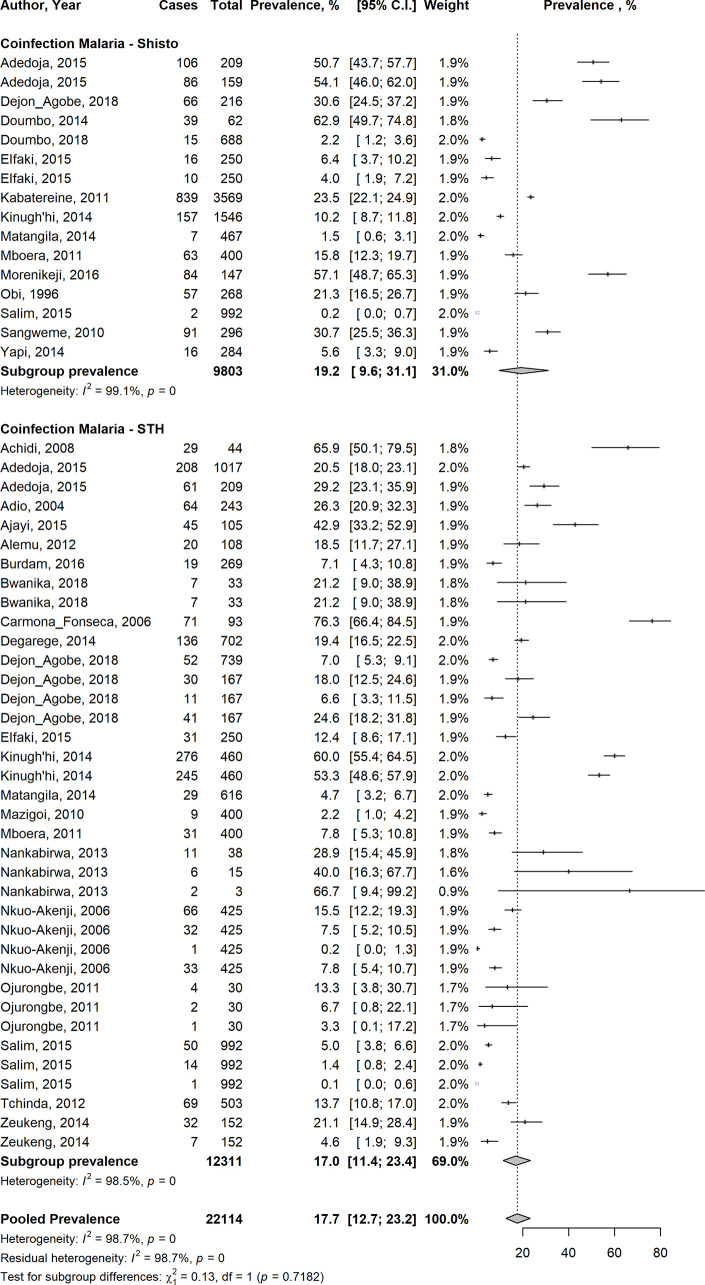
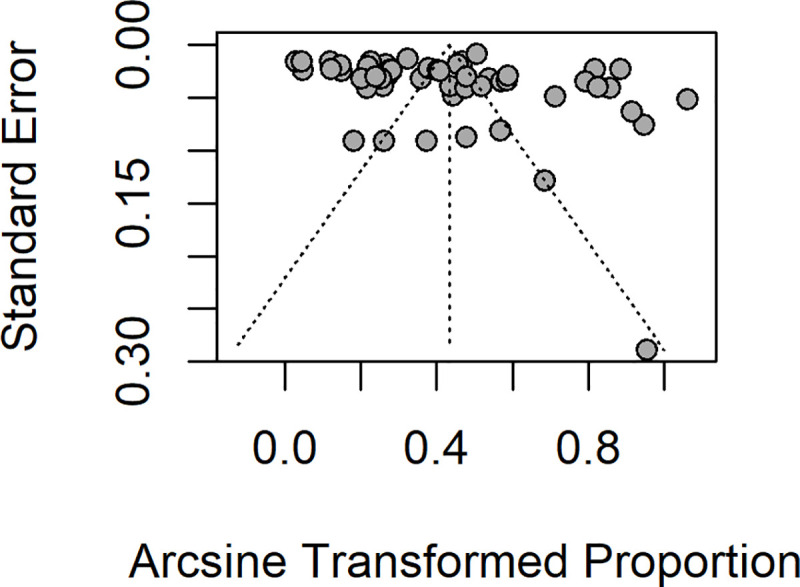
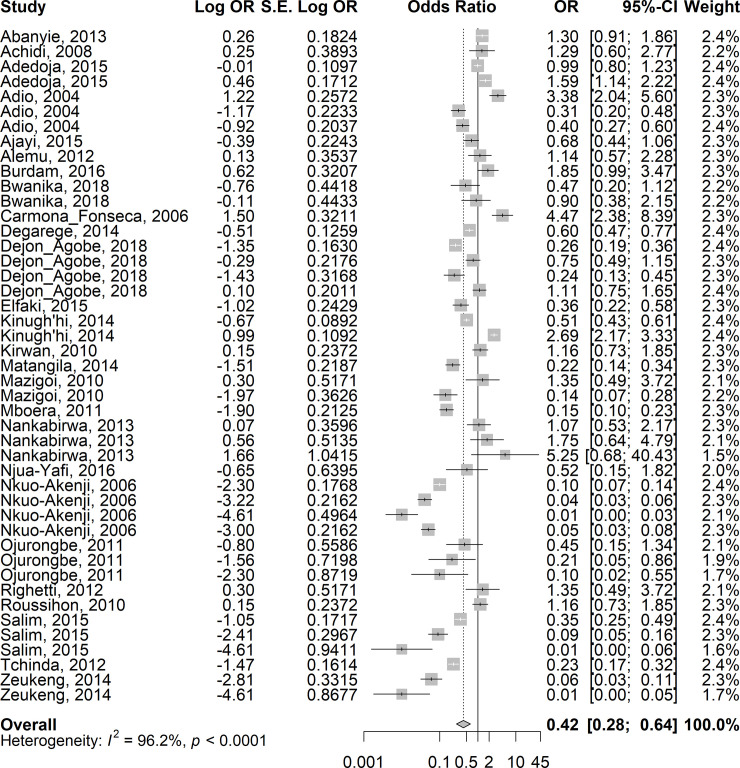
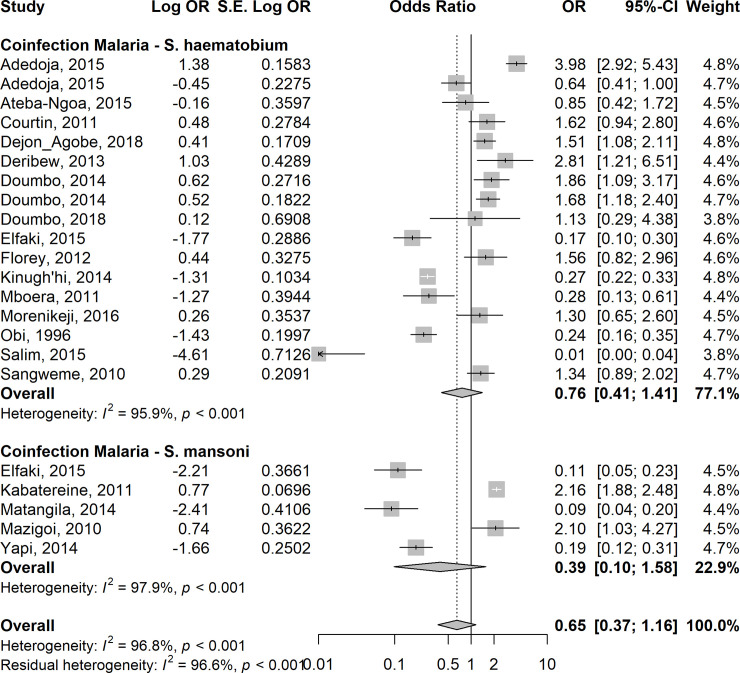
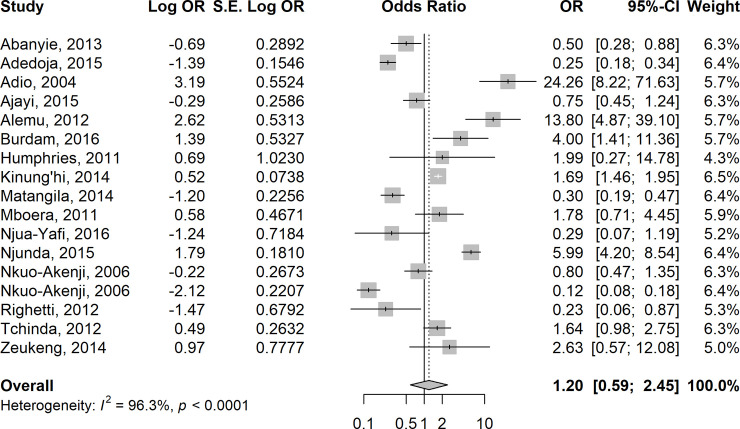
METHODOLOGY/PRINCIPAL FINDINGS: We searched Medline, Embase, Global Health and Web of Science from each database inception until 16 March 2020, for peer-reviewed articles reporting malaria-helminth co-infections in children living in endemic countries. No language restriction was applied. Following removal of duplicates, two reviewers independently screened the studies for eligibility. We used the summary odds ratio (OR) and 95% confidence intervals (CI) as a measure of association (random-effects model). We also performed Chi-square heterogeneity test based on Cochrane's Q and evaluated the severity of heterogeneity using I2 statistics. The included studies were examined for publication bias using a funnel plot and statistical significance was assessed using Egger's test (bias if p<0.1). Fifty-five of the 3,507 citations screened were eligible, 28 of which had sufficient data for meta-analysis. The 28 studies enrolled 22, 114 children in 13 countries across sub-Saharan Africa, Southeast Asia and South America. Overall, the pooled estimates showed a prevalence of Plasmodium-helminth co-infections of 17.7% (95% CI 12.7-23.2%). Summary estimates from 14 studies showed a lower odds of P. falciparum infection in children co-infected with Schistosoma spp (OR: 0.65; 95%CI: 0.37-1.16). Similar lower odds of P. falciparum infection were observed from the summary estimates of 24 studies in children co-infected with soil transmitted helminths (STH) (OR: 0.42; 95%CI: 0.28-0.64). When adjusted for age, gender, socio-economic status, nutritional status and geographic location of the children, the risk of P. falciparum infection in children co-infected with STH was higher compared with children who did not have STH infection (OR = 1.3; 95% CI 1.03-1.65). A subset of 16 studies showed that the odds of anaemia were higher in children co-infected with Plasmodium and STH than in children with Plasmodium infection alone (OR = 1.20; 95% CI: 0.59-2.45), and were almost equal in children co-infected with Plasmodium-Schistosoma spp or Plasmodium infection alone (OR = 0.97, 95% CI: 0.30-3.14).
CONCLUSIONS/SIGNIFICANCE: The current review suggests that prevalence of malaria-helminth co-infection is high in children living in endemic countries. The nature of the interactions between malaria and helminth infection and the impact of the co-infection on anaemia remain inconclusive and may be modulated by the immune responses of the affected children.
目前对于疟疾和寄生虫混合感染的负担以及相互作用,以及双重感染对贫血的影响的认识仍不明确。我们进行了一项系统评价和荟萃分析,以更新当前的知识,作为制定和实施控制疟疾和寄生虫混合感染的协调方法的第一步,这些感染在流行地区的儿童中。
方法/主要发现:我们从每个数据库的成立之初到 2020 年 3 月 16 日,在 Medline、Embase、全球健康和 Web of Science 上搜索了报道生活在流行地区的儿童中疟疾和寄生虫混合感染的同行评议文章。没有语言限制。在去除重复项后,两名评审员独立筛选了符合条件的研究。我们使用汇总优势比(OR)和 95%置信区间(CI)作为关联的度量(随机效应模型)。我们还根据 Cochrane 的 Q 进行了 Chi-square 异质性检验,并使用 I2 统计量评估了异质性的严重程度。使用漏斗图检查纳入的研究是否存在发表偏倚,并使用 Egger 检验评估统计学意义(如果 p<0.1 则存在偏倚)。从筛选出的 3507 条引用中,有 55 条符合条件,其中 28 条有足够的数据进行荟萃分析。这 28 项研究在撒哈拉以南非洲、东南亚和南美洲的 13 个国家共招募了 22114 名儿童。总的来说,合并估计表明疟疾-寄生虫混合感染的流行率为 17.7%(95%CI 12.7-23.2%)。来自 14 项研究的综合估计表明,感染血吸虫的儿童感染疟原虫的可能性较低(OR:0.65;95%CI:0.37-1.16)。来自 24 项研究的汇总估计表明,感染土壤传播的蠕虫(STH)的儿童感染疟原虫的可能性也较低(OR:0.42;95%CI:0.28-0.64)。当调整儿童的年龄、性别、社会经济地位、营养状况和地理位置时,与未感染 STH 的儿童相比,感染 STH 的儿童感染疟原虫的风险更高(OR=1.3;95%CI 1.03-1.65)。一组 16 项研究表明,与单纯感染疟原虫的儿童相比,同时感染疟原虫和 STH 的儿童发生贫血的几率更高(OR=1.20;95%CI:0.59-2.45),而同时感染疟原虫和血吸虫或单纯感染疟原虫的儿童几乎相等(OR=0.97,95%CI:0.30-3.14)。
结论/意义:目前的综述表明,流行地区儿童中疟疾和寄生虫混合感染的流行率很高。疟疾和寄生虫感染之间相互作用的性质以及混合感染对贫血的影响仍不明确,这可能取决于受影响儿童的免疫反应。