Zhang Yajun, Wang Pei, Wang Tengjiao, Fang Yuan, Ding Yongmei, Qian Qijun
Department of Biotherapy, Eastern Hepatobiliary Surgery Hospital, Navy Medical University, Shanghai, 201805, China.
Shanghai Engineering Research Center for Cell Therapy, Shanghai, 201805, China.
J Transl Med. 2021 Feb 18;19(1):82. doi: 10.1186/s12967-021-02750-4.
Although chimeric antigen receptor (CAR)-T cell therapy has been remarkably successful for haematological malignancies, its efficacy against solid tumors is limited. The combination of CAR-T cell therapy with immune checkpoint inhibitors (CPIs), such as PD-1, PD-L1, and CTLA-4 antibodies, is a promising strategy for enhancing the antitumor efficacy of CAR-T cells. However, because most patients acquire resistance to CPIs, investigating other strategies is necessary to further improve the antitumor efficacy of CAR-T cell therapy for solid tumors. Recently, CD40 agonist antibodies showed potential antitumor efficacy by activating the CD40 pathway.
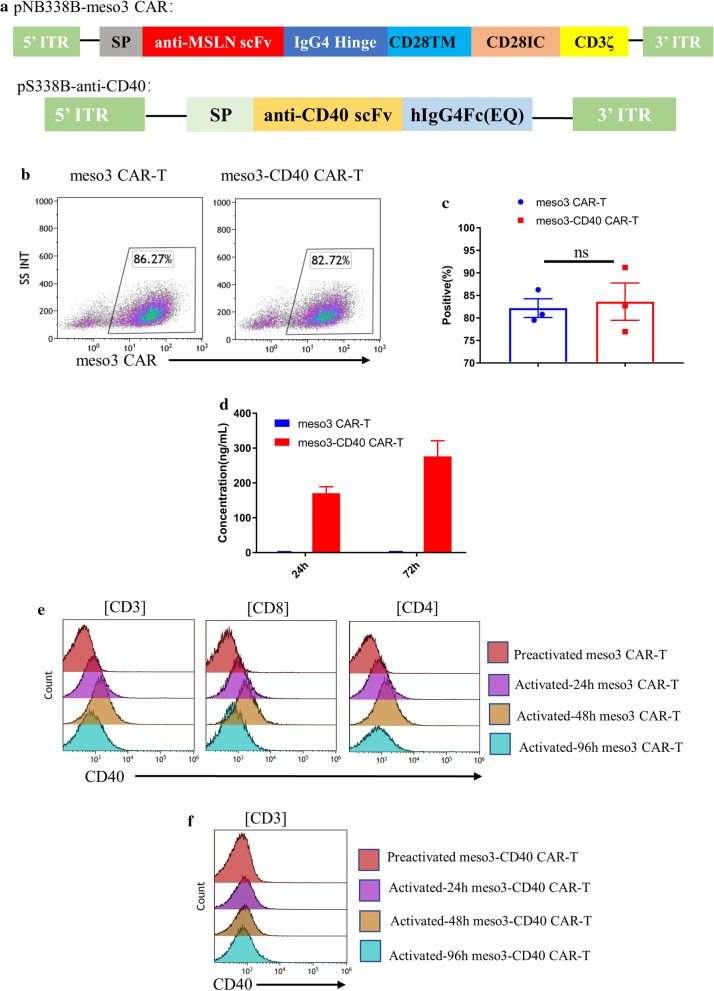
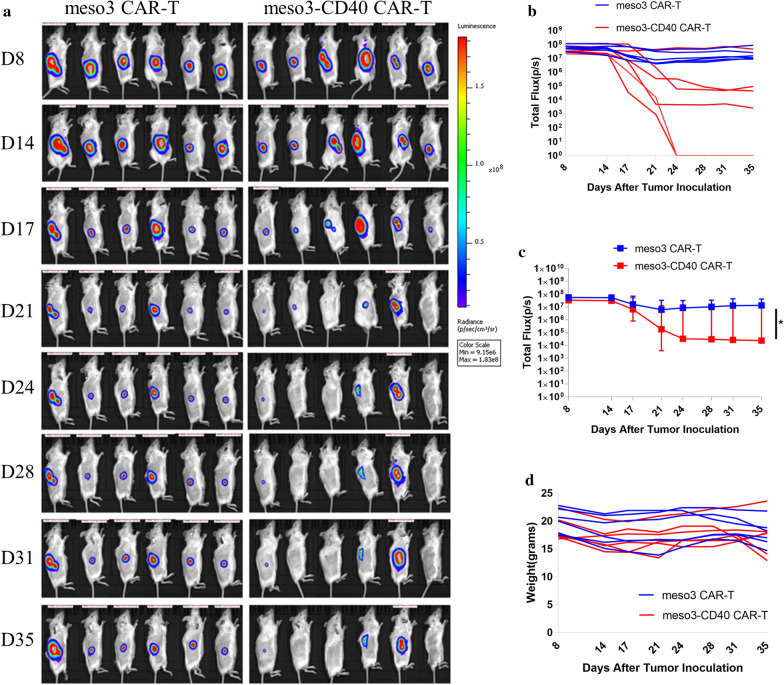
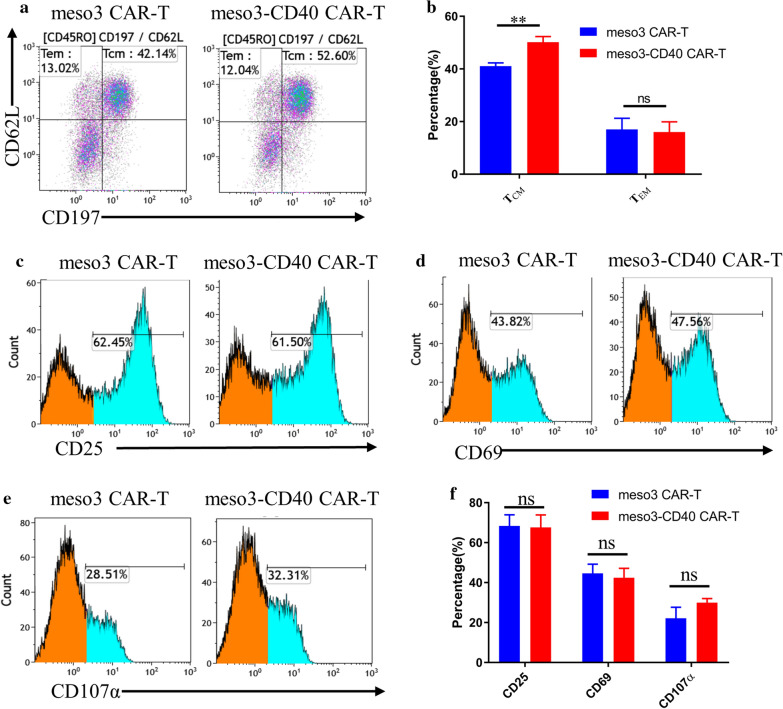
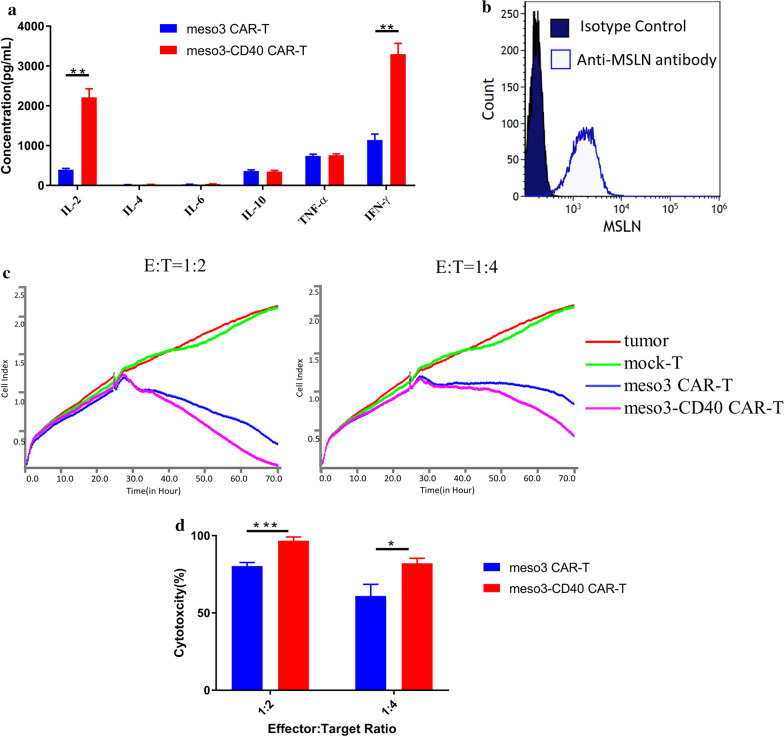
Based on the piggyBac transposon system, rather than the widely used viral vectors, we constructed a meso3-CD40 CAR-T targeting region III of mesothelin (MSLN) that possessed the ability to secrete anti-CD40 antibodies. Compared with meso3 CAR-T cells, which did not secrete the anti-CD40 antibody, meso3-CD40 CAR-T cells secreted more cytokines and had a relatively higher proportion of central memory T (T) cells after stimulation by the target antigen. In addition, compared with meso3 CAR-T cells, meso3-CD40 CAR-T cells had a more powerful cytotoxic effect on target cells at a relatively low effector-to-target ratio. More importantly, we demonstrated that the antitumor activity of meso3-CD40 CAR-T cells was enhanced in a human ovarian cancer xenograft model in vivo.
In conclusion, these results highlight anti-CD40-secreting CAR-T cells generated by nonviral vectors as a potential clinical strategy for improving the efficacy of CAR-T cell therapies.
尽管嵌合抗原受体(CAR)-T细胞疗法在血液系统恶性肿瘤治疗中取得了显著成功,但其对实体瘤的疗效有限。将CAR-T细胞疗法与免疫检查点抑制剂(CPI),如PD-1、PD-L1和CTLA-4抗体联合使用,是增强CAR-T细胞抗肿瘤疗效的一种有前景的策略。然而,由于大多数患者会对CPI产生耐药性,因此有必要研究其他策略以进一步提高CAR-T细胞疗法对实体瘤的抗肿瘤疗效。最近,CD40激动剂抗体通过激活CD40信号通路显示出潜在的抗肿瘤疗效。
基于piggyBac转座子系统而非广泛使用的病毒载体,我们构建了一种靶向间皮素(MSLN)区域III的meso3-CD40 CAR-T细胞,其具有分泌抗CD40抗体的能力。与不分泌抗CD40抗体的meso3 CAR-T细胞相比,meso3-CD40 CAR-T细胞分泌更多细胞因子,并且在受到靶抗原刺激后具有相对较高比例的中央记忆T(T)细胞。此外,与meso3 CAR-T细胞相比,meso3-CD40 CAR-T细胞在相对较低的效应细胞与靶细胞比例下对靶细胞具有更强的细胞毒性作用。更重要的是,我们证明了meso3-CD40 CAR-T细胞在体内人卵巢癌异种移植模型中的抗肿瘤活性增强。
总之,这些结果突出了由非病毒载体产生的分泌抗CD40的CAR-T细胞作为提高CAR-T细胞疗法疗效的一种潜在临床策略。