Zhai Xuejia, Mao Ling, Wu Min, Liu Jie, Yu Shicang
Department of Stem Cell and Regenerative Medicine, Institute of Pathology and Southwest Cancer Center, Southwest Hospital, Third Military Medical University (Army Medical University), Chongqing 400038, China.
Key Laboratory of Cancer Immunopathology, Ministry of Education, Chongqing 400038, China.
Cancers (Basel). 2023 Feb 21;15(5):1357. doi: 10.3390/cancers15051357.
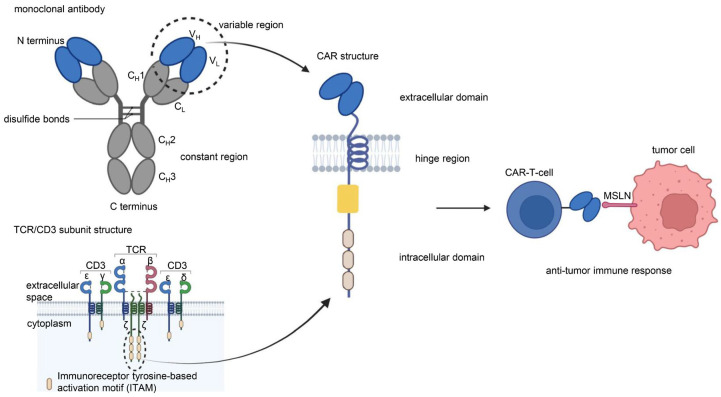
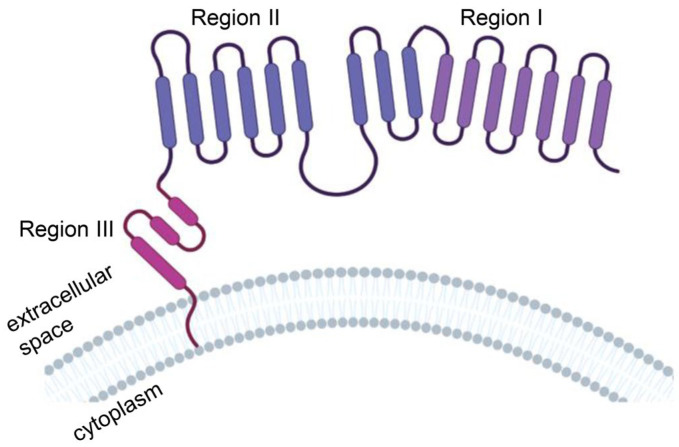
Chimeric antigen receptor (CAR)-T-cell therapy is a kind of adoptive T-cell therapy (ACT) that has developed rapidly in recent years. Mesothelin (MSLN) is a tumor-associated antigen (TAA) that is highly expressed in various solid tumors and is an important target antigen for the development of new immunotherapies for solid tumors. This article reviews the clinical research status, obstacles, advancements and challenges of anti-MSLN CAR-T-cell therapy. Clinical trials on anti-MSLN CAR-T cells show that they have a high safety profile but limited efficacy. At present, local administration and introduction of new modifications are being used to enhance proliferation and persistence and to improve the efficacy and safety of anti-MSLN CAR-T cells. A number of clinical and basic studies have shown that the curative effect of combining this therapy with standard therapy is significantly better than that of monotherapy.
嵌合抗原受体(CAR)-T细胞疗法是近年来迅速发展的一种过继性T细胞疗法(ACT)。间皮素(MSLN)是一种肿瘤相关抗原(TAA),在各种实体瘤中高表达,是实体瘤新型免疫疗法开发的重要靶抗原。本文综述了抗MSLN CAR-T细胞疗法的临床研究现状、障碍、进展和挑战。抗MSLN CAR-T细胞的临床试验表明,它们具有较高的安全性,但疗效有限。目前,正在采用局部给药和引入新的修饰来增强增殖和持久性,并提高抗MSLN CAR-T细胞的疗效和安全性。多项临床和基础研究表明,将该疗法与标准疗法联合使用的疗效明显优于单一疗法。