Department of Neurobiology and Behavior, School of Biological Sciences, University of California, Irvine, California.
University of California Irvine Center for Addiction Neuroscience, School of Biological Sciences, University of California, Irvine, California.
J Neurosci. 2021 Mar 31;41(13):2814-2827. doi: 10.1523/JNEUROSCI.2829-20.2021. Epub 2021 Feb 18.
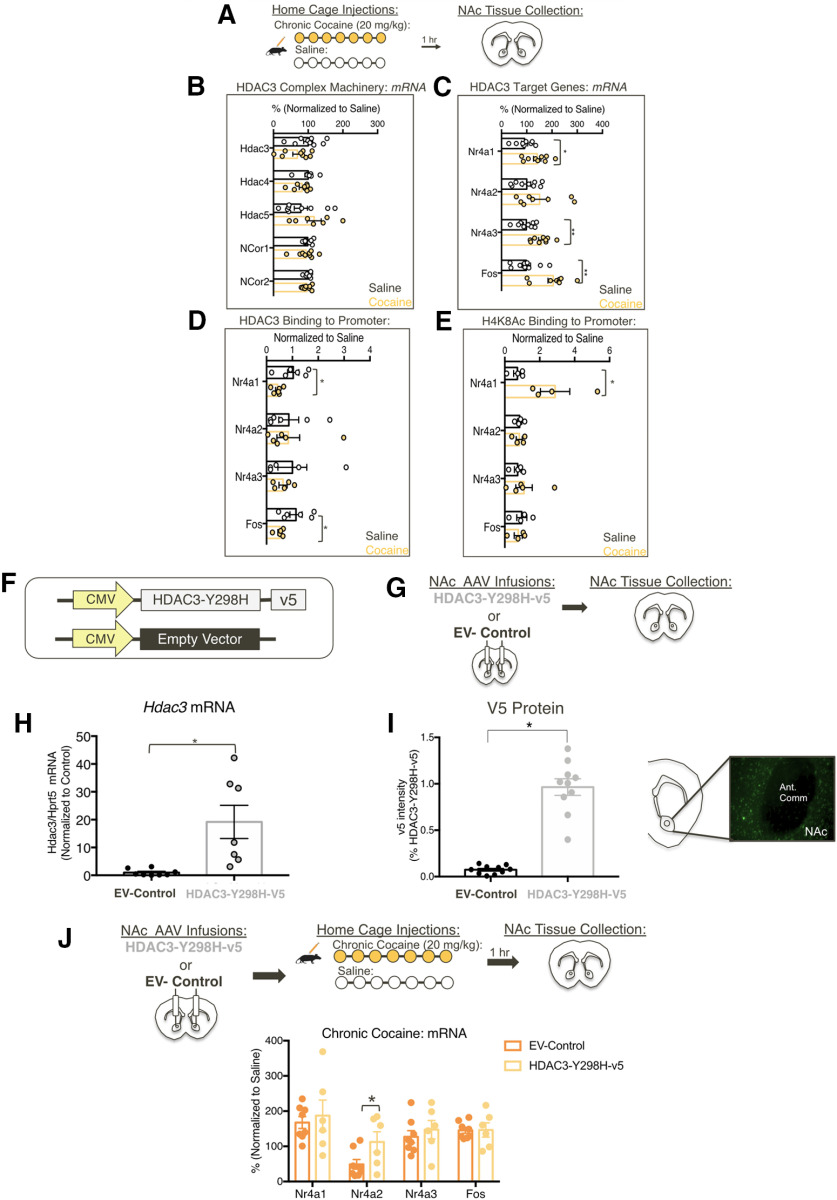
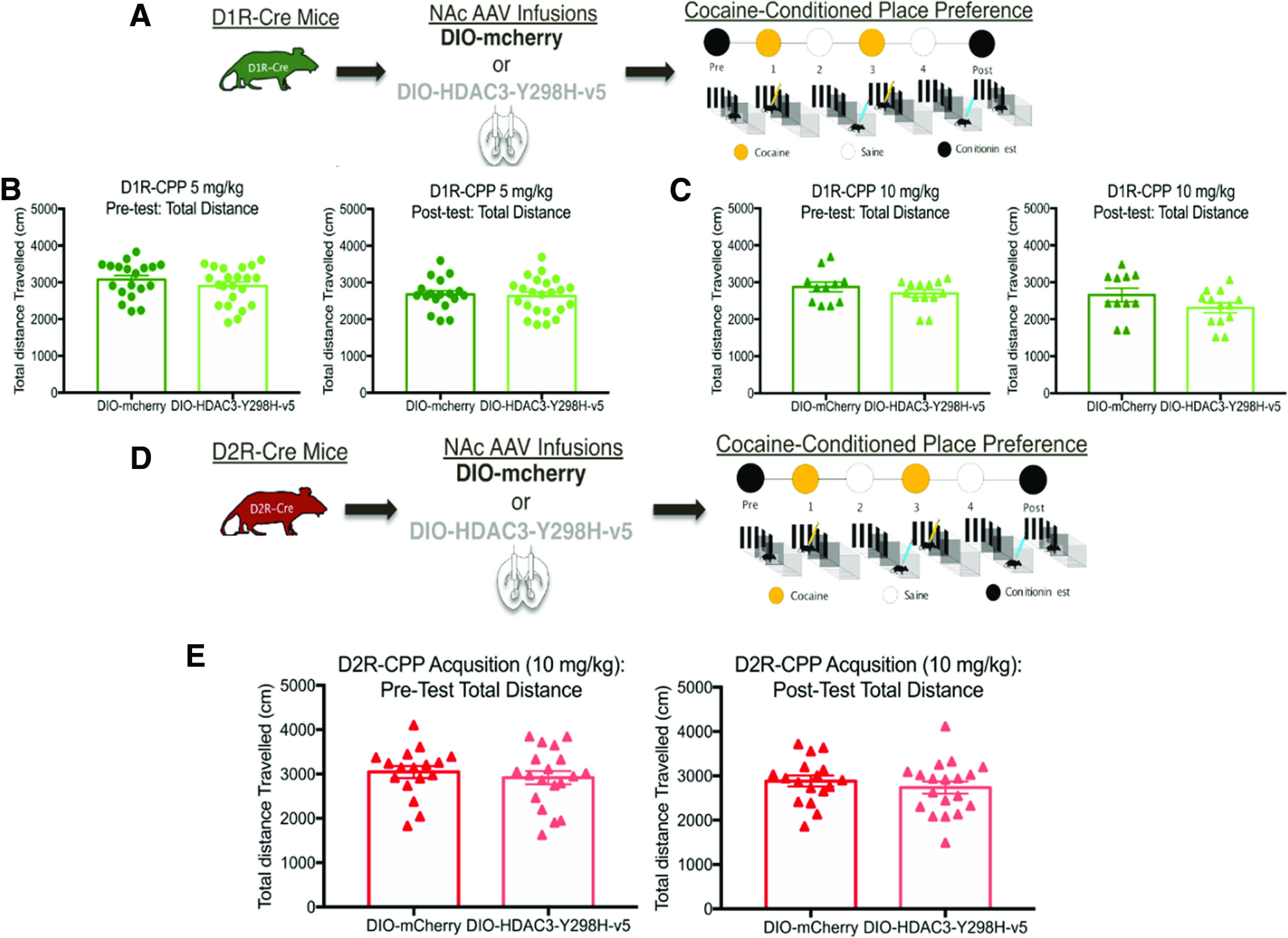
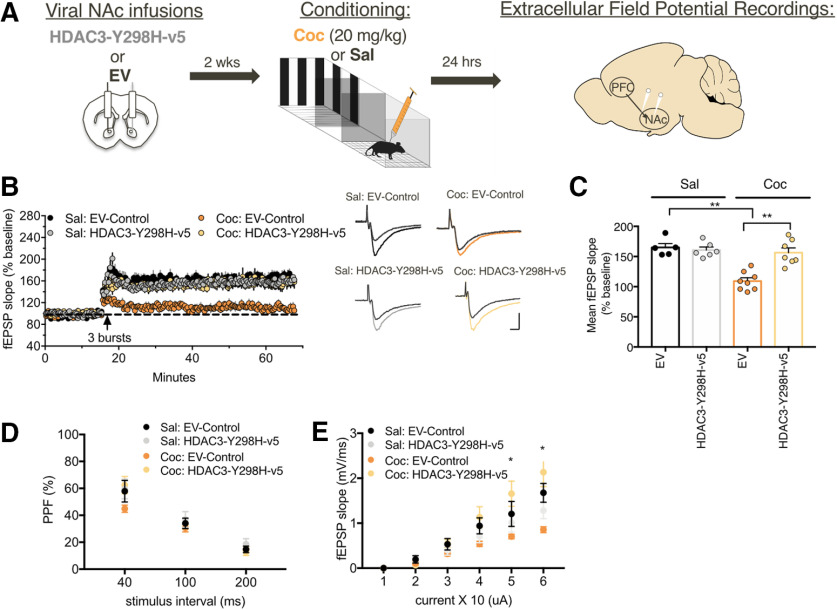
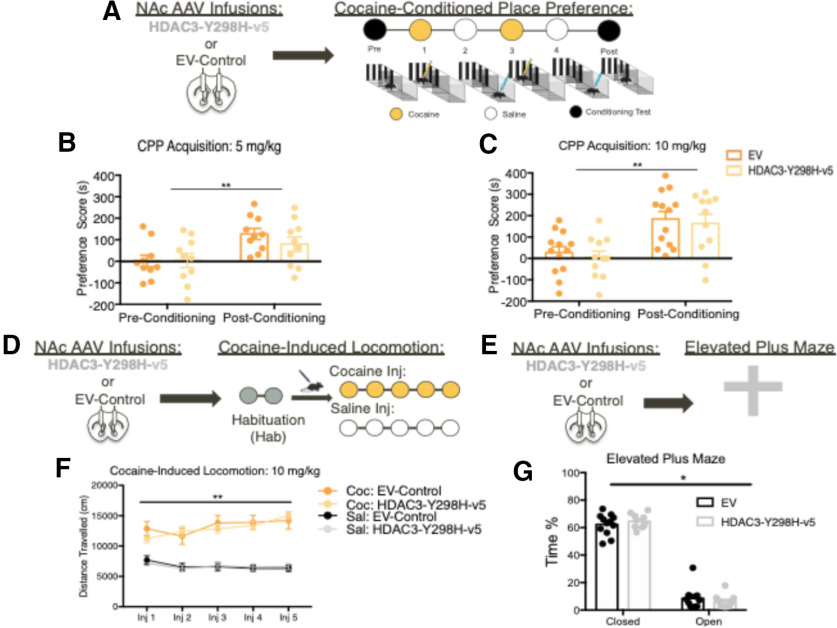
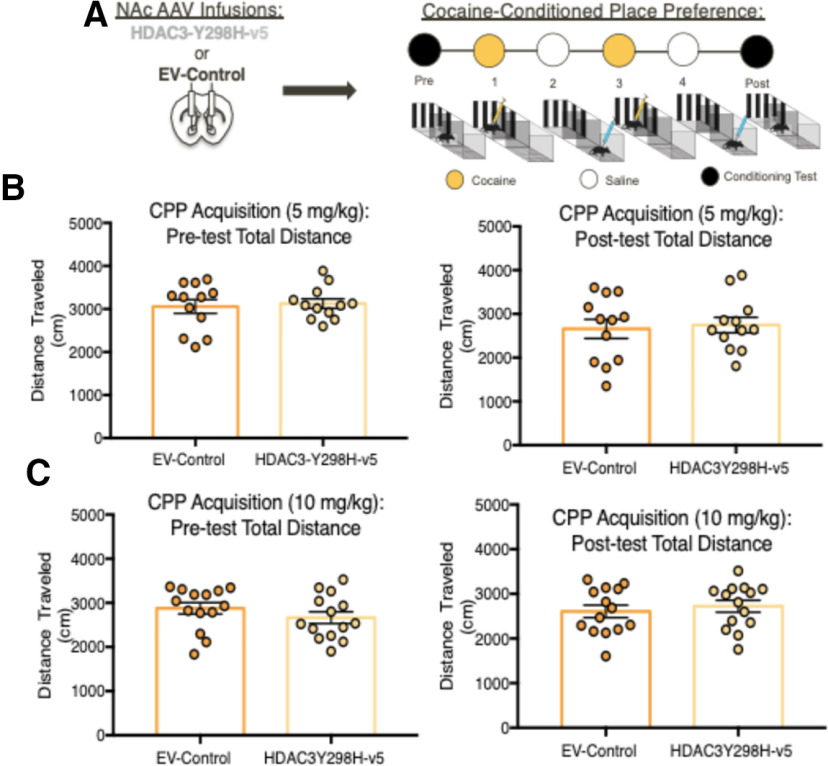
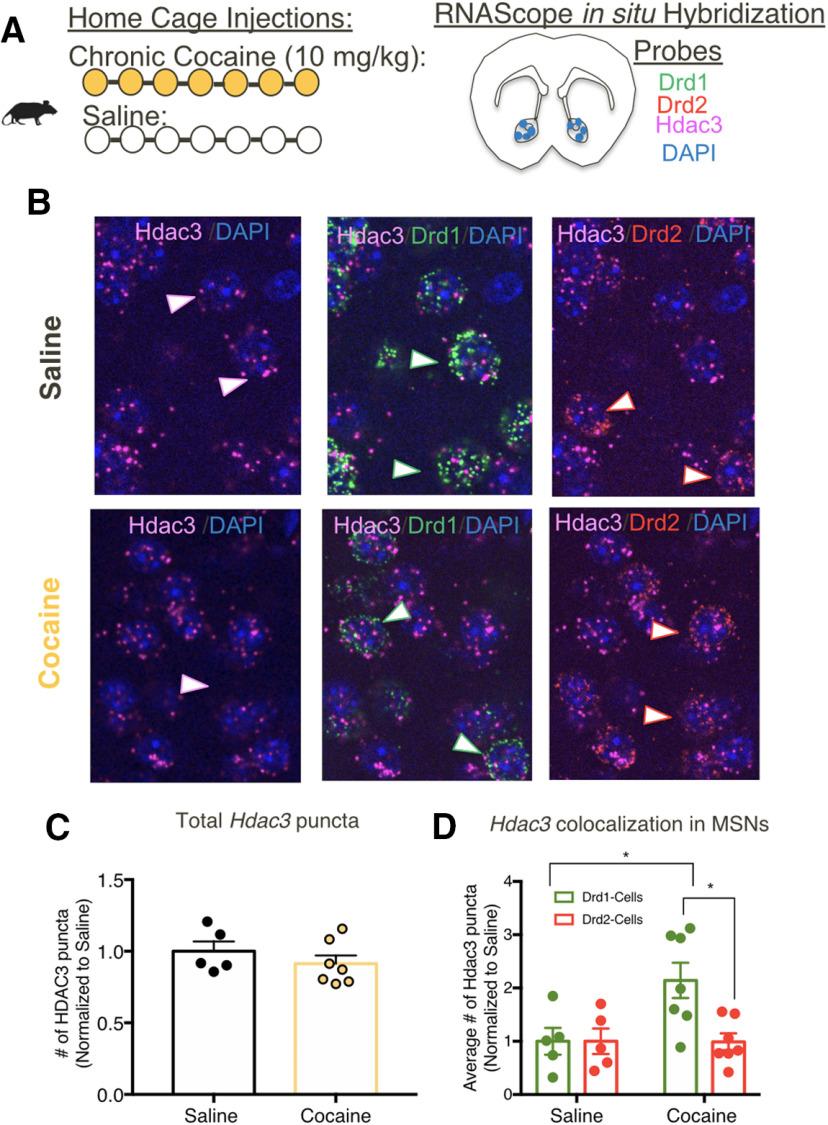
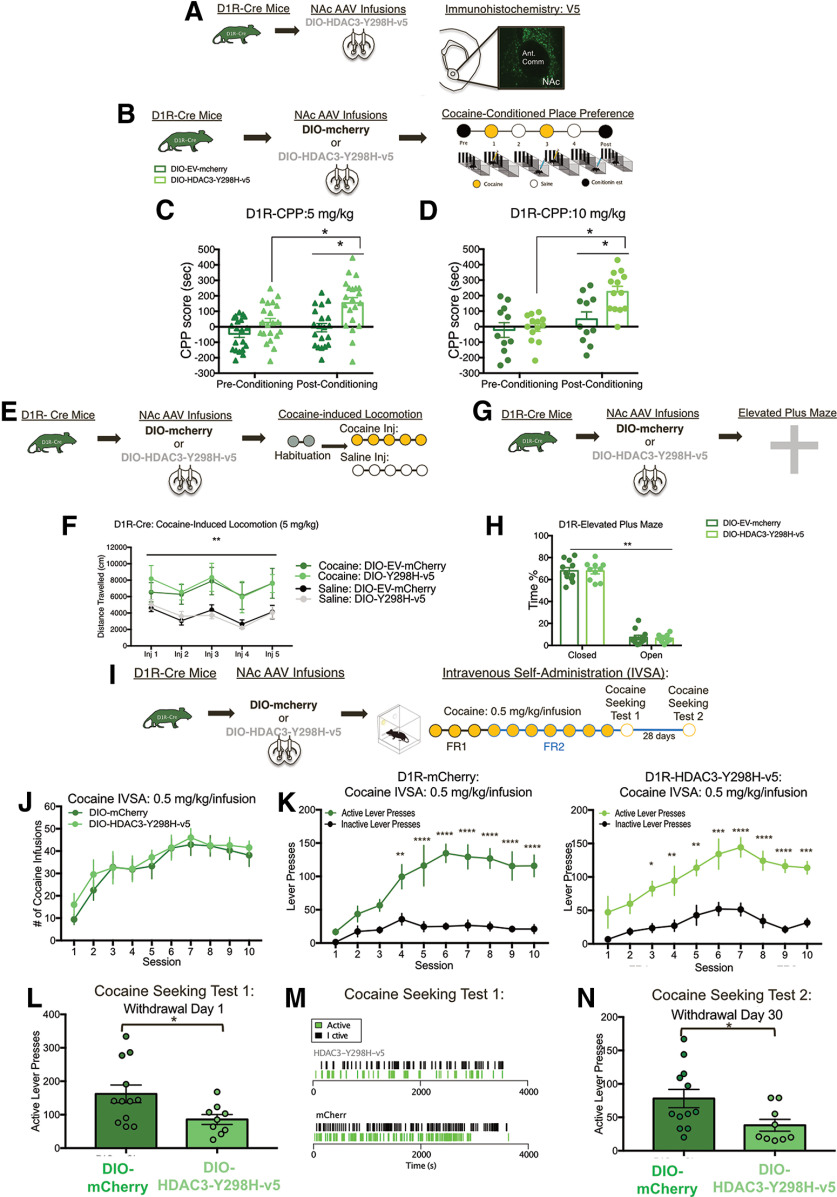
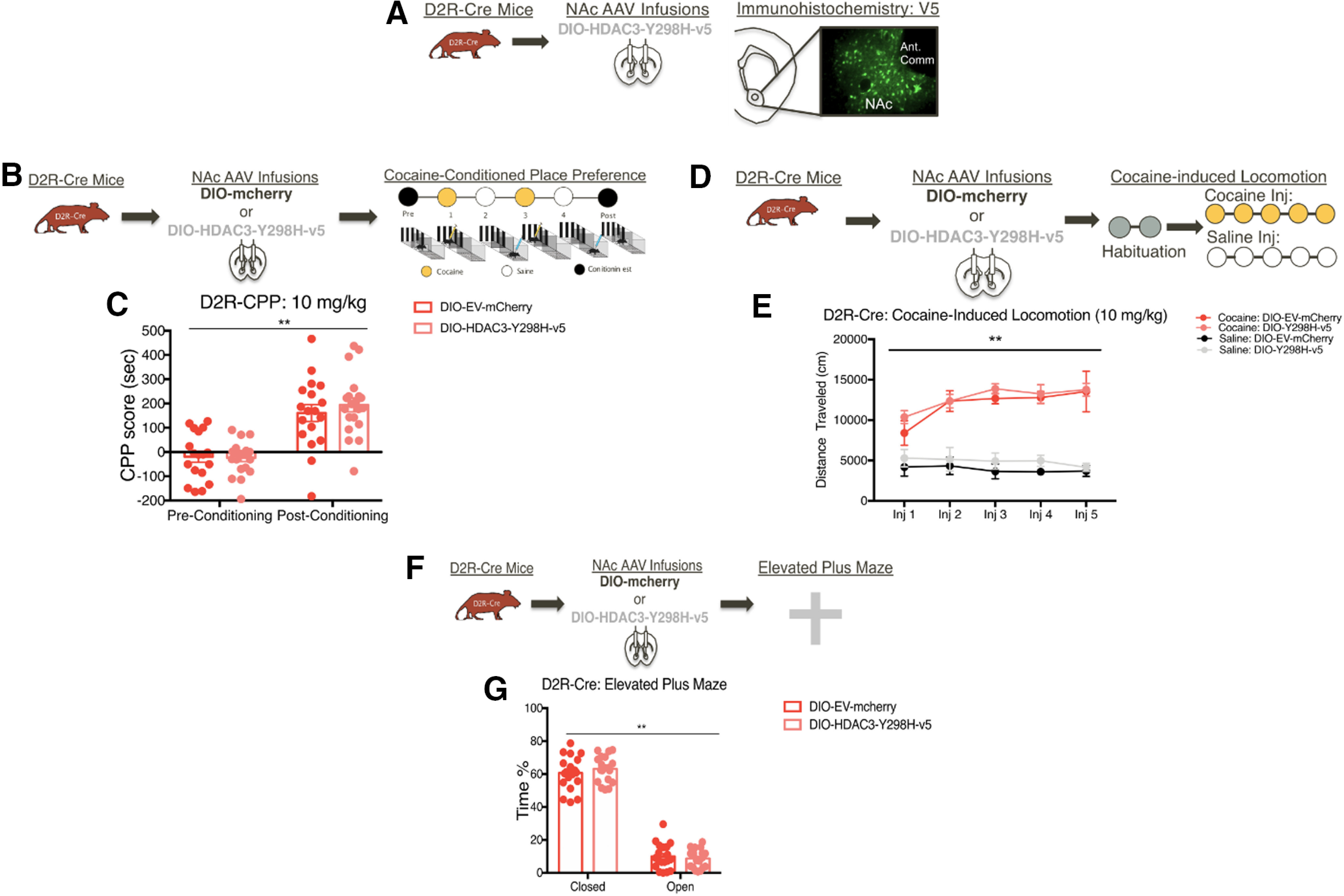
Epigenetic mechanisms regulate processes of neuroplasticity critical to cocaine-induced behaviors. This includes the Class I histone deacetylase (HDAC) HDAC3, known to act as a negative regulator of cocaine-associated memory formation within the nucleus accumbens (NAc). Despite this, it remains unknown how cocaine alters HDAC3-dependent mechanisms. Here, we profiled HDAC3 expression and activity in total NAc mouse tissue following cocaine exposure. Although chronic cocaine did not affect expression of within the NAc, chronic cocaine did affect promoter-specific changes in HDAC3 and H4K8Ac occupancy. These changes in promoter occupancy correlated with cocaine-induced changes in expression of plasticity-related genes. To causally determine whether cocaine-induced plasticity is mediated by HDAC3's deacetylase activity, we overexpressed a deacetylase-dead HDAC3 point mutant (HDAC3-Y298H-v5) within the NAc of adult male mice. We found that disrupting HDAC3's enzymatic activity altered selective changes in gene expression and synaptic plasticity following cocaine exposure, despite having no effects on cocaine-induced behaviors. In further assessing HDAC3's role within the NAc, we observed that chronic cocaine increases expression in but not -cells of the NAc. Moreover, we discovered that HDAC3 acts selectively within D1R cell-types to regulate cocaine-associated memory formation and cocaine-seeking. Overall, these results suggest that cocaine induces cell-type-specific changes in epigenetic mechanisms to promote plasticity important for driving cocaine-related behaviors. Drugs of abuse alter molecular mechanisms throughout the reward circuitry that can lead to persistent drug-associated behaviors. Epigenetic regulators are critical drivers of drug-induced changes in gene expression. Here, we demonstrate that the activity of an epigenetic enzyme promotes neuroplasticity within the nucleus accumbens (NAc) critical to cocaine action. In addition, we demonstrate that these changes in epigenetic activity drive cocaine-seeking behaviors in a cell-type-specific manner. These findings are key in understanding and targeting cocaine's impact of neural circuitry and behavior.
表观遗传机制调节神经可塑性过程,这对于可卡因引起的行为至关重要。这包括 I 类组蛋白去乙酰化酶(HDAC)HDAC3,已知其在伏隔核(NAc)内作为可卡因相关记忆形成的负调节剂起作用。尽管如此,仍然不清楚可卡因如何改变 HDAC3 依赖性机制。在这里,我们在可卡因暴露后对总 NAc 小鼠组织中的 HDAC3 表达和活性进行了分析。尽管慢性可卡因不影响 NAc 内的表达,但慢性可卡因确实会影响 HDAC3 和 H4K8Ac 占有率的启动子特异性变化。这些启动子占有率的变化与可卡因引起的可塑性相关基因表达变化相关。为了确定可卡因诱导的可塑性是否由 HDAC3 的去乙酰化酶活性介导,我们在成年雄性小鼠的 NAc 中过表达了一个去乙酰化酶失活的 HDAC3 点突变体(HDAC3-Y298H-v5)。我们发现,尽管对可卡因诱导的行为没有影响,但破坏 HDAC3 的酶活性会改变可卡因暴露后的选择性基因表达和突触可塑性变化。在进一步评估 HDAC3 在 NAc 中的作用时,我们观察到慢性可卡因会增加 NAc 中的表达,但不会增加 NAc 中的表达。此外,我们发现 HDAC3 选择性地作用于 D1R 细胞类型,以调节可卡因相关记忆形成和可卡因寻求。总体而言,这些结果表明,可卡因会诱导特定于细胞类型的表观遗传机制变化,以促进对驱动可卡因相关行为至关重要的可塑性。成瘾药物会改变奖励回路中的分子机制,从而导致与药物相关的持续行为。表观遗传调节剂是药物诱导基因表达变化的关键驱动因素。在这里,我们证明了一种表观遗传酶的活性促进了伏隔核(NAc)中的神经可塑性,这对于可卡因的作用至关重要。此外,我们证明这些表观遗传活性的变化以细胞类型特异性的方式驱动可卡因寻求行为。这些发现对于理解和靶向可卡因对神经回路和行为的影响至关重要。