Cell and Molecular Biology Program, College of Natural Science, Michigan State University, 3009 Interdisciplinary Science and Technology Building 766 Service Road, East Lansing, MI, 48854, USA.
Institute for Integrative Toxicology, Michigan State University, East Lansing, MI, USA.
Sci Rep. 2021 Feb 18;11(1):4217. doi: 10.1038/s41598-021-82752-w.
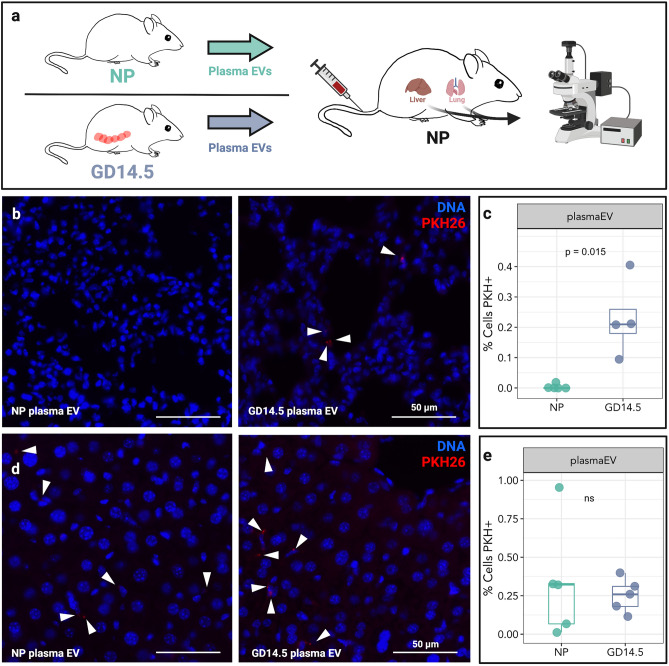
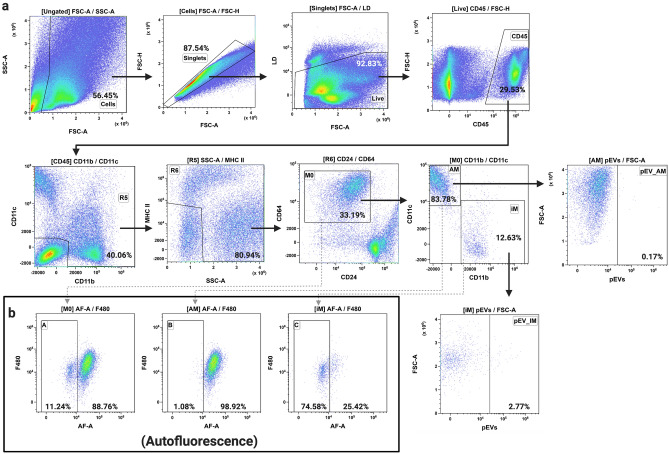
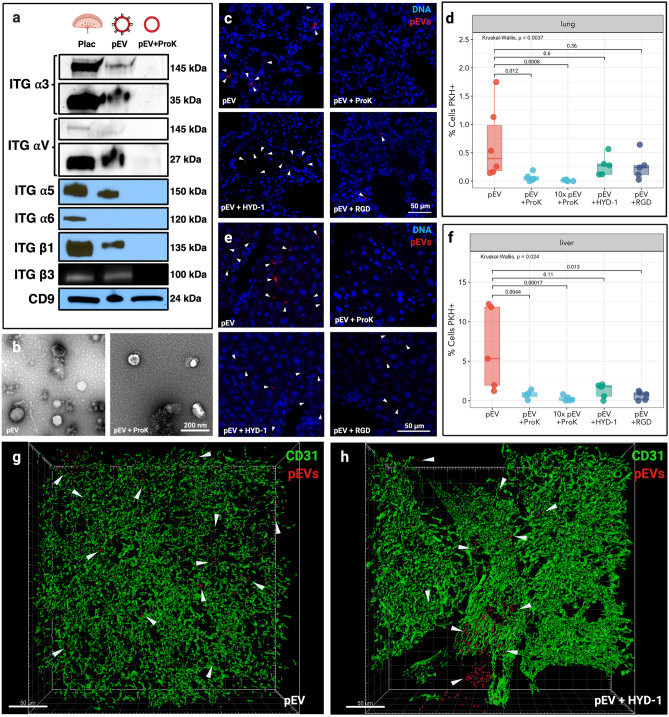
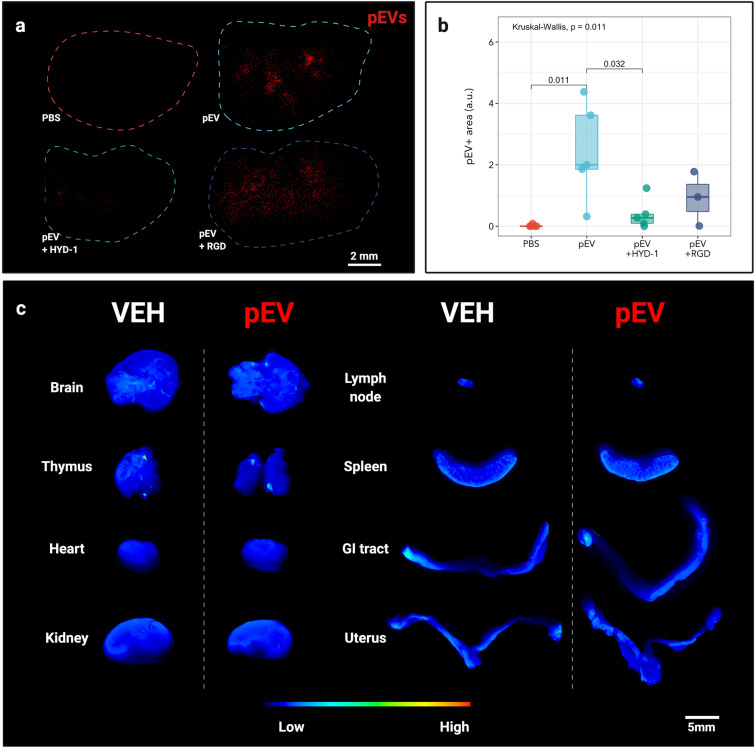
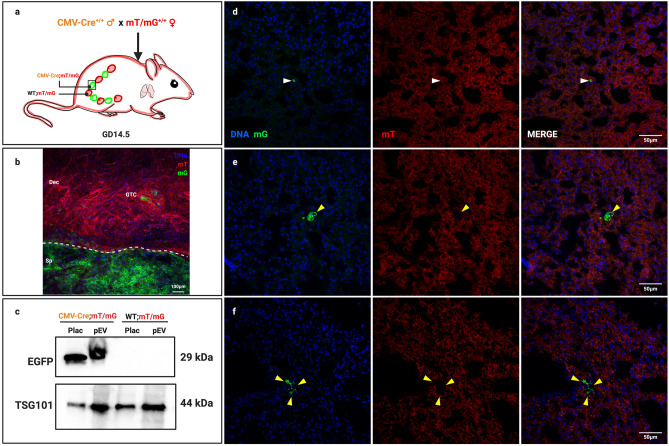
Membrane-bound extracellular vesicles (EVs) mediate intercellular communication in all organisms, and those produced by placental mammals have become increasingly recognized as significant mediators of fetal-maternal communication. Here, we aimed to identify maternal cells targeted by placental EVs and elucidate the mechanisms by which they traffic to these cells. Exogenously administered pregnancy-associated EVs traffic specifically to the lung; further, placental EVs associate with lung interstitial macrophages and liver Kupffer cells in an integrin-dependent manner. Localization of EV to maternal lungs was confirmed in unmanipulated pregnancy using a transgenic reporter mouse model, which also provided in situ and in vitro evidence that fetally-derived EVs, rarely, may cause genetic alteration of maternal cells. These results provide for the first time direct in vivo evidence that placental EVs target maternal immune cells, and further, that EVs can alter cellular phenotype.
膜结合细胞外囊泡 (EVs) 在所有生物体中介导细胞间通讯,而胎盘哺乳动物产生的 EVs 已越来越被认为是胎儿-母体通讯的重要介质。在这里,我们旨在确定胎盘 EVs 靶向的母体细胞,并阐明它们向这些细胞转移的机制。外源性给予的妊娠相关 EVs 特异性地转移到肺部;此外,胎盘 EVs 以整合素依赖性方式与肺间质巨噬细胞和肝库普弗细胞结合。使用转基因报告小鼠模型在未处理的妊娠中证实了 EV 向母体肺部的定位,该模型还提供了体内和体外证据,表明胎儿来源的 EV 很少可能导致母体细胞的遗传改变。这些结果首次提供了直接的体内证据,表明胎盘 EVs 靶向母体免疫细胞,并且进一步表明 EVs 可以改变细胞表型。