Division of Neurodevelopmental and Behavioral Pediatrics, Department of Pediatrics, University of Virginia, Charlottesville, VA, USA.
Department of Medicine, University of Virginia, Charlottesville, VA, USA.
Pediatr Res. 2021 Dec;90(6):1186-1192. doi: 10.1038/s41390-021-01381-1. Epub 2021 Feb 18.
Neonatal intensive care unit (NICU) patients are at increased risk for autism spectrum disorder (ASD). Autonomic nervous system aberrancy has been described in children with ASD, and we aimed to identify heart rate (HR) patterns in NICU patients associated with eventual ASD diagnosis.
This retrospective cohort study included NICU patients from 2009 to 2016 with archived HR data and follow-up beyond age 3 years. Medical records provided clinical variables and ASD diagnosis. HR data were compared in infants with and without ASD.
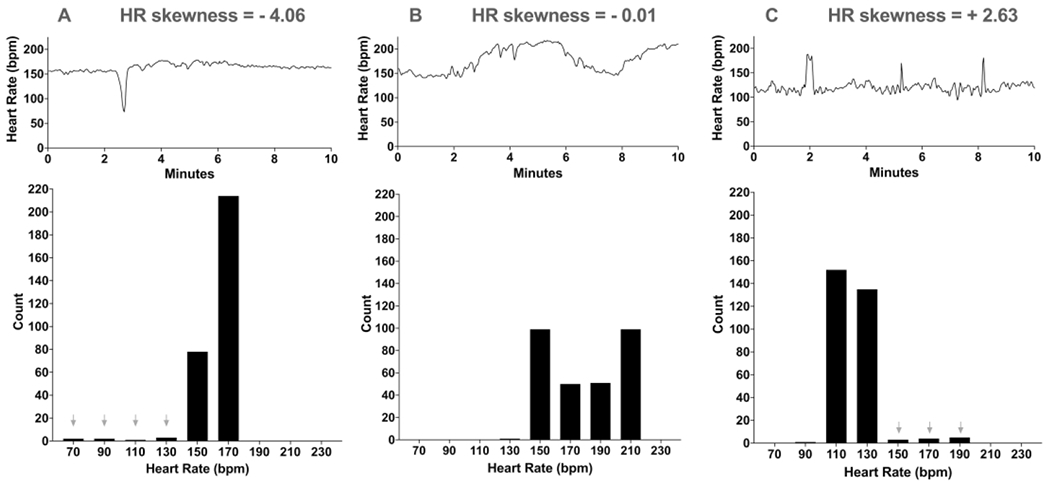
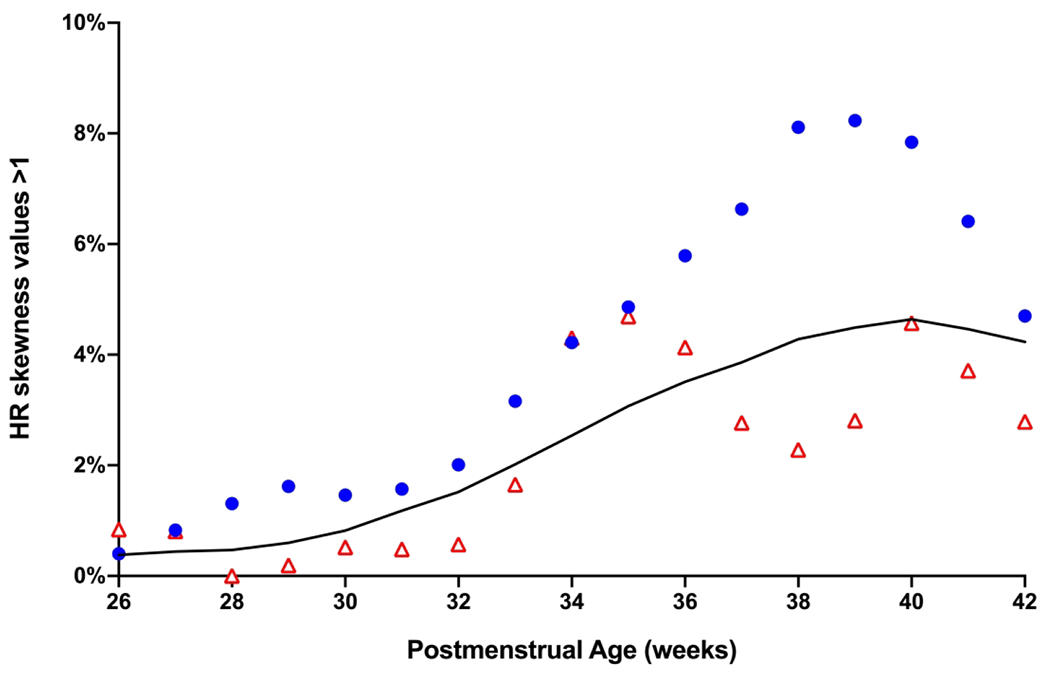
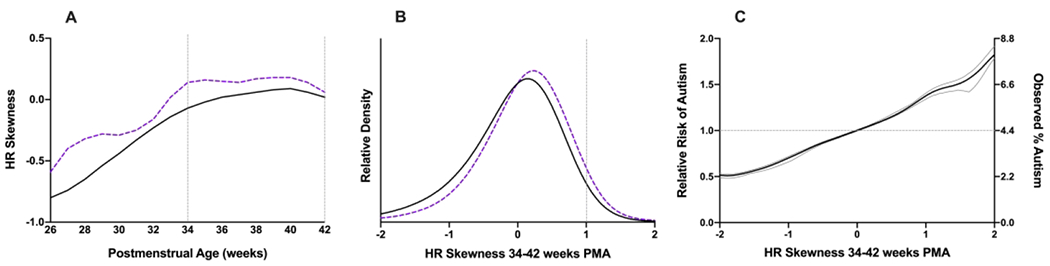
Of the 2371 patients, 88 had ASD, and 689,016 h of data were analyzed. HR skewness (HRskw) was significantly different between ASD and control infants. Preterm infants at early postmenstrual ages (PMAs) had negative HRskw reflecting decelerations, which increased with maturation. From 34 to 42 weeks PMA, positive HRskw toward accelerations was higher in males with ASD. In 931 males with at least 4 days of HR data, overall ASD prevalence was 5%, whereas 11% in the top 5th HRskw percentile had ASD.
High HRskw in NICU males, perhaps representing autonomic imbalance, was associated with increased ASD risk. Further study is needed to determine whether HR analysis identifies highest-risk infants who might benefit from earlier screening and therapies.
In a large retrospective single-center cohort of NICU patients, we found that high positive skewness of heart rate toward more accelerations was significantly associated with increased risk of eventual autism spectrum disorder diagnosis in male infants but not in females. Existing literature describes differences in heart rate characteristics in children, adolescents, and adults with autism spectrum disorders, but the finding from our study in NICU infants is novel. Heart rate analysis during the NICU stay might identify, among an inherently high-risk population, those infants with especially high risk of ASD who might benefit from earlier screening and therapies.
新生儿重症监护病房(NICU)的患儿患自闭症谱系障碍(ASD)的风险增加。已经在患有 ASD 的儿童中描述了自主神经系统异常,我们旨在确定与最终 ASD 诊断相关的 NICU 患者的心率(HR)模式。
这项回顾性队列研究包括 2009 年至 2016 年期间在 NICU 住院的患者,这些患者有存档的 HR 数据,随访时间超过 3 岁。病历提供了临床变量和 ASD 诊断。比较了 ASD 患儿和非 ASD 患儿的 HR 数据。
在 2371 名患者中,有 88 名患有 ASD,分析了 689016 小时的数据。ASD 患儿和对照组患儿的心率偏度(HRskw)有显著差异。早产儿在早期孕周(PMA)时 HRskw 为负,反映减速,随着成熟而增加。从 34 周到 42 周 PMA,ASD 男婴的正向 HRskw 向加速的方向更高。在 931 名至少有 4 天 HR 数据的男性中,ASD 的总体患病率为 5%,而 HRskw 最高的 5%的男性患病率为 11%。
NICU 男性中 HRskw 较高,可能代表自主神经失衡,与 ASD 风险增加相关。需要进一步研究以确定 HR 分析是否能识别出高危婴儿,使他们受益于早期筛查和治疗。
在一项大型回顾性单中心 NICU 患者队列研究中,我们发现,心率向更高加速的正偏度较高与男性婴儿最终自闭症谱系障碍诊断风险增加显著相关,但与女性婴儿无关。现有文献描述了自闭症谱系障碍儿童、青少年和成年人的心率特征差异,但我们在 NICU 婴儿中的研究发现是新颖的。NICU 住院期间的心率分析可能会在高危人群中识别出那些具有极高 ASD 风险的婴儿,使他们受益于早期筛查和治疗。