Meharie Birhanu Geta, Tunta Tewodros Agedew
Department of Pharmacy, College of Medicine and Health Sciences, Wollo University, Dessie, Ethiopia.
Department of Pharmacy, College of Medicine and Health Sciences, Arba Minch University, Arba Minch, Ethiopia.
Clin Exp Gastroenterol. 2021 Feb 12;14:59-70. doi: 10.2147/CEG.S290859. eCollection 2021.
The liver is a hub of metabolism and detoxification of substances. Since many redox reactions take place in the liver, it is prone to oxidative damage. Unlike conventional agents, botanicals act through several mechanisms in preventing oxidative damage. Among these is the most commonly used agent in Ethiopian folk medicine.
To evaluate antioxidant and hepatoprotective activities of the 80% methanol extract of root.
Male mice were divided into six groups and treated accordingly. Negative control was given 2% Tween 80, toxicant control administered with carbon tetrachloride (CCl), positive control treated with silymarin 100 mg/kg, and test groups were treated with 100, 200, and 400 mg/kg of the extract. Then, serum levels of alkaline phosphatase (ALP), alanine aminotransferase (ALT), aspartate aminotransferase (AST), gamma-glutamyl transferase (GGT), lactate dehydrogenase (LDH), total cholesterol (TC), triglyceride (TG), low-density lipoprotein (LDL) cholesterol, high-density lipoprotein (HDL) cholesterol, albumin, total protein, and bilirubin were determined. Determination of the change in body weight and liver weight, histopathologic examination of the liver, and in vitro and in vivo antioxidant assays were also carried out.
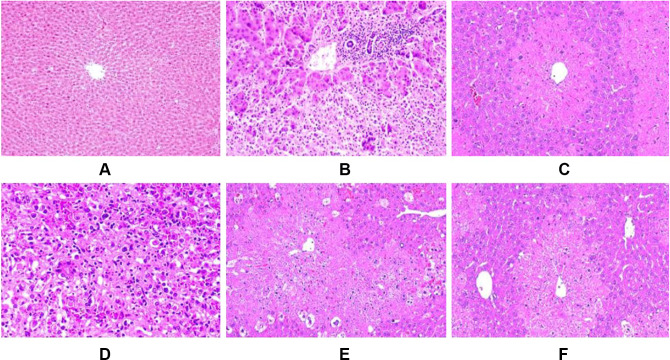
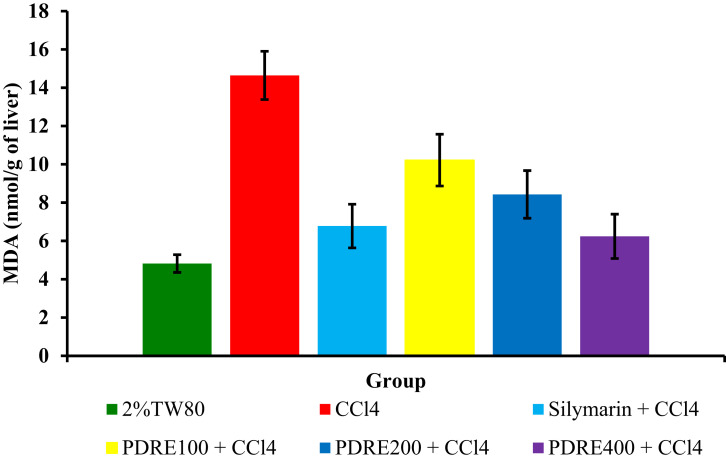
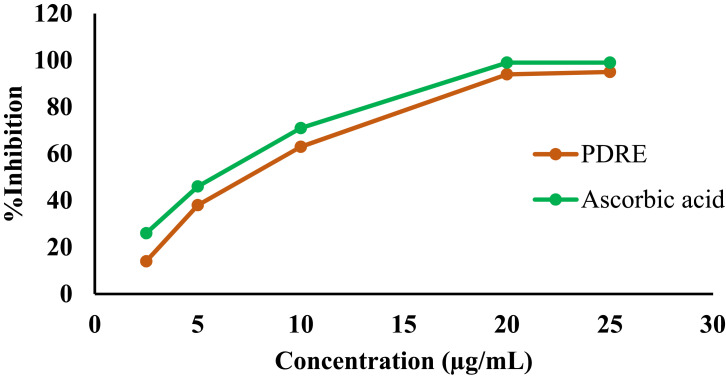
The levels of ALP, ALT, AST, GGT, LDH, and bilirubin were significantly reduced, while albumin and total protein were significantly increased after treatment with root extract at the doses of 200 and 400 mg/kg in CCl intoxicated mice. Cholesterol metabolism and lipoprotein synthesis capabilities of the liver of mice were also returned to normal in the two doses. Besides, the 200 and 400 mg/kg doses were able to return the normal architecture and morphology of hepatocytes. Furthermore, the plant extract was found to scavenge free radicals in vitro and inhibit lipid peroxidation in vivo.
The results suggest that the 80% methanol extract of root can be used for the management of liver disease.
肝脏是物质代谢和解毒的中心。由于肝脏中发生许多氧化还原反应,它容易受到氧化损伤。与传统药物不同,植物药通过多种机制预防氧化损伤。其中 是埃塞俄比亚民间医学中最常用的药物。
评估 根80%甲醇提取物的抗氧化和保肝活性。
将雄性小鼠分为六组并进行相应处理。阴性对照组给予2%吐温80,毒性对照组给予四氯化碳(CCl),阳性对照组用100 mg/kg水飞蓟宾处理,试验组分别用100、200和400 mg/kg提取物处理。然后,测定血清碱性磷酸酶(ALP)、丙氨酸氨基转移酶(ALT)、天冬氨酸氨基转移酶(AST)、γ-谷氨酰转移酶(GGT)、乳酸脱氢酶(LDH)、总胆固醇(TC)、甘油三酯(TG)、低密度脂蛋白(LDL)胆固醇、高密度脂蛋白(HDL)胆固醇、白蛋白、总蛋白和胆红素水平。还进行了体重和肝脏重量变化的测定、肝脏组织病理学检查以及体外和体内抗氧化试验。
在CCl中毒小鼠中,200和400 mg/kg剂量的 根提取物处理后,ALP、ALT、AST、GGT、LDH和胆红素水平显著降低,而白蛋白和总蛋白显著增加。这两个剂量还使小鼠肝脏的胆固醇代谢和脂蛋白合成能力恢复正常。此外,200和400 mg/kg剂量能够使肝细胞的正常结构和形态恢复。此外,发现该植物提取物在体外能清除自由基,在体内能抑制脂质过氧化。
结果表明, 根80%甲醇提取物可用于肝病的治疗。