Liu Lijun, Zhang Jun, Liu Yujuan
Department of Gynecology, Weifang Maternal and Child Health Hospital, Weifang, Shandong 261011, P.R. China.
Department of Pharmacy, Weifang Maternal and Child Health Hospital, Weifang, Shandong 261011, P.R. China.
Exp Ther Med. 2021 Mar;21(3):230. doi: 10.3892/etm.2021.9661. Epub 2021 Jan 20.
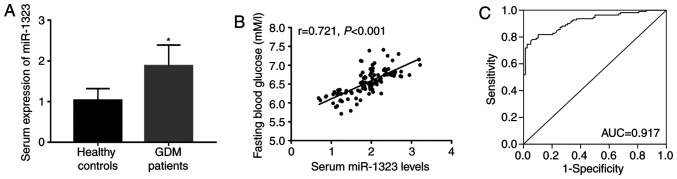
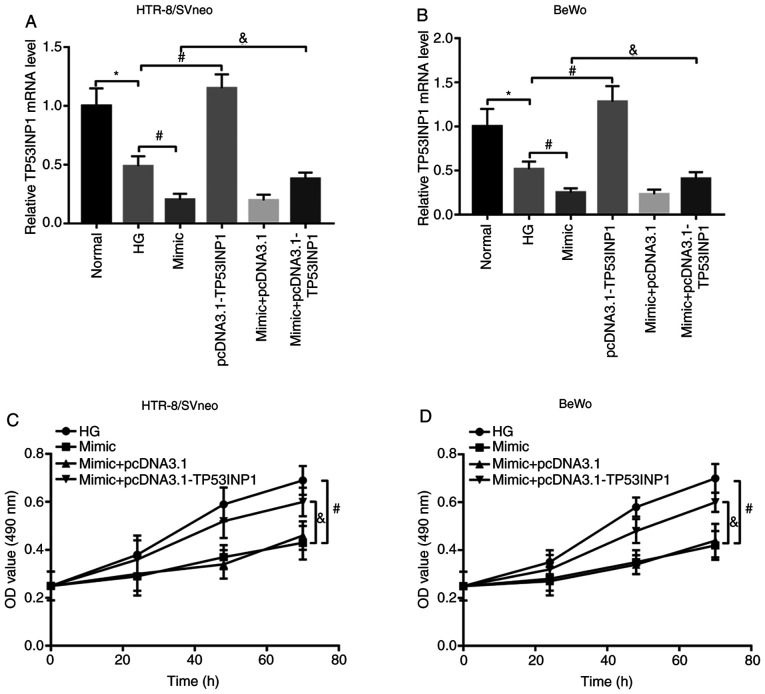
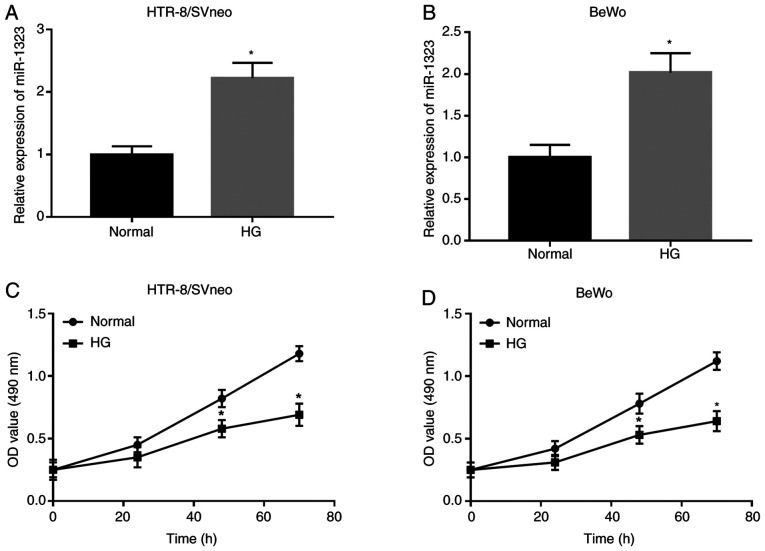
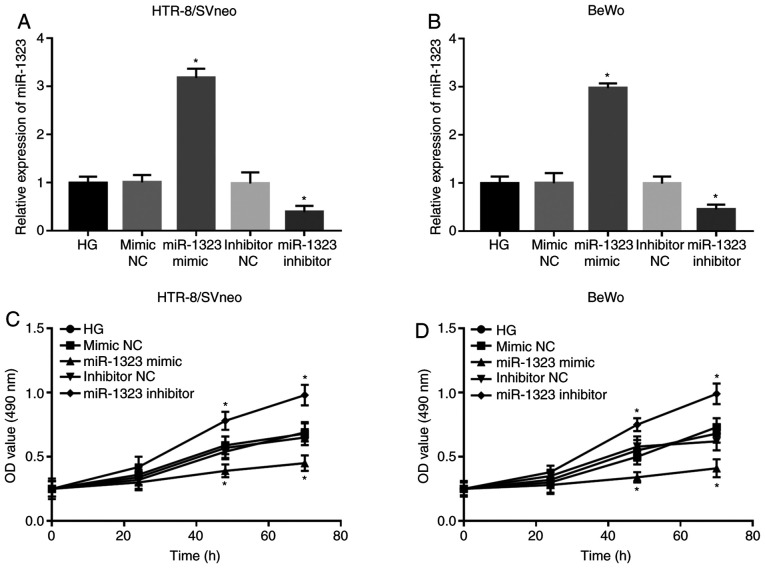
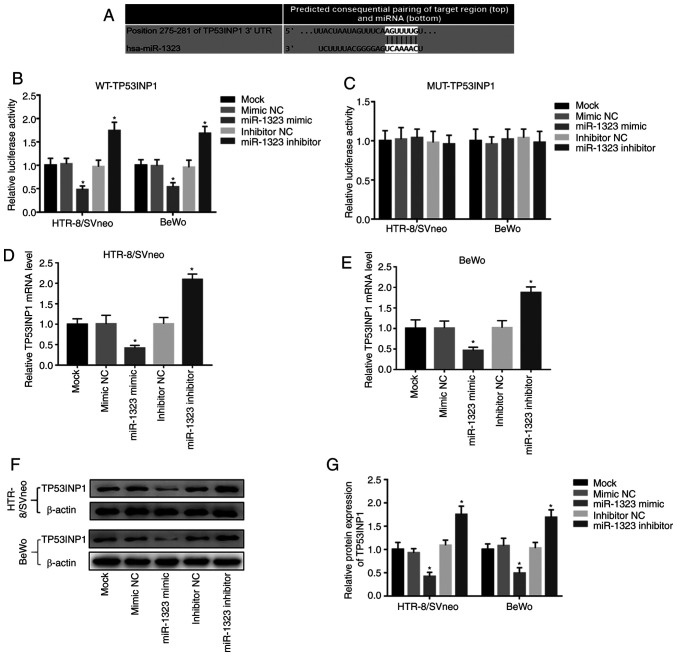
Gestational diabetes mellitus (GDM) leads to poor pregnancy outcomes, and microRNAs (miRNAs/miRs) have been suggested to be associated with GDM, but the pathological mechanisms remain unclear. The present study aimed to investigate the diagnostic value of miR-1323 in GDM patients and its effects on trophoblast cell viability. Additionally, the present study investigated the correlation between miR-1323 and TP53INP1 to understand the pathological mechanism of GDM progression. Reverse transcription-quantitative polymerase chain reaction was used to detect the miR-1323 expression and TP53INP1 mRNA expression. The diagnostic value of serum miR-1323 was evaluated by receiver operating characteristic analysis. HTR-8/SVneo and BeWo cells were treated with high glucose (HG) to construct cell models of GDM, and trophoblast cell viability was assessed using an MTT assay. The protein expression of TP53INP1 was detected by western blot analysis. The correlation between miR-1323 and TP53INP1 was investigated by luciferase reporter assay. The miR-1323 expression was increased in patients with GDM, which had relatively high diagnostic accuracy for GDM screening and was positively correlated with fasting blood glucose in patients GDM. HG upregulated the miR-1323 expression and inhibited trophoblast cell viability. Overexpression of miR-1323 significantly inhibited the viability of HG-induced trophoblast cells. TP53INP1, a target gene of miR-1323, was negatively correlated with miR-1323. TP53INP1 overexpression reversed the inhibitory effect of miR-1323 overexpression on the viability of HG-treated trophoblast cells. Increased levels of serum miR-1323 may be a diagnostic biomarker for GDM. Additionally, miR-1323 may inhibit trophoblast cell viability by inhibiting TP53INP1, suggesting that it may be a potential therapeutic target for GDM.
妊娠期糖尿病(GDM)会导致不良妊娠结局,且有研究表明微小RNA(miRNA/miR)与GDM有关,但病理机制仍不清楚。本研究旨在探讨miR-1323在GDM患者中的诊断价值及其对滋养层细胞活力的影响。此外,本研究还探讨了miR-1323与TP53INP1之间的相关性,以了解GDM进展的病理机制。采用逆转录定量聚合酶链反应检测miR-1323表达和TP53INP1 mRNA表达。通过受试者工作特征分析评估血清miR-1323的诊断价值。用高糖(HG)处理HTR-8/SVneo和BeWo细胞以构建GDM细胞模型,并用MTT法评估滋养层细胞活力。通过蛋白质印迹分析检测TP53INP1的蛋白表达。通过荧光素酶报告基因检测法研究miR-1323与TP53INP1之间的相关性。GDM患者的miR-1323表达升高,其对GDM筛查具有较高的诊断准确性,且与GDM患者的空腹血糖呈正相关。HG上调miR-1323表达并抑制滋养层细胞活力。miR-1323的过表达显著抑制了HG诱导的滋养层细胞活力。TP53INP1是miR-1323的靶基因,与miR-1323呈负相关。TP53INP1的过表达逆转了miR-1323过表达对HG处理的滋养层细胞活力的抑制作用。血清miR-1323水平升高可能是GDM的诊断生物标志物。此外,miR-1323可能通过抑制TP53INP1来抑制滋养层细胞活力,表明它可能是GDM的潜在治疗靶点。