Discovery and Translational Science Department, Leeds Institute of Cardiovascular and Metabolic Medicine, Faculty of Medicine and Health, University of Leeds, Leeds, U.K.
Anthony Nolan Research Institute, Royal Free Hospital, Hampstead, London, U.K.
Clin Sci (Lond). 2024 Sep 18;138(18):1179-1207. doi: 10.1042/CS20230681.
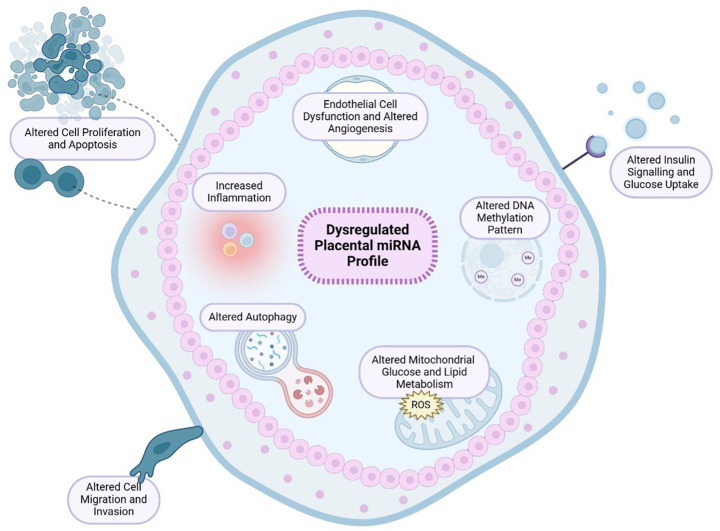
With the global prevalence of diabetes increasing, more people of reproductive age are experiencing hyperglycaemic pregnancies. Maternal Type 1 (T1DM) or Type 2 (T2DM) diabetes mellitus, and gestational diabetes mellitus (GDM) are associated with maternal cardiovascular and metabolic complications. Pregnancies complicated by maternal diabetes also increase the risk of short- and long-term health complications for the offspring, including altered fetal growth and the onset of T2DM and cardiometabolic diseases throughout life. Despite advanced methods for improving maternal glucose control, the prevalence of adverse maternal and offspring outcomes associated with maternal diabetes remains high. The placenta is a key organ at the maternal-fetal interface that regulates fetal growth and development. In pregnancies complicated by maternal diabetes, altered placental development and function has been linked to adverse outcomes in both mother and fetus. Emerging evidence suggests that microRNAs (miRNAs) are key molecules involved in mediating these changes. In this review, we describe the role of miRNAs in normal pregnancy and discuss how miRNA dysregulation in the placenta and maternal circulation is associated with suboptimal placental development and pregnancy outcomes in individuals with maternal diabetes. We also discuss evidence demonstrating that miRNA dysregulation may affect the long-term health of mothers and their offspring. As such, miRNAs are potential candidates as biomarkers and therapeutic targets in diabetic pregnancies at risk of adverse outcomes.
随着全球糖尿病患病率的增加,越来越多的育龄期人群经历高血糖妊娠。母体 1 型(T1DM)或 2 型(T2DM)糖尿病和妊娠糖尿病(GDM)与母体心血管和代谢并发症相关。合并母体糖尿病的妊娠也增加了后代短期和长期健康并发症的风险,包括胎儿生长改变以及终生发生 2 型糖尿病和心脏代谢疾病。尽管有先进的方法来改善母体血糖控制,但与母体糖尿病相关的不良母婴结局的发生率仍然很高。胎盘是母体-胎儿界面的关键器官,调节胎儿的生长和发育。在合并母体糖尿病的妊娠中,胎盘发育和功能的改变与母亲和胎儿的不良结局有关。新出现的证据表明,microRNAs(miRNAs)是参与调节这些变化的关键分子。在这篇综述中,我们描述了 miRNAs 在正常妊娠中的作用,并讨论了胎盘和母体循环中 miRNA 失调如何与母体糖尿病患者的胎盘发育不良和妊娠结局不佳相关。我们还讨论了证明 miRNA 失调可能影响母亲及其后代长期健康的证据。因此,miRNAs 可能是有发生不良结局风险的糖尿病妊娠的潜在生物标志物和治疗靶点。