Hallan David R
Neurosurgery, Penn State Health Milton S. Hershey Medical Center, Hershey, USA.
Cureus. 2021 Jan 13;13(1):e12671. doi: 10.7759/cureus.12671.
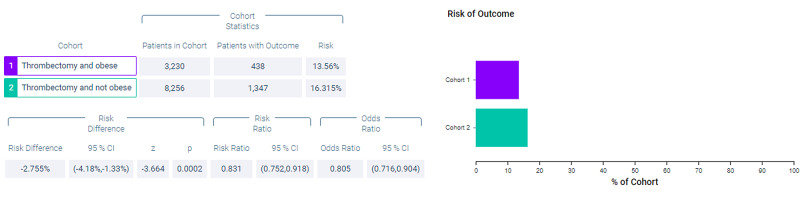
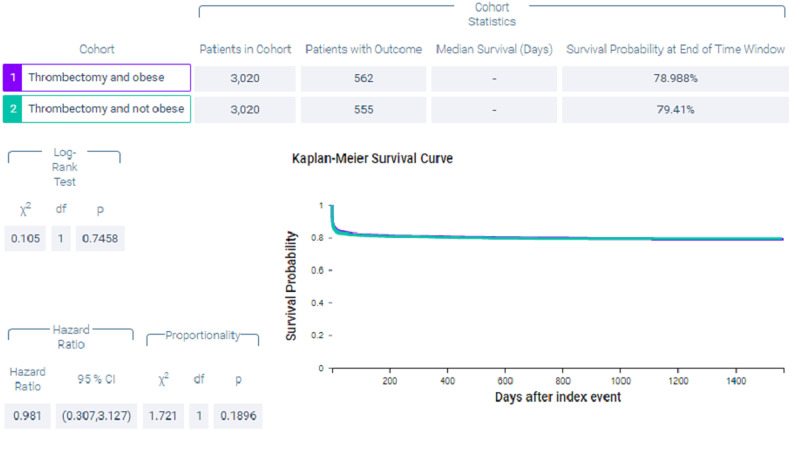
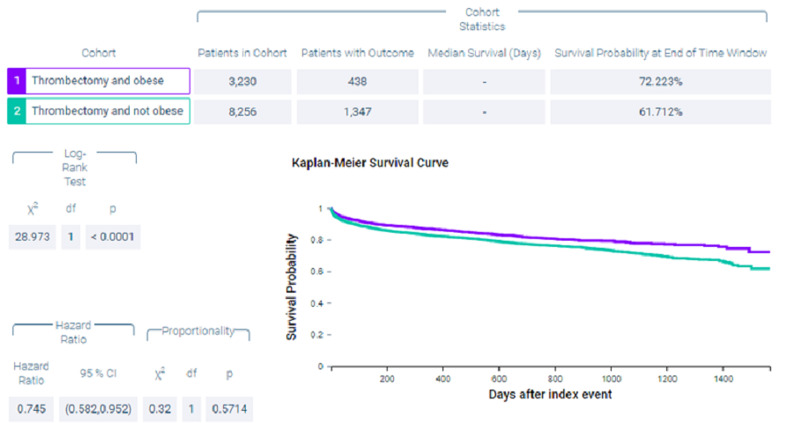
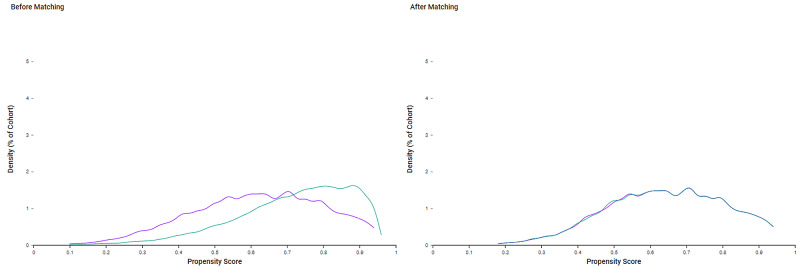
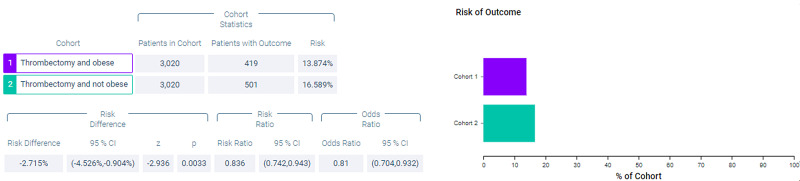
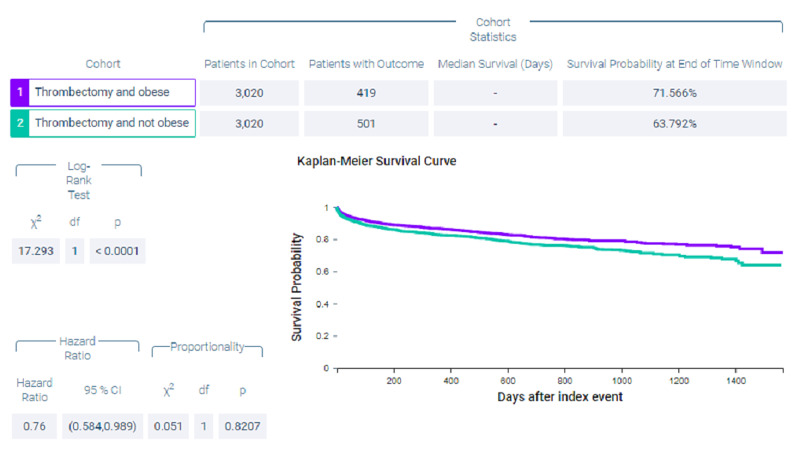
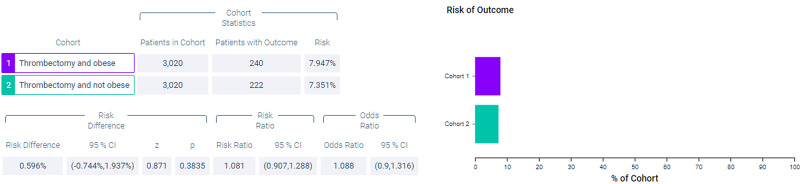
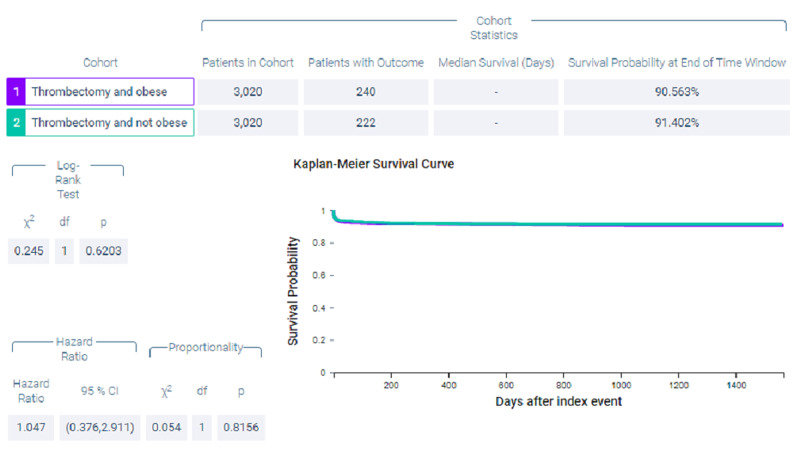
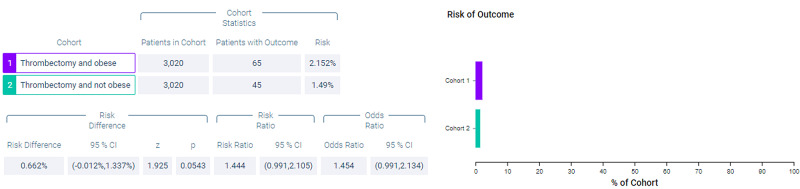
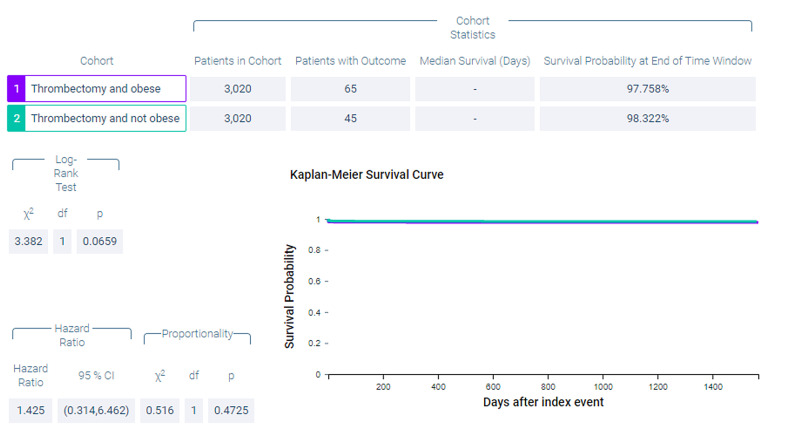
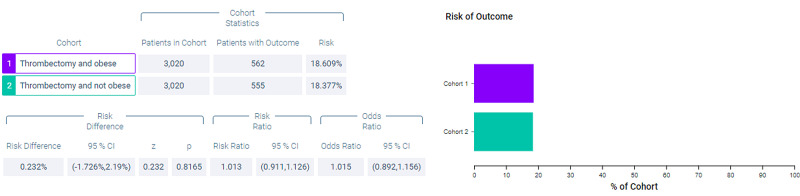
Background Obesity has been shown to have a positive mortality benefit in patients undergoing percutaneous coronary intervention, dialysis, those with rheumatoid arthritis, chronic obstructive pulmonary disease, and various wasting diseases. Studies for this mortality benefit in ischemic stroke patients are conflicting, and it has not been well studied in mechanical thrombectomy patients. We sought to determine the impact of obesity on outcomes of mechanical thrombectomy patients. Methodology We used a large global health research network to gather clinical data extracted from the electronic medical records of ischemic stroke patients who underwent mechanical thrombectomy, and then stratified these patients into obese and non-obese cohorts. The primary endpoint was mortality. Results After propensity score matching, obese patients who underwent mechanical thrombectomy had decreased mortality (p = 0.0033, odds ratio = 0.81, 95% confidence interval = 0.704,0.932) compared to non-obese patients. No statistically significant difference was shown between these two cohorts for the outcomes of ventilator dependence, hemicraniectomy, or post-procedure intracerebral hemorrhage. Conclusion Despite increasing risk of ischemic stroke, obese patients who undergo mechanical thrombectomy have decreased mortality rates compared to their non-obese counterparts.
肥胖已被证明对接受经皮冠状动脉介入治疗、透析、患有类风湿性关节炎、慢性阻塞性肺疾病以及各种消耗性疾病的患者具有积极的死亡率益处。关于肥胖对缺血性中风患者死亡率益处的研究结果相互矛盾,且在机械取栓患者中尚未得到充分研究。我们试图确定肥胖对机械取栓患者预后的影响。
我们使用一个大型全球健康研究网络收集从接受机械取栓的缺血性中风患者电子病历中提取的临床数据,然后将这些患者分为肥胖组和非肥胖组。主要终点是死亡率。
经过倾向评分匹配后,与非肥胖患者相比,接受机械取栓的肥胖患者死亡率降低(p = 0.0033,比值比 = 0.81,95%置信区间 = 0.704,0.932)。在这两组患者中,在呼吸机依赖、去骨瓣减压术或术后脑出血的预后方面未显示出统计学上的显著差异。
尽管缺血性中风风险增加,但接受机械取栓的肥胖患者与非肥胖患者相比死亡率较低。