Wang Fangyan, Pan Binhui, Xu Sheng, Xu Zhihua, Zhang Tiaotiao, Zhang Qihao, Bao Yifan, Wang Yingwei, Zhang Jiamin, Xu Changlong, Xue Xiangyang
Department of Pathophysiology, School of Basic Medicine Science, Wenzhou Medical University, Wenzhou, Zhejiang Province, China.
The Basic Research Division of Virology Institute, Wenzhou Medical University, Wenzhou, Zhejiang Province, China.
Biosci Rep. 2021 Mar 26;41(3). doi: 10.1042/BSR20203638.
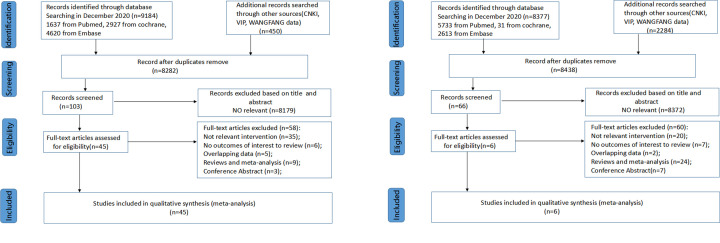
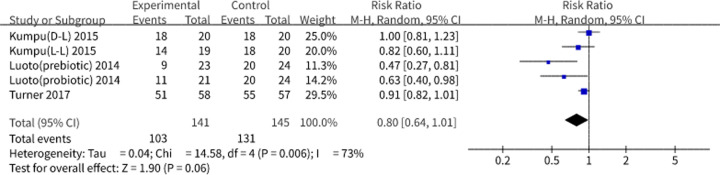
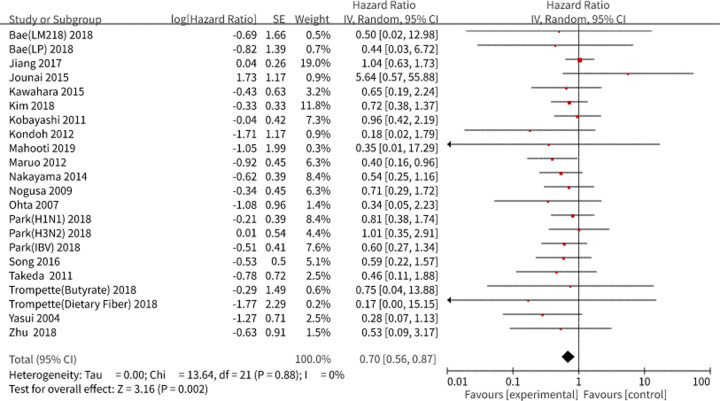
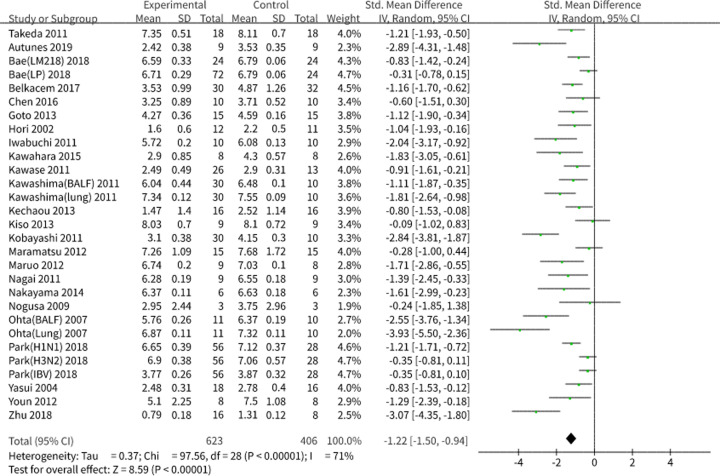
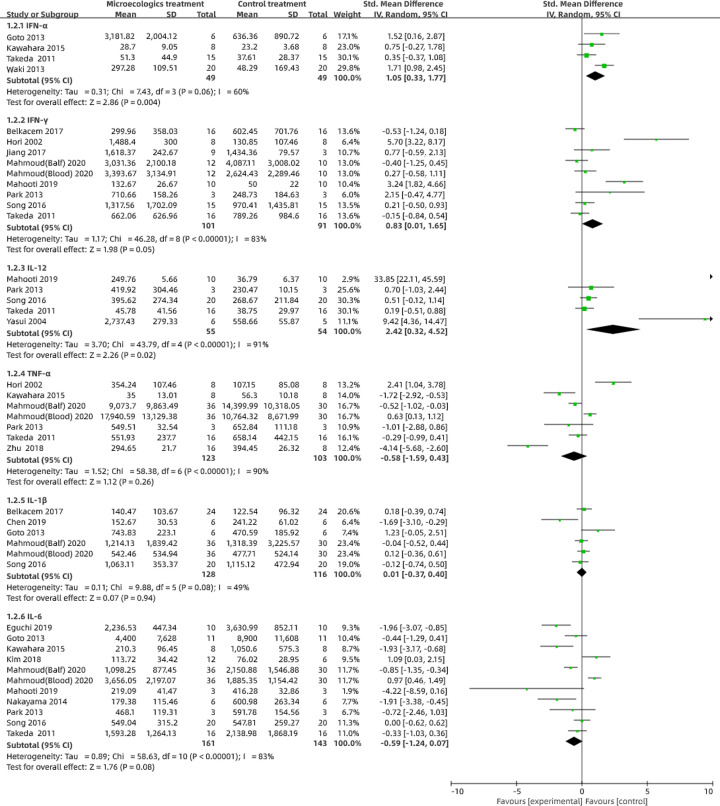
Experimental experience suggests that microbial agents including probiotics and prebiotics (representative microbial agents) play a critical role in defending against respiratory virus infection. We aim to systematically examine these agents' effect on respiratory viral infection and encourage research into clinical applications. An electronic literature search was conducted from published data with a combination of a microbial agents search component containing synonyms for microbial agents-related terms and a customized search component for respiratory virus infection. Hazard ratio (HR), risk ratio (RR) and standard deviation (SD) were employed as effect estimates. In 45 preclinical studies, the mortality rates decreased in the respiratory viral infection models that included prebiotics or prebiotics as interventions (HR: 0.70; 95% confidence interval (CI): 0.56-0.87; P=0.002). There was a significant decrease in viral load due to improved gut microbiota (SD: -1.22; 95% CI: -1.50 to -0.94; P<0.001). Concentrations of interferon (IFN)-α (SD: 1.05; 95% CI: 0.33-1.77; P=0.004), IFN-γ (SD: 0.83; 95% CI: 0.01-1.65; P=0.05) and interleukin (IL)-12 (SD: 2.42; 95% CI: 0.32-4.52; P=0.02), IL-1β (SD: 0.01; 95% CI: -0.37 to 0.40; P=0.94) increased, whereas those of TNF-α (SD: -0.58; 95% CI: -1.59 to 0.43; P=0.26) and IL-6 (SD: -0.59; 95% CI: -1.24 to 0.07; P=0.08) decreased. Six clinical studies had lower symptom scores (SD: -0.09; 95% CI: -0.44 to 0.26; P=0.61) and less incidence of infection (RR: 0.80; 95% CI: 0.64-1.01; P=0.06). Our research indicates that probiotics and prebiotics pose a defensive possibility on respiratory viral infection and may encourage the clinical application.
实验经验表明,包括益生菌和益生元(典型微生物制剂)在内的微生物制剂在抵御呼吸道病毒感染方面发挥着关键作用。我们旨在系统地研究这些制剂对呼吸道病毒感染的影响,并推动其临床应用研究。通过已发表的数据进行电子文献检索,检索内容结合了包含微生物制剂相关术语同义词的微生物制剂检索部分和针对呼吸道病毒感染的定制检索部分。采用风险比(HR)、相对危险度(RR)和标准差(SD)作为效应估计值。在45项临床前研究中,在包含益生元或益生菌作为干预措施的呼吸道病毒感染模型中死亡率降低(HR:0.70;95%置信区间(CI):0.56 - 0.87;P = 0.002)。由于肠道微生物群改善,病毒载量显著降低(SD: - 1.22;95% CI: - 1.50至 - 0.94;P < 0.001)。干扰素(IFN)-α(SD:1.05;95% CI:0.33 - 1.77;P = 0.004)、IFN - γ(SD:0.83;95% CI:0.01 - 1.65;P = 0.05)和白细胞介素(IL)-12(SD:2.42;95% CI:0.32 - 4.52;P = 0.02)浓度升高,而肿瘤坏死因子-α(SD: - 0.58;95% CI: - 1.59至0.43;P = 0.26)和IL - 6(SD: - 0.59;95% CI: - 1.24至0.07;P = 0.08)浓度降低。六项临床研究显示症状评分较低(SD: - 0.09;95% CI: - 0.44至0.26;P = 0.61)且感染发生率较低(RR:0.80;95% CI:0.64 - 1.01;P = 0.06)。我们的研究表明,益生菌和益生元对呼吸道病毒感染具有防御作用的可能性,并且可能会推动其临床应用。