Harry S. Truman Memorial Veterans Hospital and Department of Neurology, University of Missouri, Columbia, MO, USA.
Alcohol Clin Exp Res. 2021 Mar;45(3):530-542. doi: 10.1111/acer.14549. Epub 2021 Feb 19.
Binge drinking is a deadly pattern of alcohol consumption. Evidence suggests that genetic variation in clock genes is strongly associated with alcohol misuse; however, the neuroanatomical basis for such a relationship is unknown. The shell region of the nucleus accumbens (NAcSh) is well known to play a role in binge drinking. Hence, we examined whether clock genes in the NAcSh regulate binge drinking.
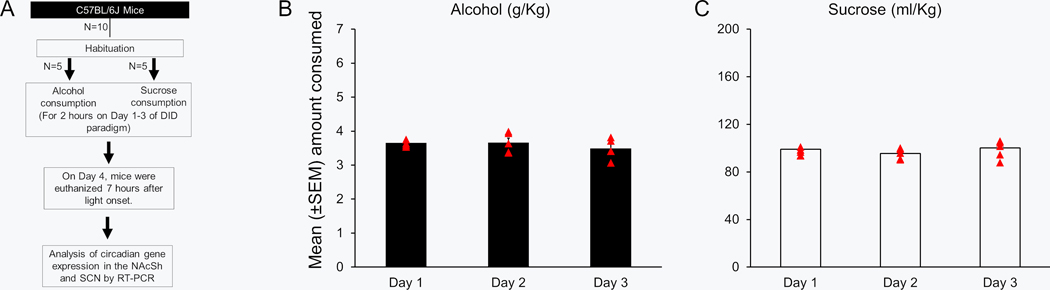
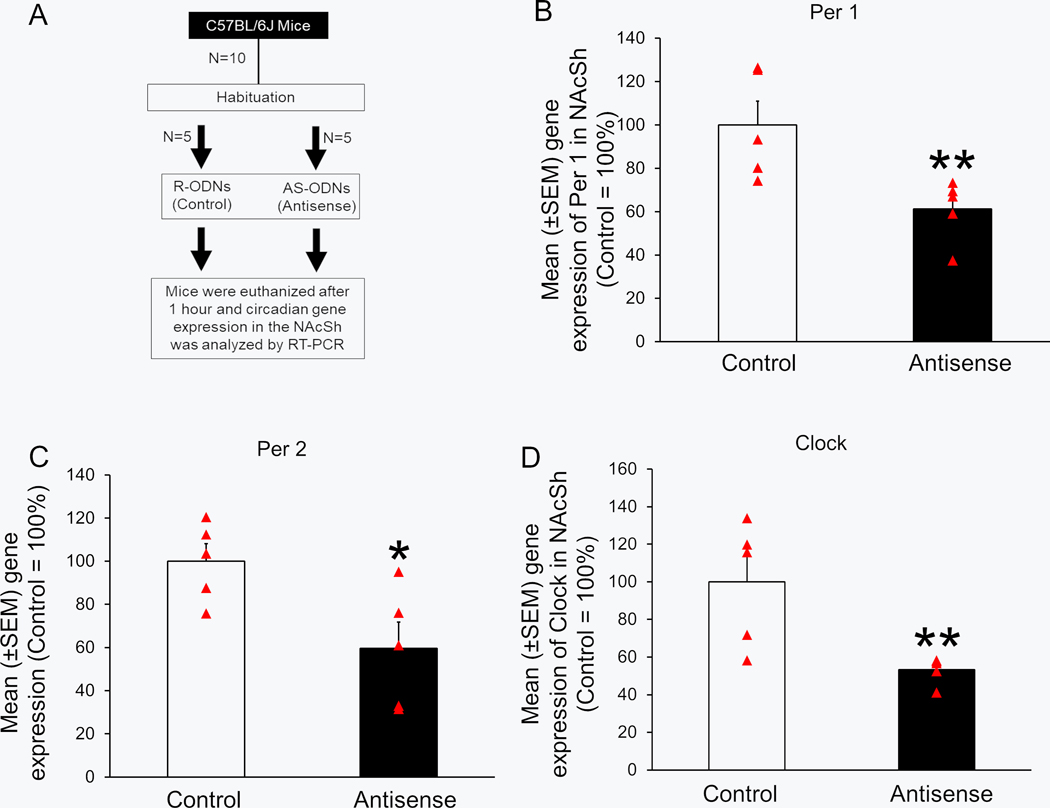
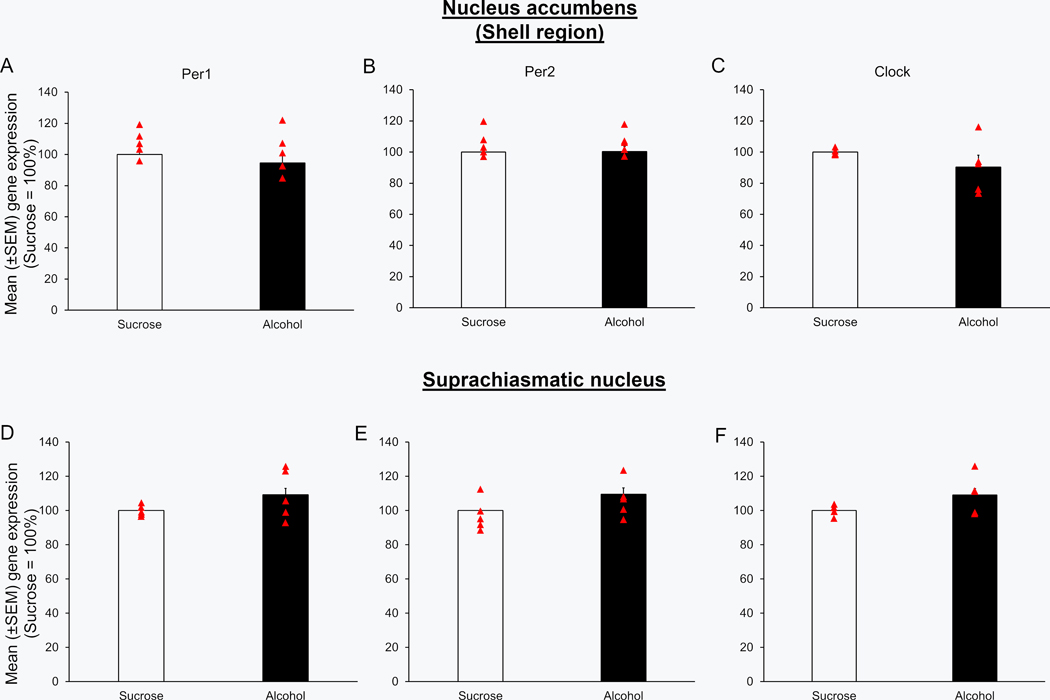
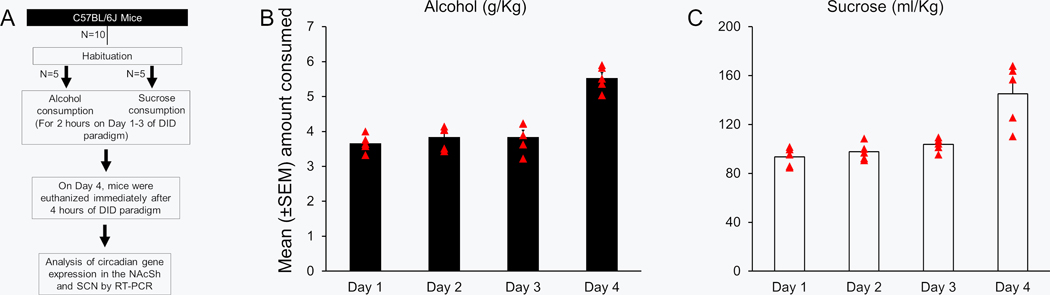
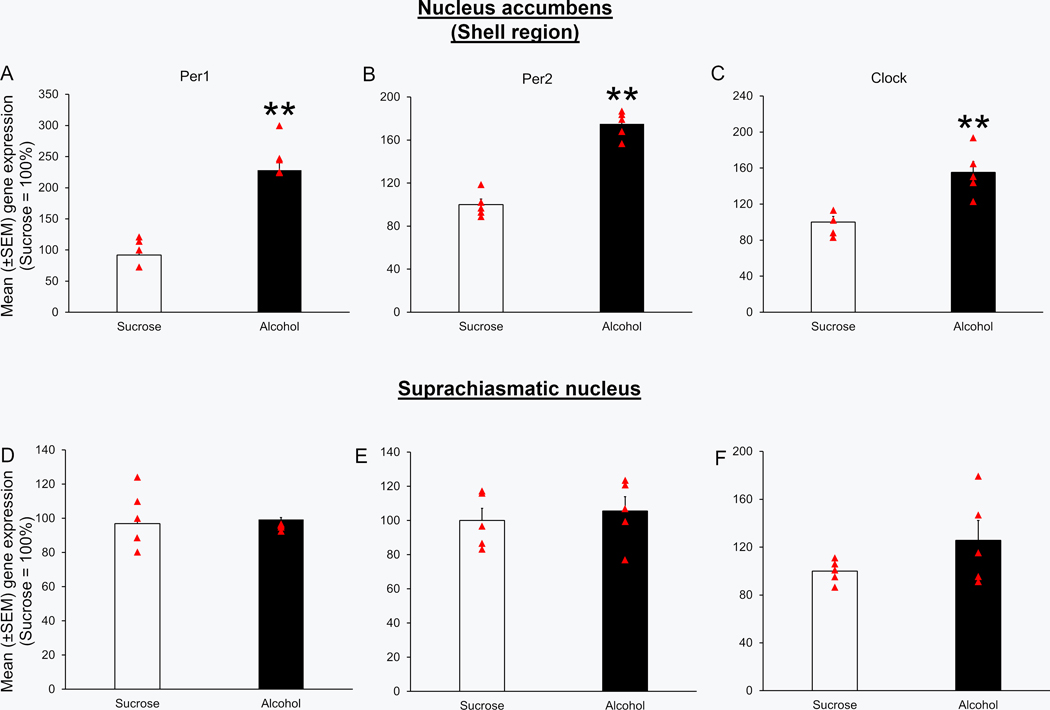
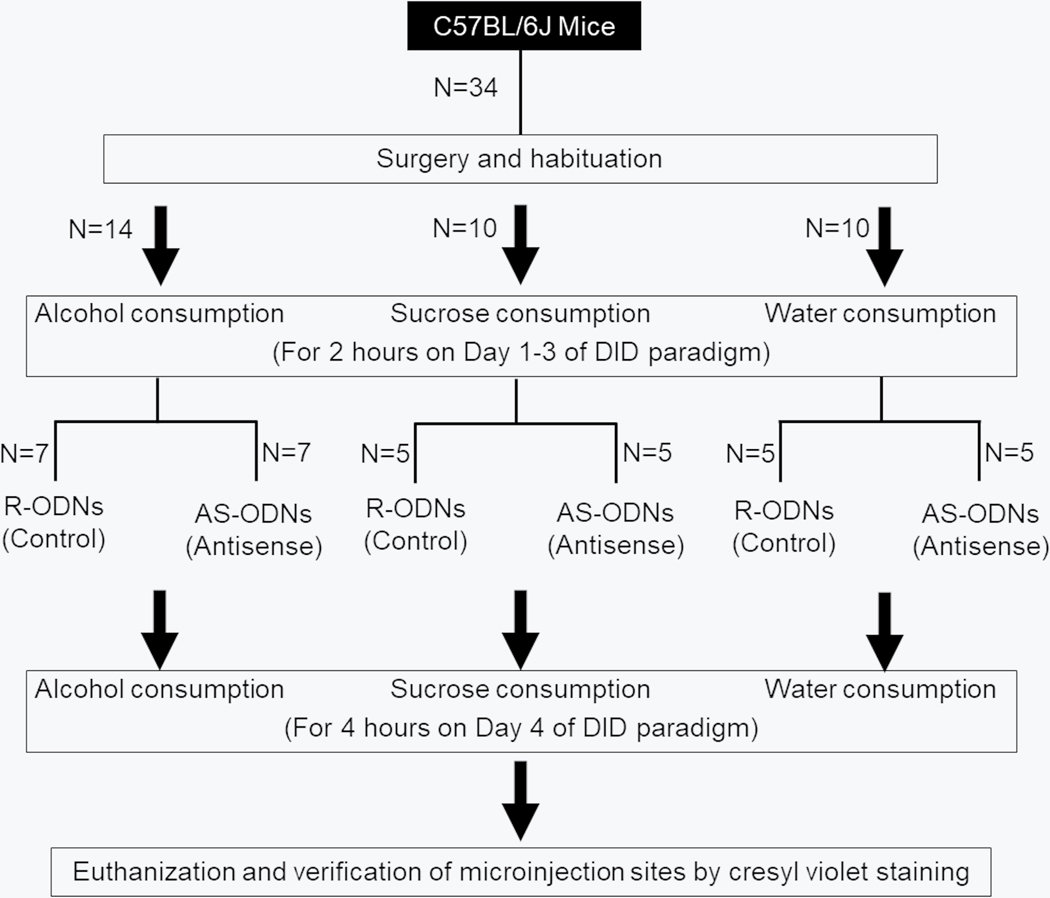
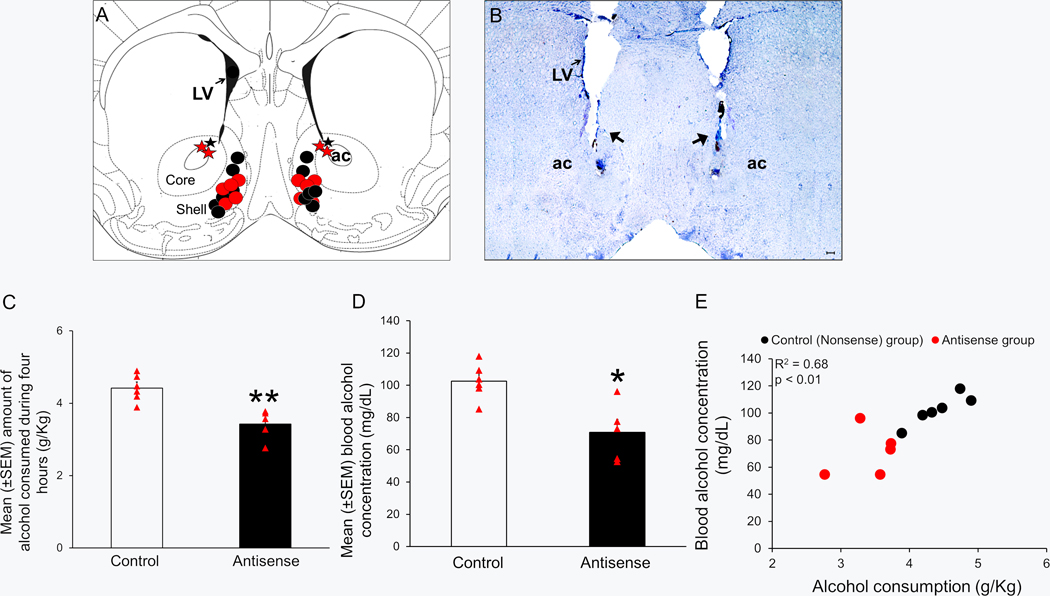
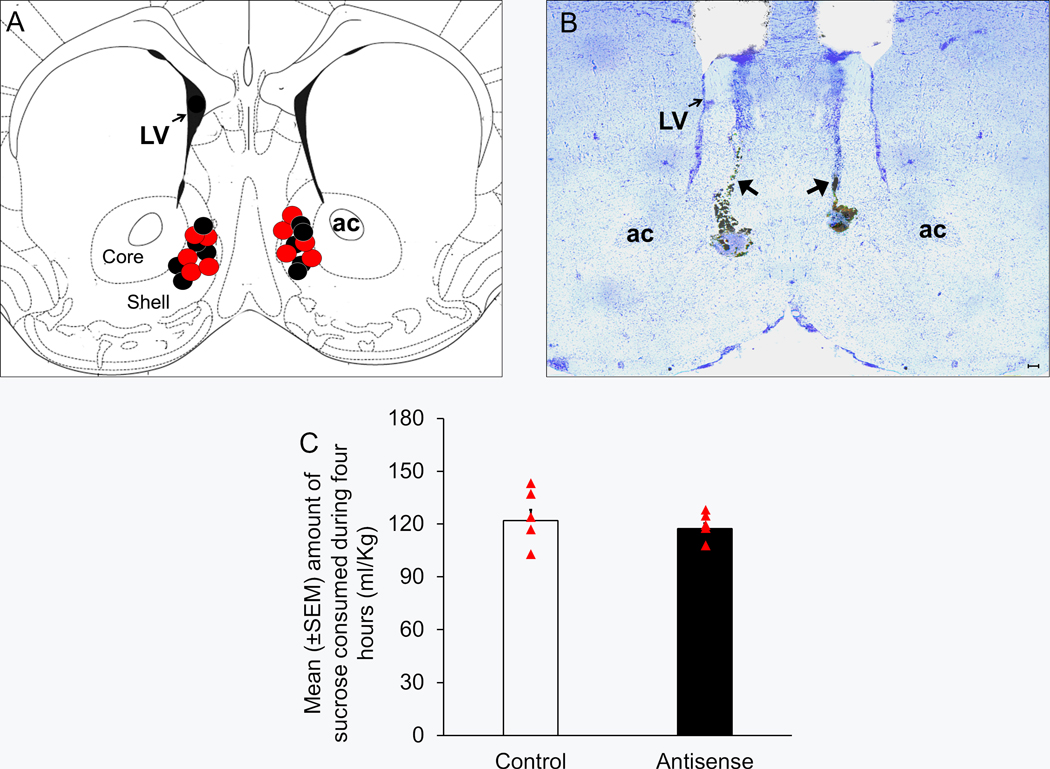
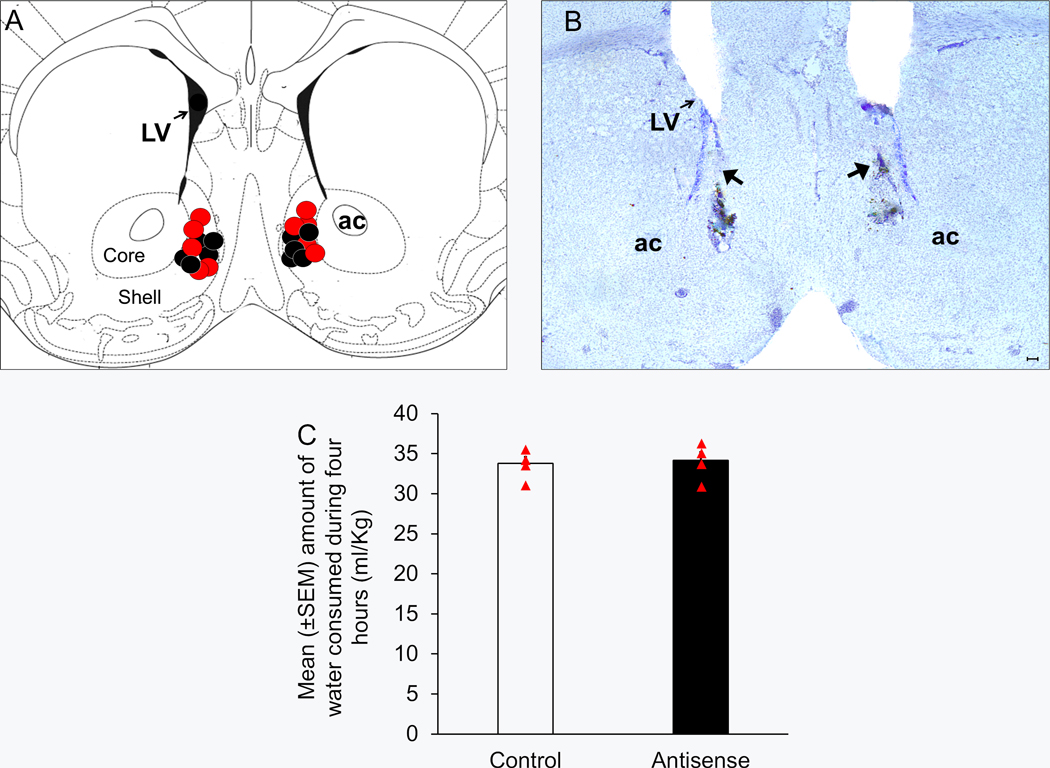
To address this question, 2 experiments were performed on male C57BL/6J mice. In the first experiment, mice exposed to alcohol or sucrose under the 4-day drinking-in-the-dark (DID) paradigm were euthanized at 2 different time points on day 4 [7 hours after light (pre-binge drinking) or dark (post-binge drinking) onset]. The brains were processed for RT-PCR to examine the expression of circadian clock genes (Clock, Per1, and Per2) in the NAcSh and suprachiasmatic nucleus (SCN). In the second experiment, mice were exposed to alcohol, sucrose, or water as described above. On day 4, 1 hour prior to the onset of alcohol exposure, mice were bilaterally infused with either a mixture of circadian clock gene antisense oligodeoxynucleotides (AS-ODNs; antisense group) or nonsense/random ODNs (R-ODNs; control group) through surgically implanted cannulas above the NAcSh. Alcohol/sucrose/water consumption was measured for 4 hours. Blood alcohol concentration was measured to confirm binge drinking. Microinfusion sites were histologically verified using cresyl violet staining.
As compared to sucrose, mice euthanized post-binge drinking (not pre-binge drinking) on day 4 displayed a greater expression of circadian genes in the NAcSh but not in the SCN. Knockdown of clock genes in the NAcSh caused a significantly lower volume of alcohol to be consumed on day 4 than in the control treatment. No differences were found in sucrose or water consumption.
Our results suggest that clock genes in the NAcSh play a crucial role in binge drinking.
狂饮是一种致命的饮酒模式。有证据表明,生物钟基因的遗传变异与酒精滥用密切相关;然而,这种关系的神经解剖学基础尚不清楚。伏隔核(NAcSh)的壳区已知在狂饮中起作用。因此,我们研究了 NAcSh 中的生物钟基因是否调节狂饮。
为了解决这个问题,我们在雄性 C57BL/6J 小鼠上进行了 2 项实验。在第一项实验中,将暴露于酒精或蔗糖下的小鼠置于 4 天暗饮(DID)范式中,在第 4 天的 2 个不同时间点(光照(预狂饮)或黑暗(后狂饮)开始后 7 小时)处死。对大脑进行 RT-PCR 处理,以检测 NAcSh 和视交叉上核(SCN)中生物钟基因(Clock、Per1 和 Per2)的表达。在第二项实验中,如上所述,将小鼠暴露于酒精、蔗糖或水中。在第 4 天,在暴露于酒精之前 1 小时,通过手术植入的 NAcSh 上方的套管将生物钟基因反义寡核苷酸(AS-ODN;反义组)或无意义/随机 ODN(R-ODN;对照组)的混合物双侧输注到小鼠体内。测量 4 小时的酒精/蔗糖/水消耗。测量血酒精浓度以确认狂饮。使用 Cresyl Violet 染色通过组织学验证微灌注部位。
与蔗糖相比,在第 4 天狂饮后(而非预狂饮)处死的小鼠在 NAcSh 中显示出更高的生物钟基因表达,但在 SCN 中没有。NAcSh 中的时钟基因敲低导致在第 4 天的酒精摄入量明显低于对照组。在蔗糖或水消耗方面没有差异。
我们的结果表明,NAcSh 中的时钟基因在狂饮中起着至关重要的作用。