Gowin Joshua L, Sloan Matthew E, Stangl Bethany L, Vatsalya Vatsalya, Ramchandani Vijay A
From the Section on Human Psychopharmacology, National Institute on Alcohol Abuse and Alcoholism, Bethesda, Md., and the University of Louisville and Robley Rex Veterans Affairs Medical Center, Louisville, Ky.
Am J Psychiatry. 2017 Nov 1;174(11):1094-1101. doi: 10.1176/appi.ajp.2017.16101180. Epub 2017 Aug 4.
Although several risk factors have been identified for alcohol use disorder, many individuals with these factors do not go on to develop the disorder. Identifying early phenotypic differences between vulnerable individuals and healthy control subjects could help identify those at higher risk. Binge drinking, defined as reaching a blood alcohol level of 80 mg%, carries a risk of negative legal and health outcomes and may be an early marker of vulnerability. Using a carefully controlled experimental paradigm, the authors tested the hypothesis that risk factors for alcohol use disorder, including family history of alcoholism, male sex, impulsivity, and low level of response to alcohol, would predict rate of binging during an individual alcohol consumption session.
This cross-sectional study included 159 young social drinkers who completed a laboratory session in which they self-administered alcohol intravenously. Cox proportional hazards models were used to determine whether risk factors for alcohol use disorder were associated with the rate of achieving a binge-level exposure.
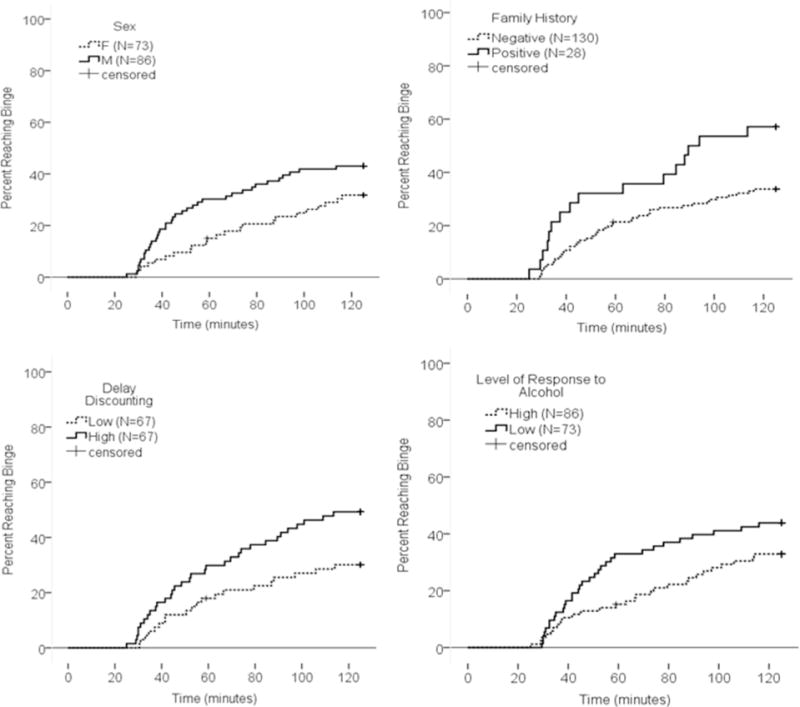
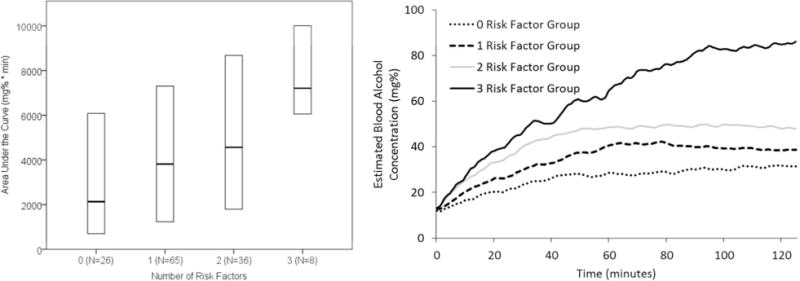
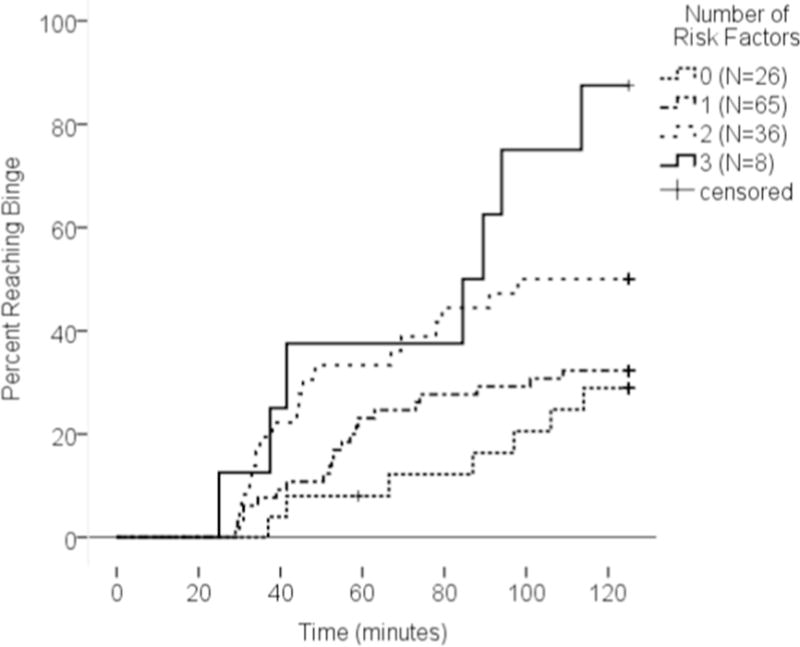
A greater percentage of relatives with alcoholism (hazard ratio: 1.04, 95% CI=1.02-1.07), male sex (hazard ratio: 1.74, 95% CI=1.03-2.93), and higher impulsivity (hazard ratio: 1.17, 95% CI=1.00 to 1.37) were associated with a higher rate of binging throughout the session. Participants with all three risk factors had the highest rate of binging throughout the session compared with the lowest risk group (hazard ratio: 5.27, 95% CI=1.81-15.30).
Binge drinking may be an early indicator of vulnerability to alcohol use disorder and should be carefully assessed as part of a thorough clinical evaluation.
尽管已确定了酒精使用障碍的多种风险因素,但许多有这些因素的个体并未发展成该障碍。识别易患个体与健康对照者之间早期的表型差异,有助于确定那些风险较高的人。暴饮被定义为血液酒精浓度达到80mg%,会带来负面法律和健康后果的风险,可能是易感性的早期标志。作者使用精心控制的实验范式,检验了酒精使用障碍的风险因素,包括酗酒家族史、男性性别、冲动性和对酒精的低反应水平,是否能预测个体饮酒过程中的暴饮率这一假设。
这项横断面研究纳入了159名年轻的社交饮酒者,他们完成了一次实验室实验,在实验中通过静脉自我给药酒精。采用Cox比例风险模型来确定酒精使用障碍的风险因素是否与达到暴饮水平暴露的速率相关。
有酗酒家族史(风险比:1.04,95%置信区间=1.02-1.07)、男性性别(风险比:1.74,95%置信区间=1.03-2.93)和较高冲动性(风险比:1.17,95%置信区间=1.00至1.37)的参与者在整个实验过程中暴饮率较高。与风险最低的组相比,具有所有三个风险因素的参与者在整个实验过程中的暴饮率最高(风险比:5.27,95%置信区间=1.81-15.30)。
暴饮可能是酒精使用障碍易感性的早期指标,应作为全面临床评估的一部分进行仔细评估。