Cancer Biology Laboratory and DBT-AIST International Center for Translational and Environmental Research (DAICENTER), Department of Biosciences and Bioengineering, Indian Institute of Technology Guwahati, Guwahati, Assam 781039, India.
Cancer Biology Laboratory and DBT-AIST International Center for Translational and Environmental Research (DAICENTER), Department of Biosciences and Bioengineering, Indian Institute of Technology Guwahati, Guwahati, Assam 781039, India.
Life Sci. 2021 Nov 1;284:119201. doi: 10.1016/j.lfs.2021.119201. Epub 2021 Feb 16.
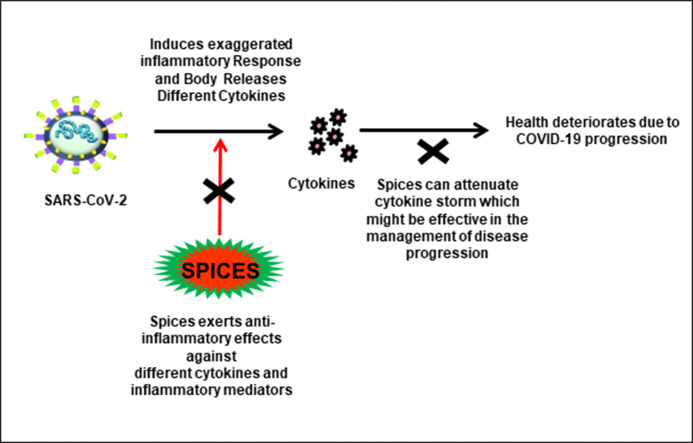
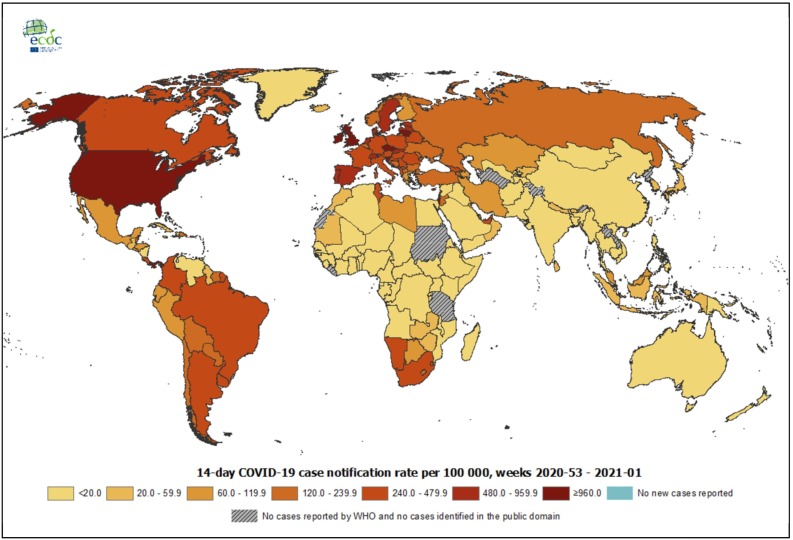
Cytokine storm is the exaggerated immune response often observed in viral infections. It is also intimately linked with the progression of COVID-19 disease as well as associated complications and mortality. Therefore, targeting the cytokine storm might help in reducing COVID-19-associated health complications. The number of COVID-19 associated deaths (as of January 15, 2021; https://www.worldometers.info/coronavirus/) in the USA is high (1199/million) as compared to countries like India (110/million). Although the reason behind this is not clear, spices may have some role in explaining this difference. Spices and herbs are used in different traditional medicines, especially in countries such as India to treat various chronic diseases due to their potent antioxidant and anti-inflammatory properties.
To evaluate the literature available on the anti-inflammatory properties of spices which might prove beneficial in the prevention and treatment of COVID-19 associated cytokine storm.
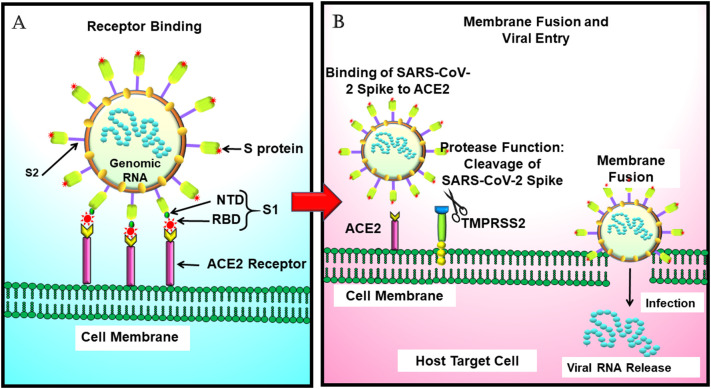
A detailed literature search has been conducted on PubMed for collecting information pertaining to the COVID-19; the history, origin, key structural features, and mechanism of infection of SARS-CoV-2; the repurposed drugs in use for the management of COVID-19, and the anti-inflammatory role of spices to combat COVID-19 associated cytokine storm.
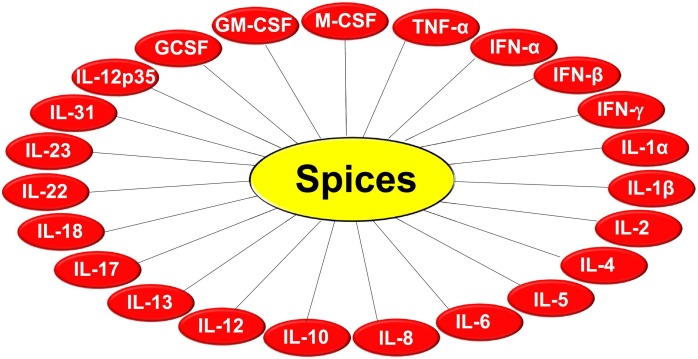
The literature search resulted in numerous in vitro, in vivo and clinical trials that have reported the potency of spices to exert anti-inflammatory effects by regulating crucial molecular targets for inflammation.
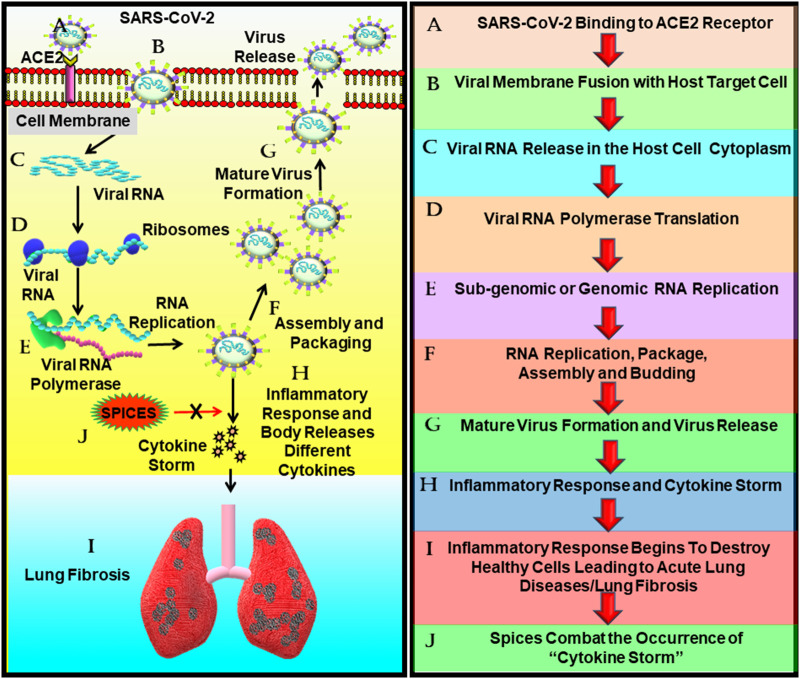
As spices are derived from Mother Nature and are inexpensive, they are relatively safer to consume. Therefore, their anti-inflammatory property can be exploited to combat the cytokine storm in COVID-19 patients. This review thus focuses on the current knowledge on the role of spices for the treatment of COVID-19 through suppression of inflammation-linked cytokine storm.
细胞因子风暴是一种在病毒感染中经常观察到的过度免疫反应,它与 COVID-19 疾病的进展以及相关并发症和死亡率密切相关。因此,靶向细胞因子风暴可能有助于减少 COVID-19 相关的健康并发症。截至 2021 年 1 月 15 日(https://www.worldometers.info/coronavirus/),美国与 COVID-19 相关的死亡人数(每百万 1199 人)很高,而印度等国家(每百万 110 人)则相对较低。尽管背后的原因尚不清楚,但香料可能在解释这一差异方面发挥了一些作用。香料和草药被用于不同的传统医学中,特别是在印度等国家,由于其具有强大的抗氧化和抗炎特性,用于治疗各种慢性疾病。
评估有关香料抗炎特性的现有文献,这些特性可能有助于预防和治疗 COVID-19 相关的细胞因子风暴。
在 PubMed 上进行了详细的文献检索,以收集有关 COVID-19 的信息;SARS-CoV-2 的历史、起源、关键结构特征和感染机制;用于 COVID-19 管理的已重新使用药物,以及香料在抗击 COVID-19 相关细胞因子风暴方面的抗炎作用。
文献检索结果显示,许多体外、体内和临床试验报告称,香料通过调节炎症的关键分子靶点发挥抗炎作用。
由于香料源自大自然,价格低廉,因此相对更安全。因此,可以利用它们的抗炎特性来对抗 COVID-19 患者的细胞因子风暴。因此,本综述重点关注通过抑制炎症相关细胞因子风暴来治疗 COVID-19 的香料的当前知识。