Centre for Neural Circuits and Behaviour, University of Oxford, Oxford OX1 3SR, United Kingdom
Centre for Neural Circuits and Behaviour, University of Oxford, Oxford OX1 3SR, United Kingdom.
J Neurosci. 2021 Apr 7;41(14):3054-3067. doi: 10.1523/JNEUROSCI.2979-20.2021. Epub 2021 Feb 19.
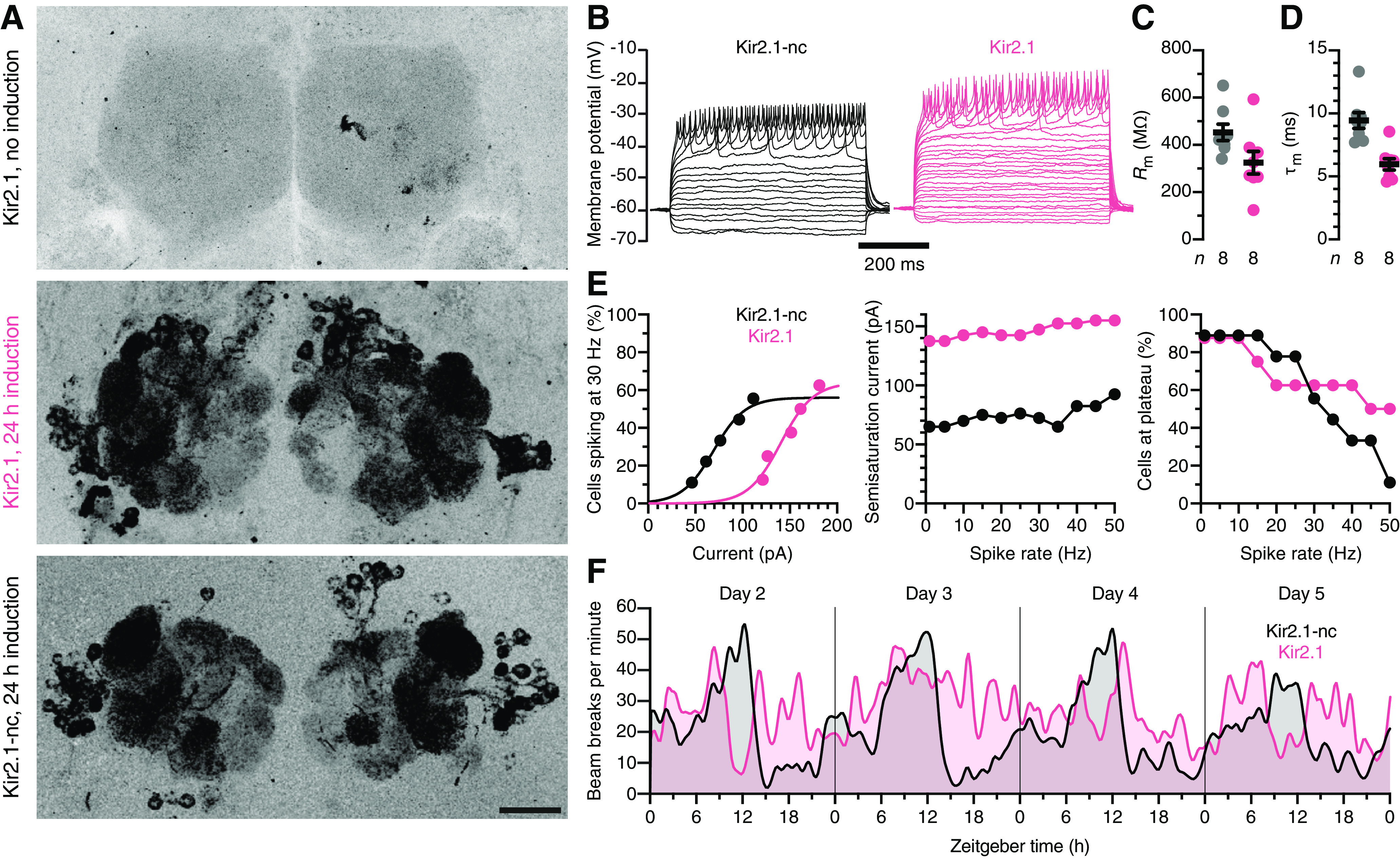
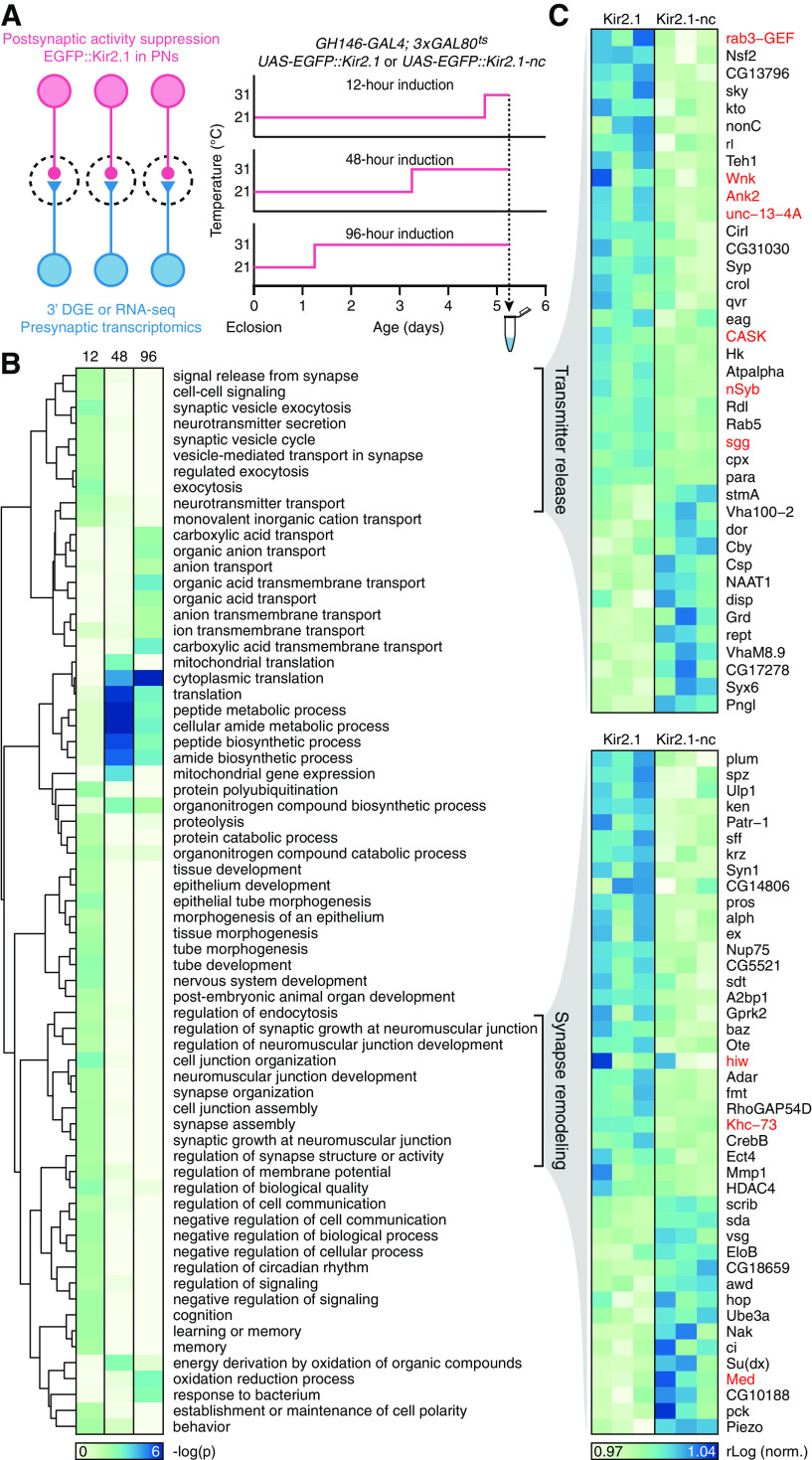
Homeostatic matching of pre- and postsynaptic function has been observed in many species and neural structures, but whether transcriptional changes contribute to this form of trans-synaptic coordination remains unknown. To identify genes whose expression is altered in presynaptic neurons as a result of perturbing postsynaptic excitability, we applied a transcriptomics-friendly, temperature-inducible Kir2.1-based activity clamp at the first synaptic relay of the olfactory system, a central synapse known to exhibit trans-synaptic homeostatic matching. Twelve hours after adult-onset suppression of activity in postsynaptic antennal lobe projection neurons of males and females, we detected changes in the expression of many genes in the third antennal segment, which houses the somata of presynaptic olfactory receptor neurons. These changes affected genes with roles in synaptic vesicle release and synaptic remodeling, including several implicated in homeostatic plasticity at the neuromuscular junction. At 48 h and beyond, the transcriptional landscape tilted toward protein synthesis, folding, and degradation; energy metabolism; and cellular stress defenses, indicating that the system had been pushed to its homeostatic limits. Our analysis suggests that similar homeostatic machinery operates at peripheral and central synapses and identifies many of its components. The presynaptic transcriptional response to genetically targeted postsynaptic perturbations could be exploited for the construction of novel connectivity tracing tools. Homeostatic feedback mechanisms adjust intrinsic and synaptic properties of neurons to keep their average activity levels constant. We show that, at a central synapse in the fruit fly brain, these mechanisms include changes in presynaptic gene expression that are instructed by an abrupt loss of postsynaptic excitability. The trans-synaptically regulated genes have roles in synaptic vesicle release and synapse remodeling; protein synthesis, folding, and degradation; and energy metabolism. Our study establishes a role for transcriptional changes in homeostatic synaptic plasticity, points to mechanistic commonalities between peripheral and central synapses, and potentially opens new opportunities for the development of connectivity-based gene expression systems.
已经在许多物种和神经结构中观察到了前突触和后突触功能的稳态匹配,但转录变化是否有助于这种形式的跨突触协调仍不清楚。为了确定由于扰乱后突触兴奋性而导致前突触神经元中表达改变的基因,我们在嗅觉系统的第一个突触中继处应用了一种转录组友好的、温度诱导的基于 Kir2.1 的活动钳位,这是一个已知表现出跨突触稳态匹配的中枢突触。在成年雄蝇和雌蝇的后突触触角叶投射神经元的活性被抑制 12 小时后,我们在第三触角节中检测到许多基因的表达发生了变化,第三触角节容纳了前突触嗅觉受体神经元的体。这些变化影响了与突触小泡释放和突触重塑相关的基因,包括几个与神经肌肉接头的稳态可塑性有关的基因。在 48 小时及以后,转录图谱向蛋白质合成、折叠和降解倾斜;能量代谢;和细胞应激防御,表明该系统已达到其稳态极限。我们的分析表明,类似的稳态机制在周围和中枢突触中起作用,并确定了其许多组成部分。针对后突触的遗传靶向扰动的前突触转录反应可以被用来构建新型的连接追踪工具。稳态反馈机制调节神经元的内在和突触特性,以保持其平均活动水平不变。我们表明,在果蝇大脑中的一个中枢突触中,这些机制包括由后突触兴奋性突然丧失所指示的前突触基因表达的变化。受跨突触调节的基因在突触小泡释放和突触重塑、蛋白质合成、折叠和降解以及能量代谢中起作用。我们的研究确立了转录变化在稳态突触可塑性中的作用,指出了周围和中枢突触之间的机制共性,并为基于连接的基因表达系统的发展提供了新的机会。