Department of Physiology and Medical Physics, Faculty of Medicine, Baqiyatallah University of Medical Sciences, Tehran, Iran.
Neuroscience Research Center, Baqiyatallah University of Medical Sciences, Tehran, Iran.
Inflamm Res. 2021 Apr;70(4):389-405. doi: 10.1007/s00011-021-01445-2. Epub 2021 Feb 19.
Coronavirus disease 2019 (COVID-19) is a world-wide pandemic caused by severe acute respiratory syndrome coronavirus 2 (SARS-CoV-2). To date, treatment of severe COVID-19 is far from clear. Therefore, it is urgent to develop an effective option for the treatment of patients with COVID-19. Most patients with severe COVID-19 exhibit markedly increased serum levels of pro-inflammatory cytokines, including interferon (IFN)-α, IFN-γ, and interleukin (IL)-1β. Immunotherapeutic strategies have an important role in the suppression of cytokine storm and respiratory failure in patients with COVID-19.
A systematic search in the literature was performed in PubMed, Scopus, Embase, Cochrane Library, Web of Science, as well as Google Scholar preprint database using all available MeSH terms for Coronavirus, SARS-CoV-2, anti-rheumatoid agents, COVID-19, cytokine storm, immunotherapeutic drugs, IFN, interleukin, JAK/STAT inhibitors, MCP, MIP, TNF.
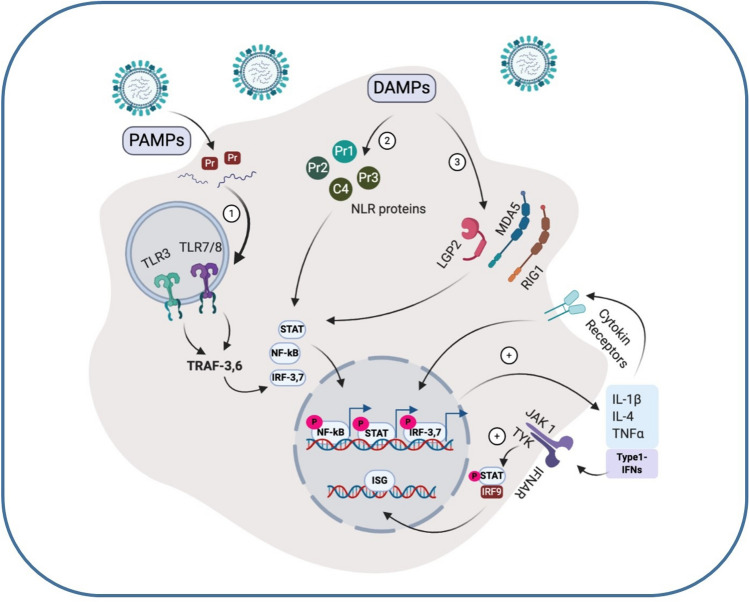
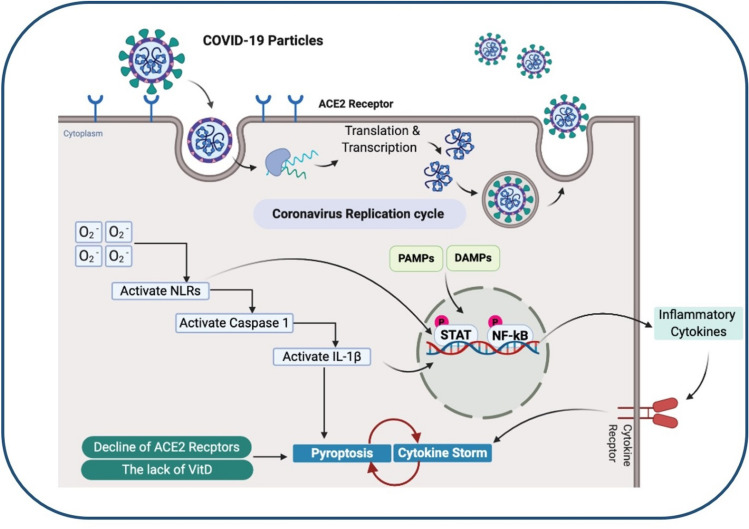
Here, we first review common complications of COVID-19 patients, particularly neurological symptoms. We next explain host immune responses against COVID-19 particles. Finally, we summarize the existing experimental and clinical immunotherapeutic strategies, particularly anti-rheumatoid agents and also plasma (with a high level of gamma globulin) therapy for severe COVID-19 patients. We discuss both their therapeutic effects and side effects that should be taken into consideration for their clinical application.
It is suggested that immunosuppressants, such as anti-rheumatoid drugs, could be considered as a potential approach for the treatment of cytokine storm in severe cases of COVID-19. One possible limitation of immunosuppressant therapy is their inhibitory effects on host anti-viral immune response. So, the appropriate timing of administration should be carefully considered.
新型冠状病毒病(COVID-19)是由严重急性呼吸系统综合征冠状病毒 2(SARS-CoV-2)引起的全球性大流行疾病。迄今为止,对于严重 COVID-19 的治疗还远远不够明确。因此,急需开发一种有效的治疗 COVID-19 患者的方案。大多数严重 COVID-19 患者的血清中促炎细胞因子水平显著升高,包括干扰素(IFN)-α、IFN-γ 和白细胞介素(IL)-1β。免疫治疗策略在抑制 COVID-19 患者的细胞因子风暴和呼吸衰竭方面具有重要作用。
我们在 PubMed、Scopus、Embase、Cochrane 图书馆、Web of Science 以及 Google Scholar 预印本数据库中使用冠状病毒、SARS-CoV-2、抗风湿药、COVID-19、细胞因子风暴、免疫治疗药物、IFN、白细胞介素、JAK/STAT 抑制剂、MCP、MIP、TNF 等所有可用的 MeSH 术语进行了系统文献检索。
在这里,我们首先回顾 COVID-19 患者的常见并发症,特别是神经系统症状。接下来,我们解释宿主对 COVID-19 颗粒的免疫反应。最后,我们总结了现有的实验和临床免疫治疗策略,特别是抗风湿药以及用于严重 COVID-19 患者的血浆(高丙种球蛋白血症)治疗。我们讨论了它们的治疗效果和副作用,这些副作用在考虑其临床应用时应予以考虑。
建议将免疫抑制剂(如抗风湿药)作为治疗严重 COVID-19 患者细胞因子风暴的一种潜在方法。免疫抑制剂治疗的一个可能局限性是它们对宿主抗病毒免疫反应的抑制作用。因此,应仔细考虑给药的适当时机。