Plant Breeding, Wageningen University and Research, P.O. Box 386, 6700 AJ, Wageningen, The Netherlands.
Laboratory of Entomology, Wageningen University and Research, P.O. Box 16, 6700 AA, Wageningen, The Netherlands.
Theor Appl Genet. 2021 May;134(5):1557-1573. doi: 10.1007/s00122-021-03790-6. Epub 2021 Feb 20.
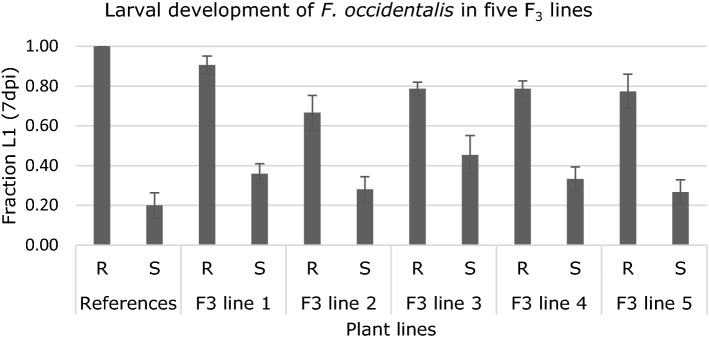
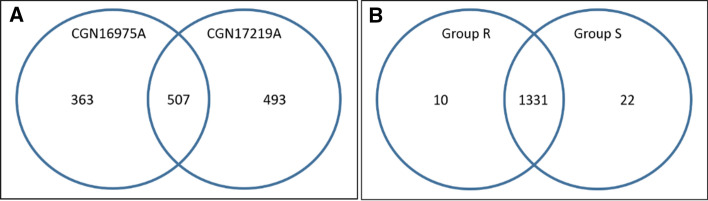
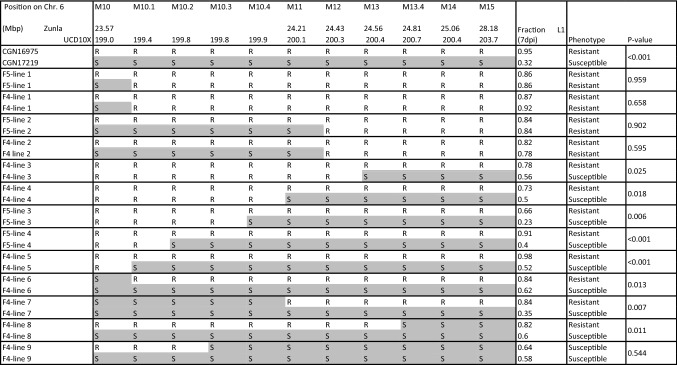
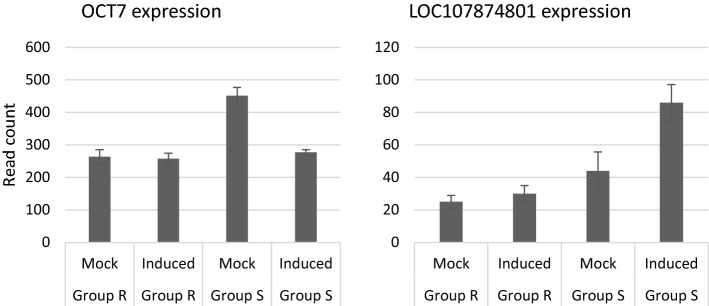
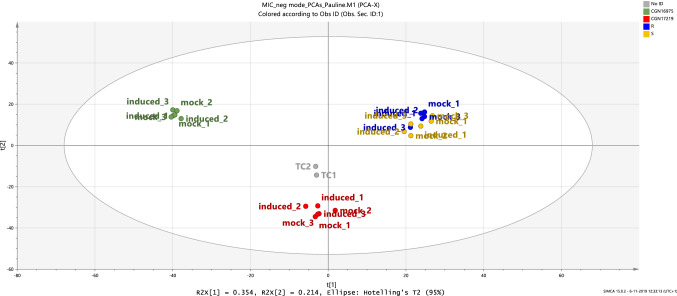
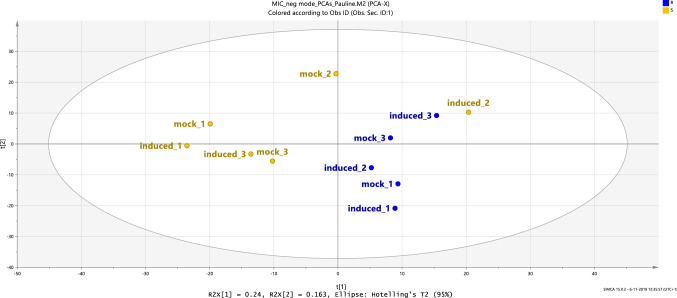
A major thrips resistance QTL in Capsicum was fine-mapped to a region of 0.4 Mbp, and a multidisciplinary approach has been used to study putative underlying mechanisms. Resistance to thrips is an important trait for pepper growers. These insects can cause extensive damage to fruits, flowers and leaves on field and greenhouse grown plants worldwide. Two independent studies in Capsicum identified diterpene glycosides as metabolites that are correlated with thrips resistance. In this study, we fine-mapped a previously defined thrips resistance QTL on chromosome 6, to a region of 0.4 Mbp harbouring 15 genes. Two of these 15 candidate genes showed differences in gene expression upon thrips induction, when comparing plants carrying the resistance allele in homozygous state to plants with the susceptibility allele in homozygous state for the QTL region. Three genes, including the two genes that showed difference in gene expression, contained a SNP that was predicted to lead to changes in protein structure. Therefore, these three genes, i.e. an acid phosphatase 1 (APS1), an organic cation/carnitine transporter 7 (OCT7) and an uncharacterized locus LOC107874801, are the most likely candidates for playing a role in thrips resistance and are a first step in elucidating the genetic basis of thrips resistance in Capsicum. In addition, we show that the diterpene glycoside profiles did not differ between plants with the resistance and susceptibility allele for the chromosome 6 QTL, suggesting that these compounds do not play a role in the resistance conferred by the genes located in the major thrips resistance QTL studied.
辣椒中一个重要的蓟马抗性 QTL 被精细定位到 0.4 Mbp 的区域,并且采用了多学科的方法来研究潜在的机制。对辣椒种植者来说,蓟马抗性是一个重要的特性。这些昆虫会对田间和温室种植的植物的果实、花朵和叶片造成广泛的损害。在辣椒中进行的两项独立研究确定二萜糖苷类化合物是与蓟马抗性相关的代谢物。在这项研究中,我们将之前定义的 6 号染色体上的蓟马抗性 QTL 精细定位到一个 0.4 Mbp 的区域,该区域包含 15 个基因。这 15 个候选基因中有 2 个在携带抗性等位基因的纯合子植株和携带 QTL 区域易感性等位基因的纯合子植株之间比较时,其基因表达存在差异。其中 3 个基因,包括在基因表达上存在差异的 2 个基因,包含一个预测会导致蛋白质结构变化的 SNP。因此,这三个基因,即酸性磷酸酶 1(APS1)、有机阳离子/肉碱转运蛋白 7(OCT7)和一个未鉴定的 LOC107874801 基因,是最有可能在蓟马抗性中发挥作用的候选基因,也是阐明辣椒中蓟马抗性遗传基础的第一步。此外,我们还表明,在携带 6 号染色体 QTL 的抗性和易感性等位基因的植株之间,二萜糖苷类化合物的图谱没有差异,这表明这些化合物在研究的主要蓟马抗性 QTL 中定位的基因所赋予的抗性中不起作用。