Nadian-Ghomsheh Ali, Farahani Bahar, Kavian Mohammad
Cyberspace Research Institute, Shahid Beheshti University, Tehran, Iran.
Multimed Tools Appl. 2021;80(20):31357-31380. doi: 10.1007/s11042-021-10563-2. Epub 2021 Feb 13.
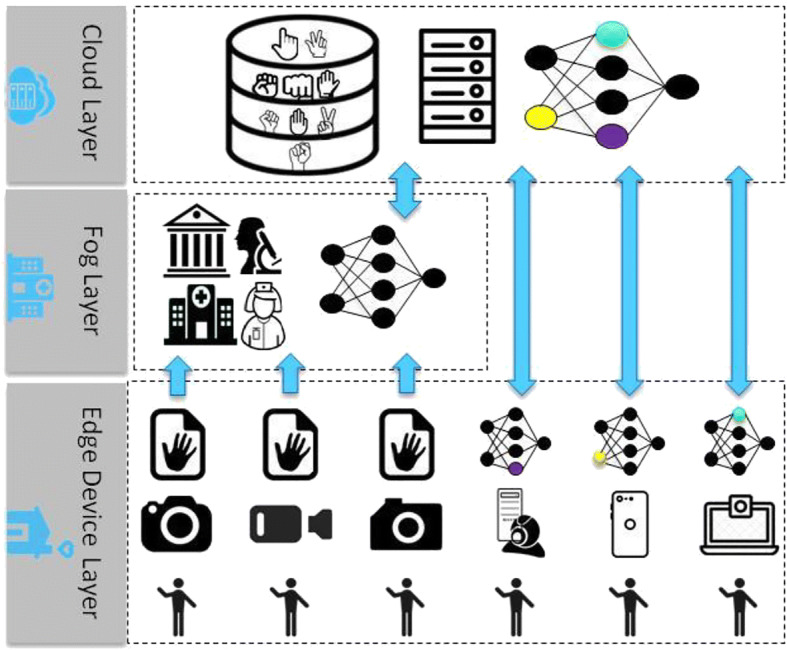
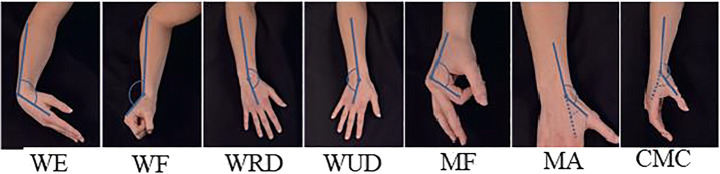
The healthcare industry requires the integration of digital technologies, such as Artificial Intelligence (AI) and the Internet of Things (IoT), to their full potential, particularly during this challenging time and the recent outbreak of the COVID-19 pandemic, which resulted in the disruptions in healthcare delivery, service operations, and shortage of healthcare personnel. However, every opportunity has barriers and bumps, and when it comes to IoT healthcare, data privacy is one of the main growing issues. Despite the recent advances in the development of IoT healthcare architectures, most of them are invasive for the data subjects. In this context, the broad applications of AI in the IoT domain have also been hindered by emerging strict legal and ethical requirements to protect individual privacy. Camera-based solutions that monitor human subjects in everyday settings, e.g., for Online Range of Motion (ROM) detection, are making this problem even worse. One actively practiced branch of such solutions is telerehabilitation, which provides remote solutions for the physically impaired to regain their strength and get back to their normal daily routines. The process usually involves transmitting video/images from the patient performing rehabilitation exercises and applying Machine Learning (ML) techniques to extract meaningful information to help therapists devise further treatment plans. Thereby, real-time measurement and assessment of rehabilitation exercises in a reliable, accurate, and Privacy-Preserving manner is imperative. To address the privacy issue of existing solutions, this paper proposes a holistic Privacy-Preserving (PP) hierarchical IoT solution that simultaneously addresses the utilization of AI-driven IoT and the demands for data protection. Furthermore, the efficiency of the proposed architecture is demonstrated by a novel machine learning-based system that allows immediate assessment and extraction of ROM as the critical information for analyzing the progress of patients.
医疗保健行业需要充分发挥数字技术的潜力,如人工智能(AI)和物联网(IoT),尤其是在这个充满挑战的时期以及近期新冠疫情爆发期间,疫情导致医疗服务交付中断、服务运营受阻以及医护人员短缺。然而,每个机遇都伴随着障碍和坎坷,就物联网医疗而言,数据隐私是日益突出的主要问题之一。尽管物联网医疗架构的发展取得了近期进展,但其中大多数对数据主体具有侵入性。在这种背景下,人工智能在物联网领域的广泛应用也受到了为保护个人隐私而新出现的严格法律和道德要求的阻碍。在日常场景中监测人体的基于摄像头的解决方案,例如用于在线运动范围(ROM)检测的方案,正使这个问题变得更加严重。此类解决方案的一个活跃实践分支是远程康复,它为身体有障碍的人提供远程解决方案,帮助他们恢复力量并回归正常日常生活。这个过程通常包括传输患者进行康复锻炼的视频/图像,并应用机器学习(ML)技术提取有意义的信息,以帮助治疗师制定进一步的治疗计划。因此,以可靠、准确且保护隐私的方式对康复锻炼进行实时测量和评估至关重要。为了解决现有解决方案的隐私问题,本文提出了一种整体的保护隐私(PP)分层物联网解决方案,该方案同时解决了人工智能驱动的物联网的利用问题和数据保护需求。此外,通过一个新颖的基于机器学习的系统展示了所提出架构的效率,该系统能够立即评估并提取ROM作为分析患者进展的关键信息。