Zhou Cheng, Zhu Jingjing, Qian Nana, Guo Jiansheng, Yan Congsheng
Jiangsu Provincial Key Lab of Solid Organic Waste Utilization, Jiangsu Collaborative Innovation Center of Solid Organic Wastes, Educational Ministry Engineering Center of Resource-Saving Fertilizers, Nanjing Agricultural University, Nanjing, China.
Key Lab of Bio-Organic Fertilizer Creation, Ministry of Agriculture and Rural Affairs, Anhui Science and Technology University, Bengbu, China.
Front Plant Sci. 2021 Feb 3;11:634819. doi: 10.3389/fpls.2020.634819. eCollection 2020.
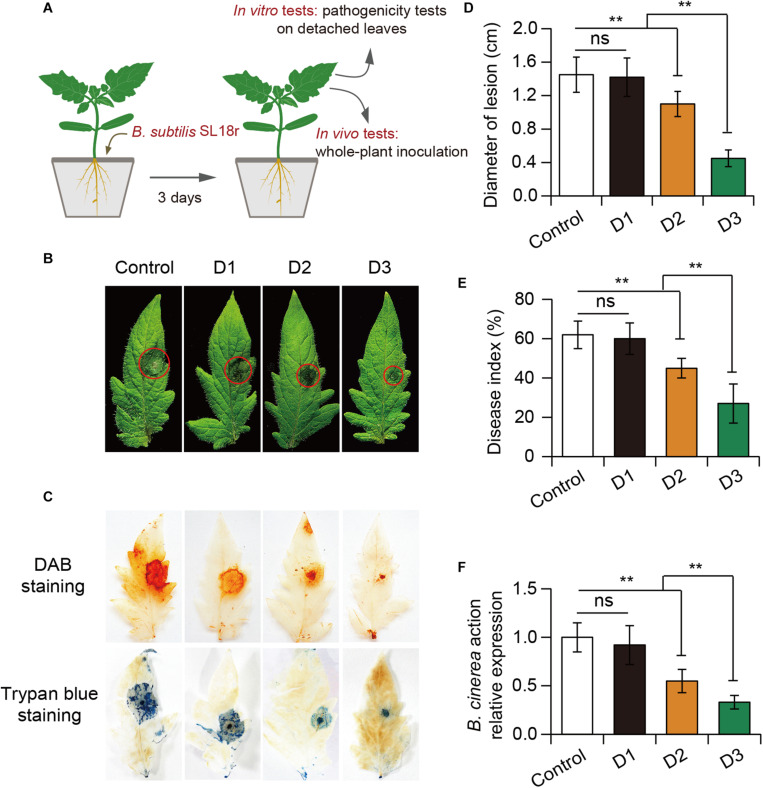
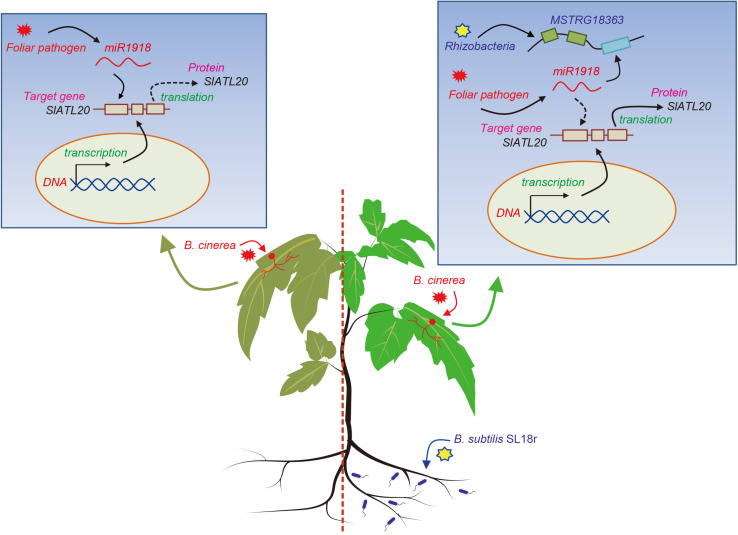
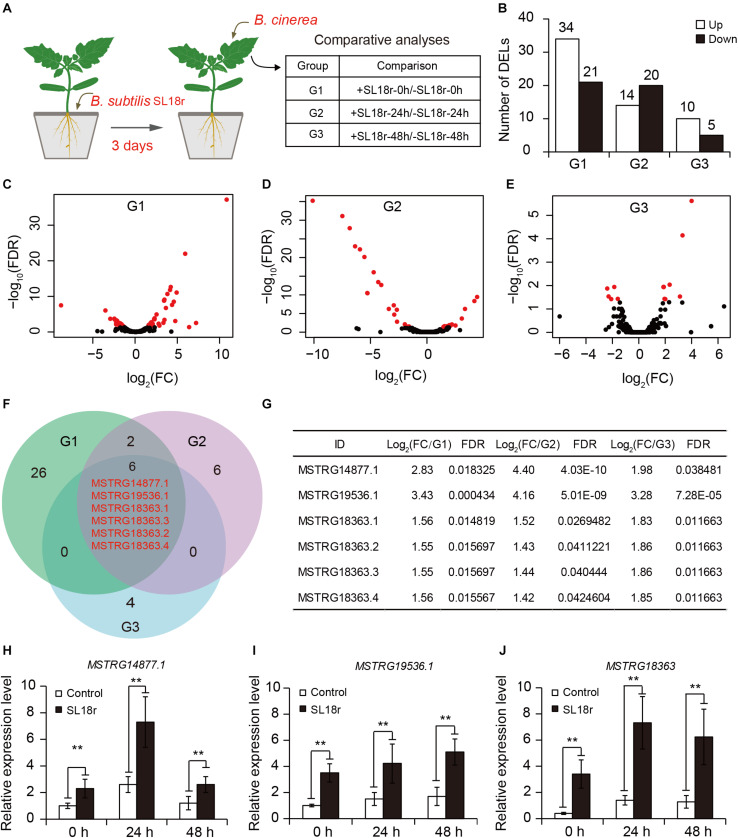
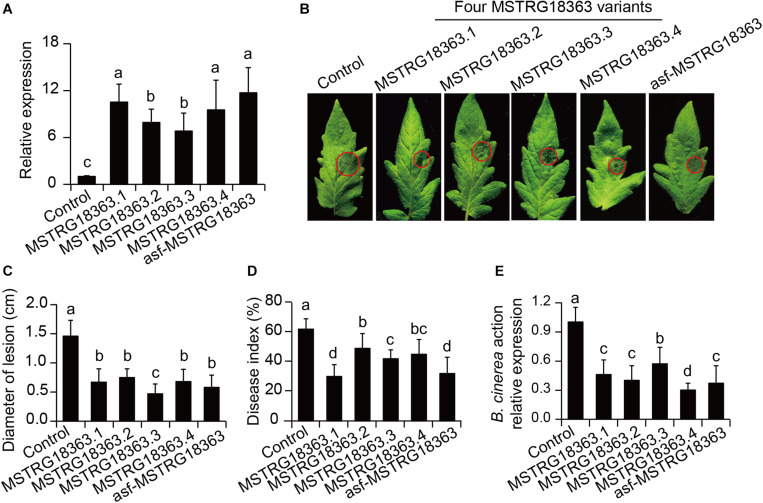
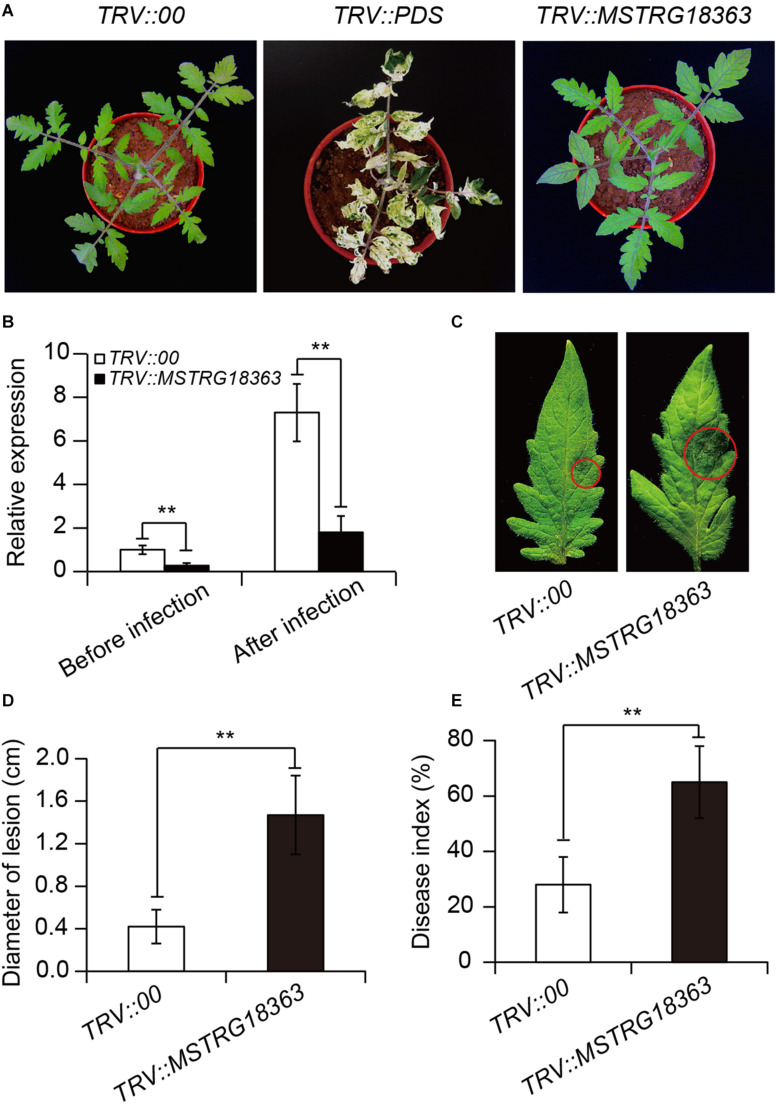
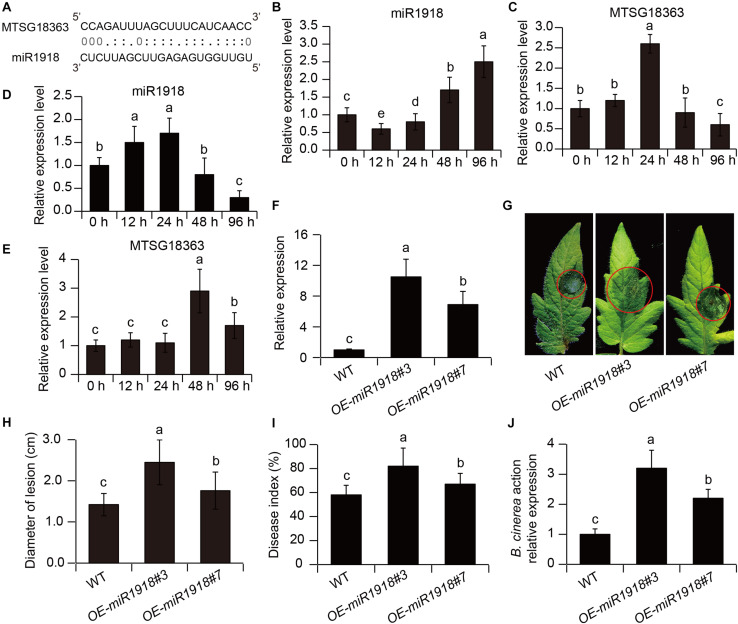
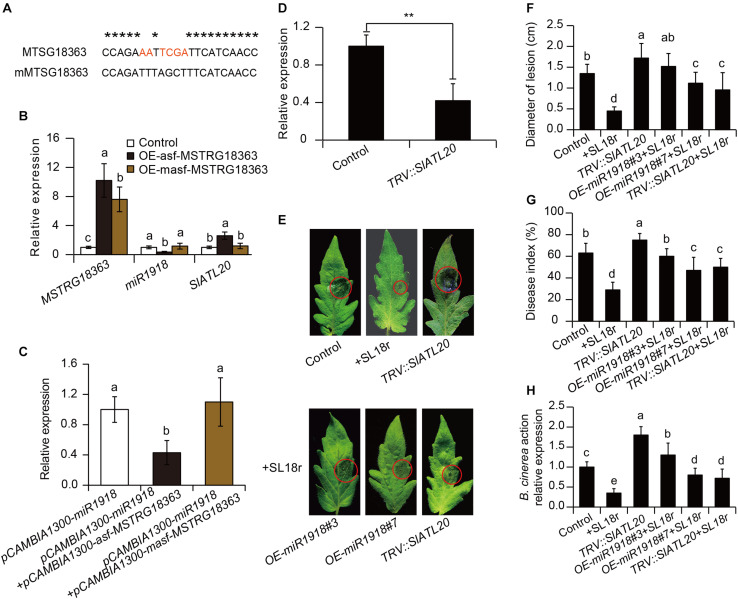
Mounting evidence has indicated that beneficial rhizobacteria can suppress foliar pathogen invasion via elicitation of induced systemic resistance (ISR). However, it remains elusive whether long non-coding RNAs (lncRNAs) are involved in the mediation of the rhizobacteria-primed ISR processes in plants. Herein, we demonstrated the ability of the rhizobacterial strain SL18r to trigger ISR in tomato plants against the foliar pathogen . Comparative transcriptome analysis was conducted to screen differentially expressed lncRNAs (DELs) between the non-inoculated and SL18r-inoculated plants. Among these DELs, four variants of MSTRG18363 possessed conserved binding sites for miR1918, which negatively regulates immune systems in tomato plants. The expression of MSTRG18363 in tomato leaves was significantly induced by SL18r inoculation. The transcription of MSTRG18363 was negatively correlated with the expression of miR1918, but displayed a positive correlation with the transcription of the RING-H2 finger gene (a target gene of miR1918). Moreover, MSTRG18363-overexpressing plants exhibited the enhanced disease resistance, reduction of miR1918 transcripts, and marked increases of expression. However, the SL18r-induced disease resistance was largely impaired in the MSTRG18363-silenced plants. VIGS-mediated silencing also greatly weakened the SL18r-induced disease resistance. Collectively, our results suggested that induction of MSTRG18363 expression in tomato plants by SL18r was conducive to promoting the decoy of miR1918 and regulating the expression of , thereby provoking the ISR responses against foliar pathogen infection.
越来越多的证据表明,有益根际细菌可通过诱导系统抗性(ISR)来抑制叶部病原菌的入侵。然而,长链非编码RNA(lncRNA)是否参与植物中根际细菌引发的ISR过程仍不清楚。在此,我们证明了根际细菌菌株SL18r能够在番茄植株中触发针对叶部病原菌的ISR。进行了比较转录组分析,以筛选未接种和接种SL18r的植株之间差异表达的lncRNA(DEL)。在这些DEL中,MSTRG18363的四个变体具有与miR1918的保守结合位点,miR1918对番茄植株的免疫系统起负调控作用。SL18r接种显著诱导了番茄叶片中MSTRG18363的表达。MSTRG18363的转录与miR1918的表达呈负相关,但与RING-H2指基因(miR1918的一个靶基因)的转录呈正相关。此外,过表达MSTRG18363的植株表现出增强的抗病性、miR1918转录本减少以及 表达显著增加。然而,在MSTRG18363沉默的植株中,SL18r诱导的抗病性大大受损。VIGS介导的 沉默也极大地削弱了SL18r诱导的抗病性。总体而言,我们的结果表明,SL18r诱导番茄植株中MSTRG18363的表达有利于促进miR1918的诱饵作用并调节 的表达,从而引发针对叶部病原菌感染的ISR反应。