Gao Suhua, Yan Lei, Zhang Hongtao, Fan Xiaoguang, Jiao Xiaojing, Shao Fengmin
He'nan Provincial Key Laboratory of Kidney Disease and Immunology, Department of Nephrology, He'nan Provincial People's Hospital, People's Hospital of Zhengzhou University, Zhengzhou, China.
Front Genet. 2021 Feb 4;11:603455. doi: 10.3389/fgene.2020.603455. eCollection 2020.
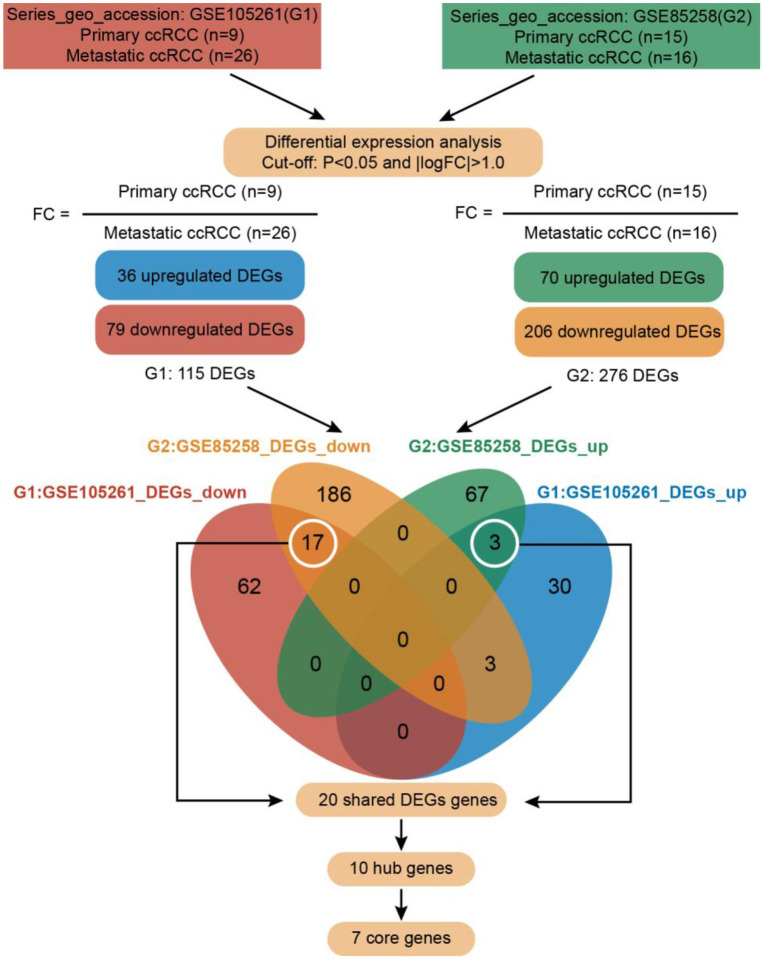
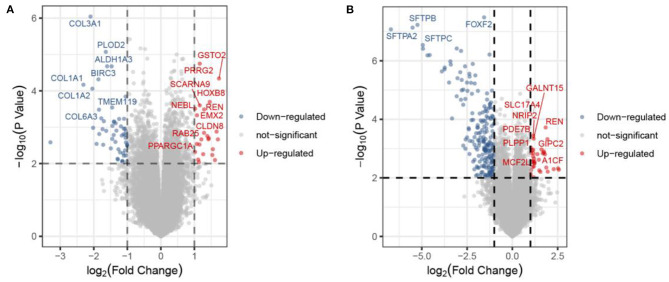
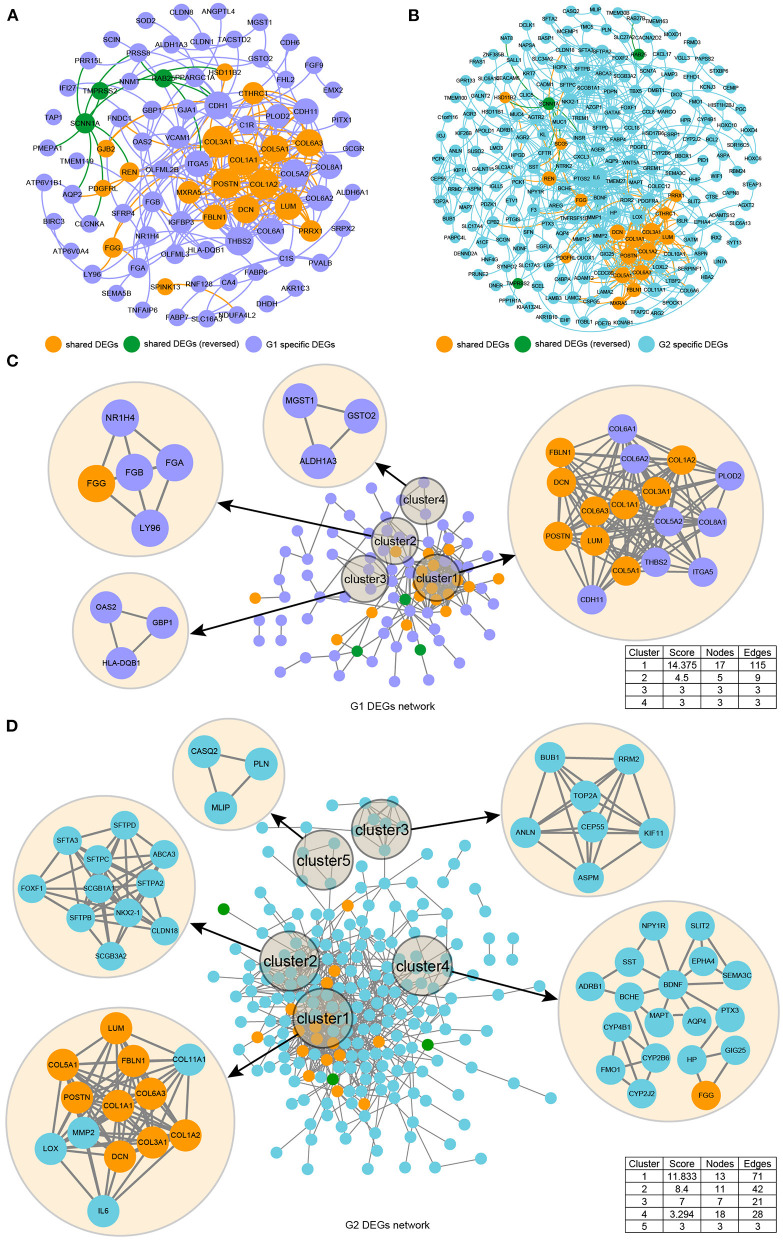
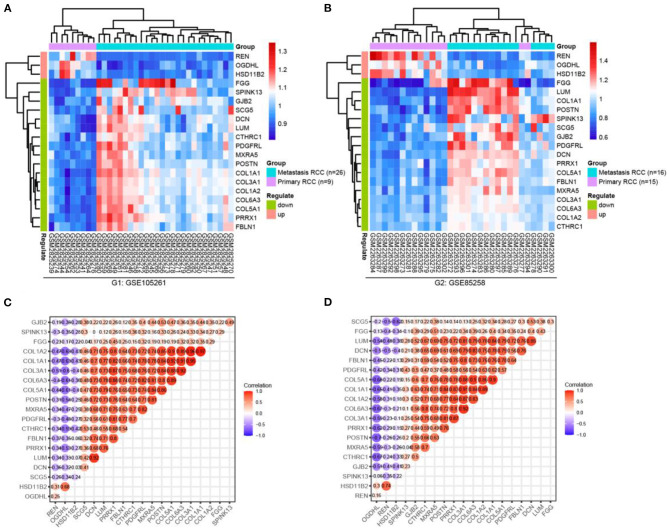
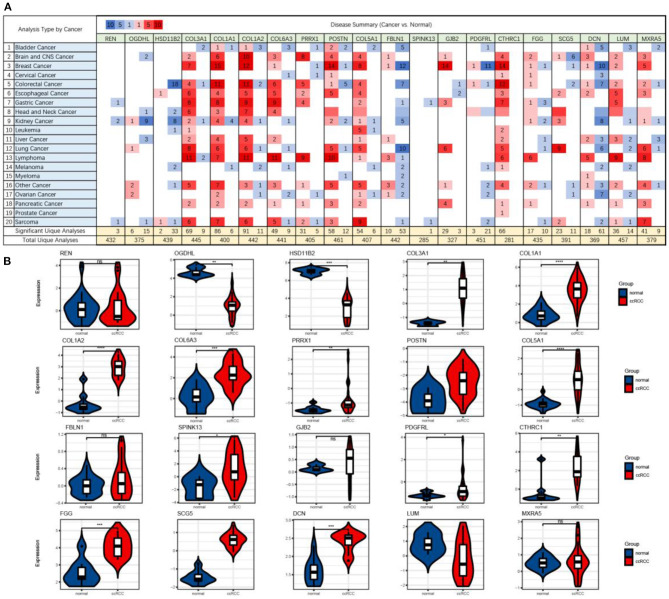
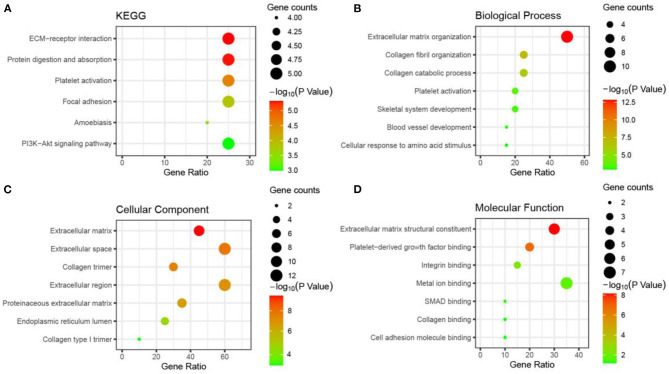
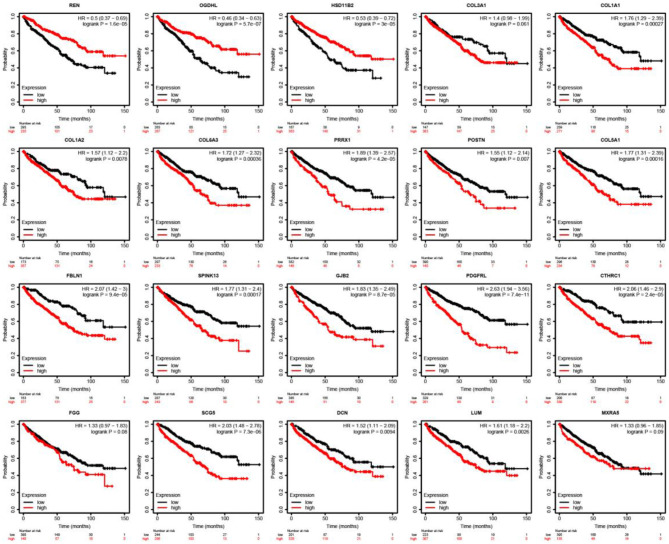
Clear cell renal cell carcinoma (ccRCC) is one of the most frequent pathological subtypes of kidney cancer, accounting for ~70-75%, and the major cause of mortality is metastatic disease. The difference in gene expression profiles between primary ccRCC tumors and metastatic tumors has not been determined. Thus, we report integrated genomic and transcriptomic analysis for identifying differentially expressed genes (DEGs) between primary and metastatic ccRCC tumors to understand the molecular mechanisms underlying the development of metastases. The microarray datasets GSE105261 and GSE85258 were obtained from the Gene Expression Omnibus (GEO) database, and the R package limma was used for DEG analyses. In summary, the results described herein provide important molecular evidence that metastatic ccRCC tumors are different from primary tumors. Enrichment analysis indicated that the DEGs were mainly enriched in ECM-receptor interaction, platelet activation, protein digestion, absorption, focal adhesion, and the PI3K-Akt signaling pathway. Moreover, we found that DEGs associated with a higher level of tumor immune infiltrates and tumor mutation burden were more susceptible to poor prognosis of ccRCC. Specifically, our study indicates that seven core genes, namely the collagen family (COL1A2, COL1A1, COL6A3, and COL5A1), DCN, FBLN1, and POSTN, were significantly upregulated in metastatic tumors compared with those in primary tumors and, thus, potentially offer insight into novel therapeutic and early diagnostic biomarkers of ccRCC.
透明细胞肾细胞癌(ccRCC)是肾癌最常见的病理亚型之一,约占70 - 75%,死亡的主要原因是转移性疾病。原发性ccRCC肿瘤与转移性肿瘤之间基因表达谱的差异尚未确定。因此,我们报告了综合基因组和转录组分析,以鉴定原发性和转移性ccRCC肿瘤之间的差异表达基因(DEG),从而了解转移发生发展的分子机制。从基因表达综合数据库(GEO)获取微阵列数据集GSE105261和GSE85258,并使用R包limma进行DEG分析。总之,本文所述结果提供了重要的分子证据,表明转移性ccRCC肿瘤与原发性肿瘤不同。富集分析表明,DEG主要富集于细胞外基质受体相互作用、血小板活化、蛋白质消化与吸收、粘着斑以及PI3K - Akt信号通路。此外,我们发现与较高水平的肿瘤免疫浸润和肿瘤突变负担相关的DEG更容易导致ccRCC预后不良。具体而言,我们的研究表明,与原发性肿瘤相比,七个核心基因,即胶原蛋白家族(COL1A2、COL1A1、COL6A3和COL5A1)、核心蛋白聚糖(DCN)、纤连蛋白1(FBLN1)和骨膜蛋白(POSTN)在转移性肿瘤中显著上调,因此可能为ccRCC的新型治疗和早期诊断生物标志物提供见解。