Schöppenthau Doreen, Weiß Karl Jakob, Estepa-Martinez Misael, Hommel Matthias, Miera Oliver, Schoenrath Felix, Hübler Sabine, Obermeier Martin, Pieske Burkert, Stawowy Philipp
Department of Internal Medicine - Cardiology, Deutsches Herzzentrum Berlin, Berlin, Germany.
DZHK (German Center for Cardiovascular Research), Partner Site Berlin, Berlin, Germany.
Front Med (Lausanne). 2021 Feb 3;7:616648. doi: 10.3389/fmed.2020.616648. eCollection 2020.
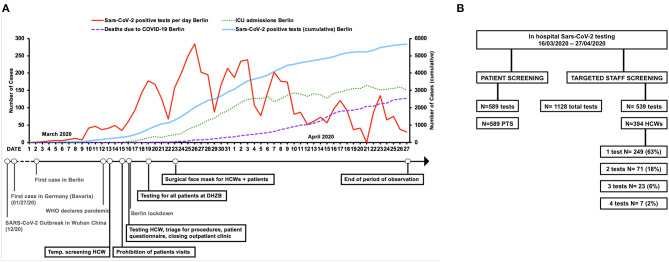
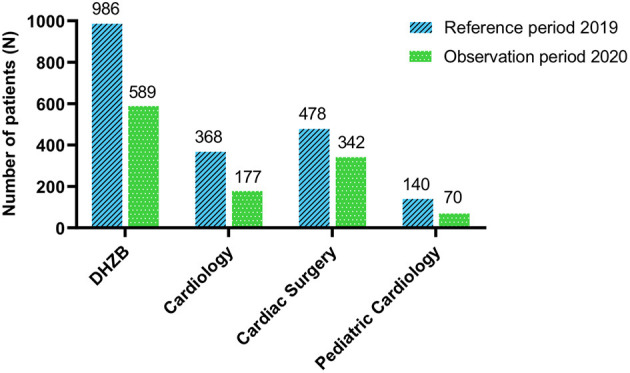
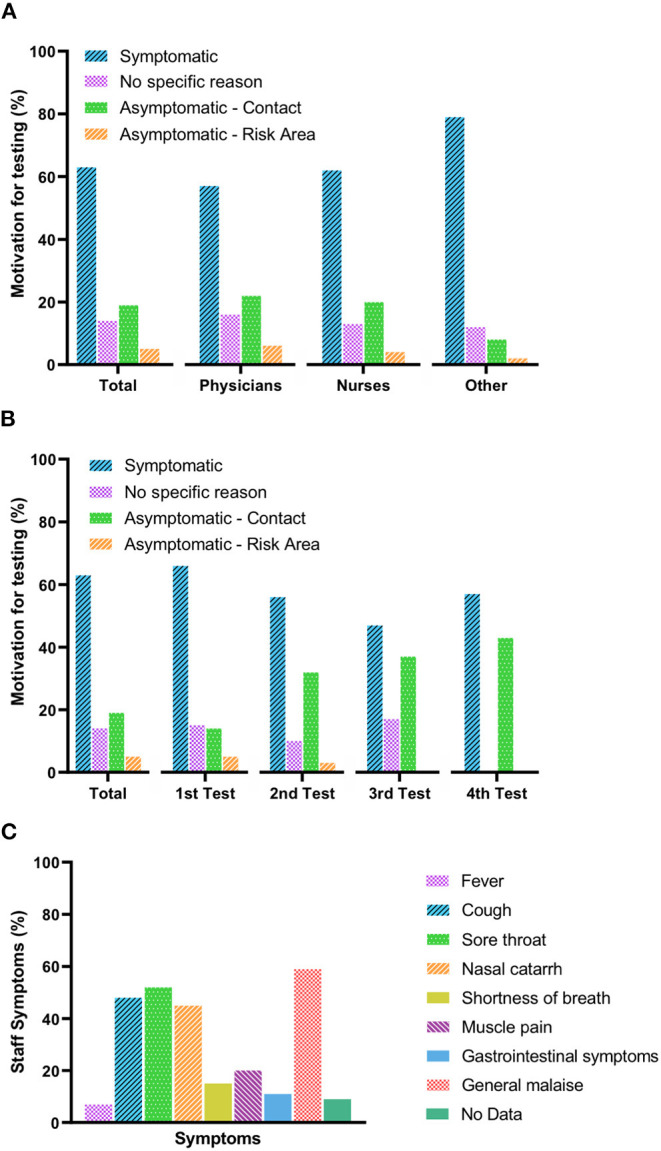
COVID-19 is a highly contagious disease caused by severe acute respiratory syndrome coronavirus 2 (SARS-CoV-2). Preventing in-hospital infections is crucial to protect patients and hospital staff. At the very beginning of the COVID-19 pandemic, the German Heart Center initiated obligatory wearing of surgical face masks for patients and employees, SARS-CoV-2 screening for all patients, and symptom-based testing for employees. In addition, access restriction, closure of outpatient departments, and postponing non-urgent procedures were implemented with community-initiated regulations. During the observation period (03/16/2020-04/27/2020), 1,128 SARS-CoV-2 tests were performed in 983 persons (1.1 tests/person; 589 in patients and 394 in hospital employees). Up to 60% of the clinical workforce was tested based on symptoms and risk (62.5% symptoms, 19.3% direct or indirect contact to known COVID-19, 4.5% returnee from risk area, 13.7% without specific reason). Patient testing for SARS-CoV-2 was obligatory (100% tested). The overall prevalence of positive tests during the observation period was 0.4% ( = 5 out of 1,128 tests performed). The incidence of new infections with SARS-CoV-2 was 0.5% ( = 5 out of 983 individuals; three healthcare workers, two patients). No nosocominal infections occurred, despite a mean number of 14.8 in-hospital contacts. Comprehensive SARS-CoV-2 testing and surgical face masks for patients and hospital staff, in addition to others measures, are key factors for the early detection of COVID-19 and to prevent spreading in the vulnerable hospital population.
新冠病毒病(COVID-19)是由严重急性呼吸综合征冠状病毒2(SARS-CoV-2)引起的一种高度传染性疾病。预防医院内感染对于保护患者和医院工作人员至关重要。在COVID-19大流行初期,德国心脏中心规定患者和员工必须佩戴外科口罩,对所有患者进行SARS-CoV-2筛查,并对员工进行症状检测。此外,根据社区发起的规定实施了出入限制、关闭门诊科室以及推迟非紧急手术。在观察期(2020年3月16日至2020年4月27日),对983人进行了1128次SARS-CoV-2检测(每人1.1次检测;患者589次,医院员工394次)。高达60%的临床工作人员根据症状和风险接受检测(62.5%有症状,19.3%与已知COVID-19有直接或间接接触,4.5%为来自风险地区的归国人员,13.7%无特定原因)。对患者进行SARS-CoV-2检测是强制性的(100%接受检测)。观察期内检测呈阳性的总体患病率为0.4%(1128次检测中有5次阳性)。SARS-CoV-2新感染发病率为0.5%(983人中5人感染;3名医护人员,2名患者)。尽管平均住院接触次数为14.8次,但未发生医院感染。除其他措施外,对患者和医院工作人员进行全面的SARS-CoV-2检测和佩戴外科口罩是早期发现COVID-19并防止其在脆弱的医院人群中传播的关键因素。