Roberts Jacob, Pritchard Antonia L, Treweeke Andrew T, Rossi Adriano G, Brace Nicole, Cahill Paul, MacRury Sandra M, Wei Jun, Megson Ian L
Institute for Health Research and Innovation, University of the Highlands and Islands, Inverness, United Kingdom.
Centre for Inflammation Research, University of Edinburgh, Edinburgh, United Kingdom.
Front Cardiovasc Med. 2021 Feb 3;7:629933. doi: 10.3389/fcvm.2020.629933. eCollection 2020.
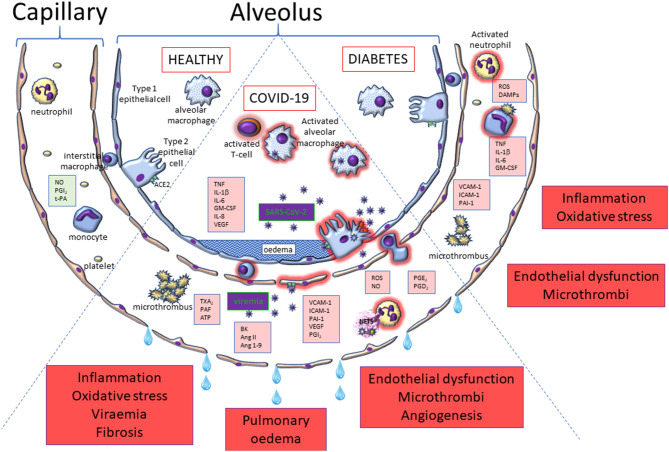
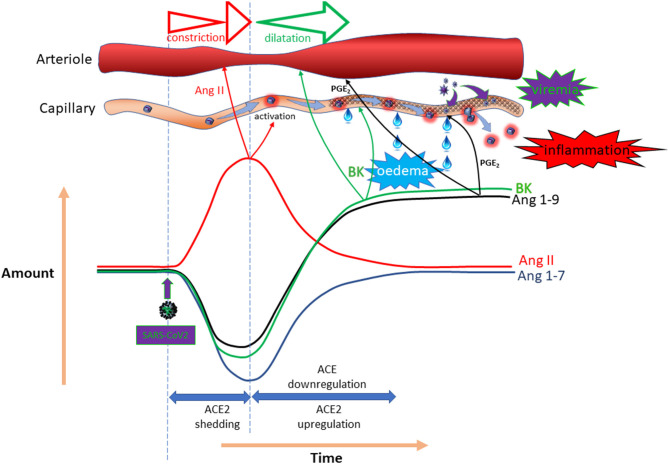
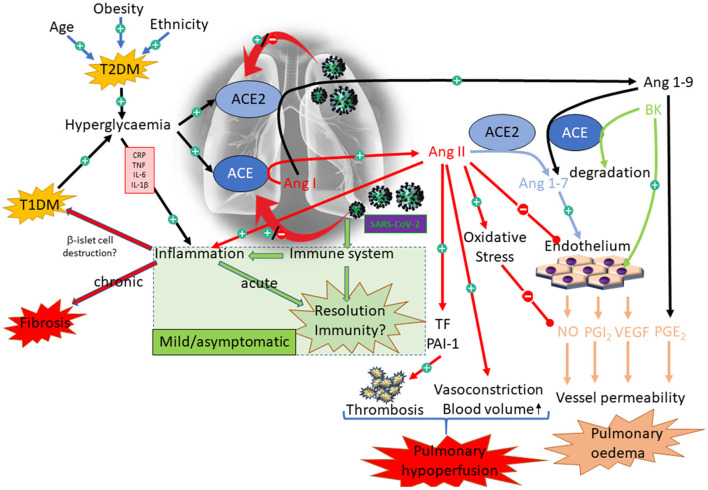
Meta-analyses have indicated that individuals with type 1 or type 2 diabetes are at increased risk of suffering a severe form of COVID-19 and have a higher mortality rate than the non-diabetic population. Patients with diabetes have chronic, low-level systemic inflammation, which results in global cellular dysfunction underlying the wide variety of symptoms associated with the disease, including an increased risk of respiratory infection. While the increased severity of COVID-19 amongst patients with diabetes is not yet fully understood, the common features associated with both diseases are dysregulated immune and inflammatory responses. An additional key player in COVID-19 is the enzyme, angiotensin-converting enzyme 2 (ACE2), which is essential for adhesion and uptake of virus into cells prior to replication. Changes to the expression of ACE2 in diabetes have been documented, but they vary across different organs and the importance of such changes on COVID-19 severity are still under investigation. This review will examine and summarise existing data on how immune and inflammatory processes interplay with the pathogenesis of COVID-19, with a particular focus on the impacts that diabetes, endothelial dysfunction and the expression dynamics of ACE2 have on the disease severity.
荟萃分析表明,1型或2型糖尿病患者患重症COVID-19的风险增加,死亡率高于非糖尿病人群。糖尿病患者存在慢性、低水平的全身炎症,这导致了与该疾病相关的各种症状背后的整体细胞功能障碍,包括呼吸道感染风险增加。虽然糖尿病患者中COVID-19病情加重的原因尚未完全明确,但两种疾病的共同特征是免疫和炎症反应失调。COVID-19中的另一个关键因素是血管紧张素转换酶2(ACE2),它在病毒复制前进入细胞的黏附和摄取过程中至关重要。糖尿病患者ACE2表达的变化已有文献记载,但不同器官的变化有所不同,这些变化对COVID-19严重程度的影响仍在研究中。本综述将研究和总结关于免疫和炎症过程如何与COVID-19发病机制相互作用的现有数据,特别关注糖尿病、内皮功能障碍和ACE2表达动态对疾病严重程度的影响。