MRC Laboratory of Molecular Biology, Cambridge, UK.
Nat Commun. 2021 Feb 22;12(1):1220. doi: 10.1038/s41467-021-21443-6.
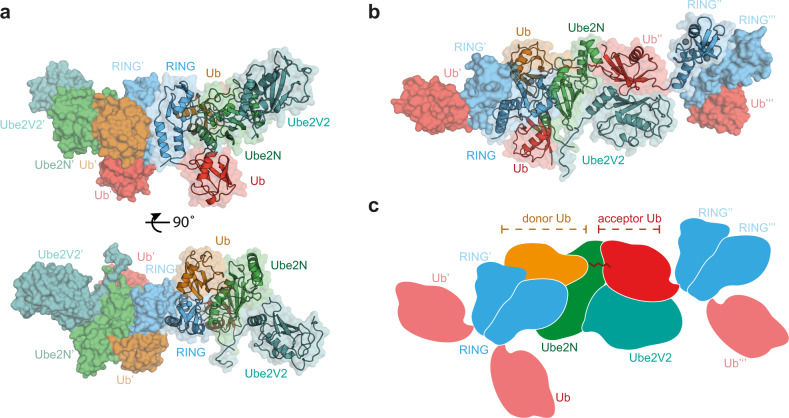
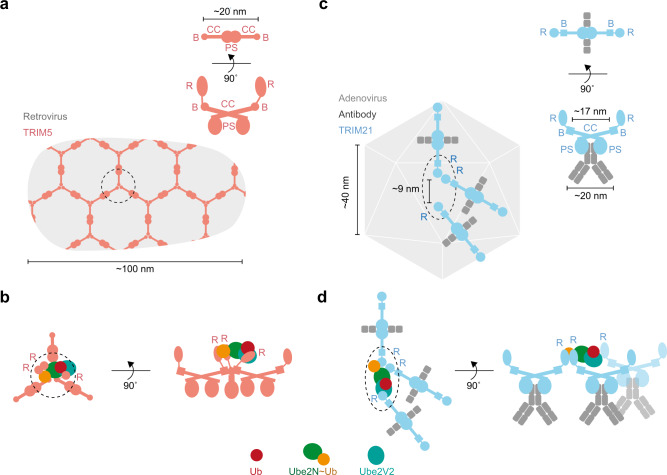
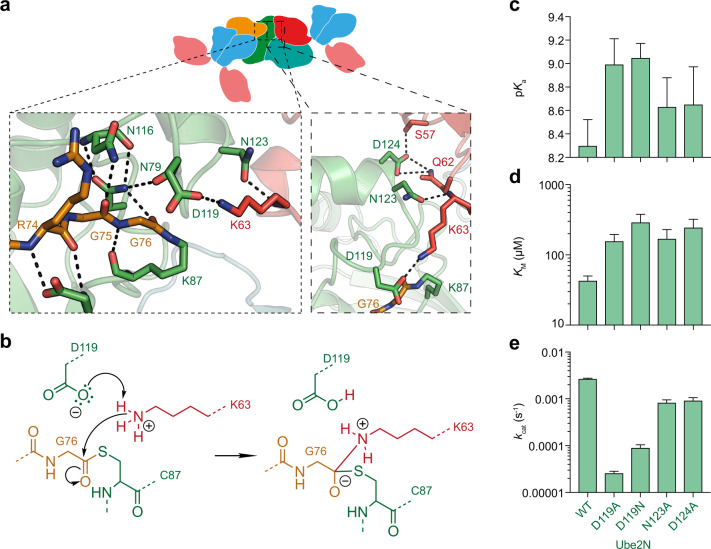
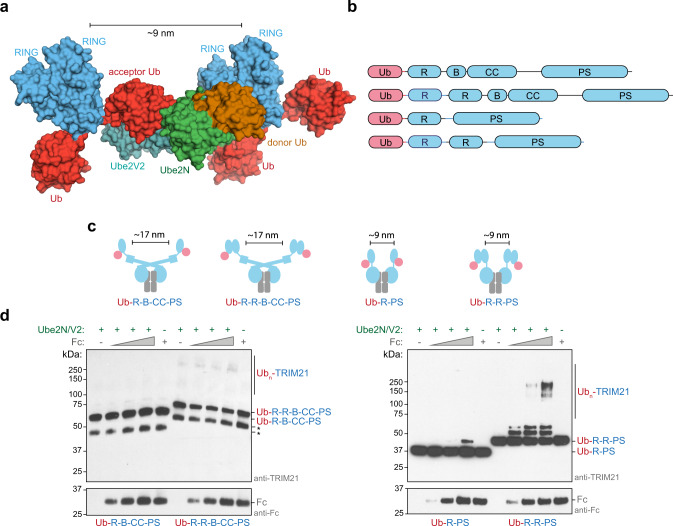
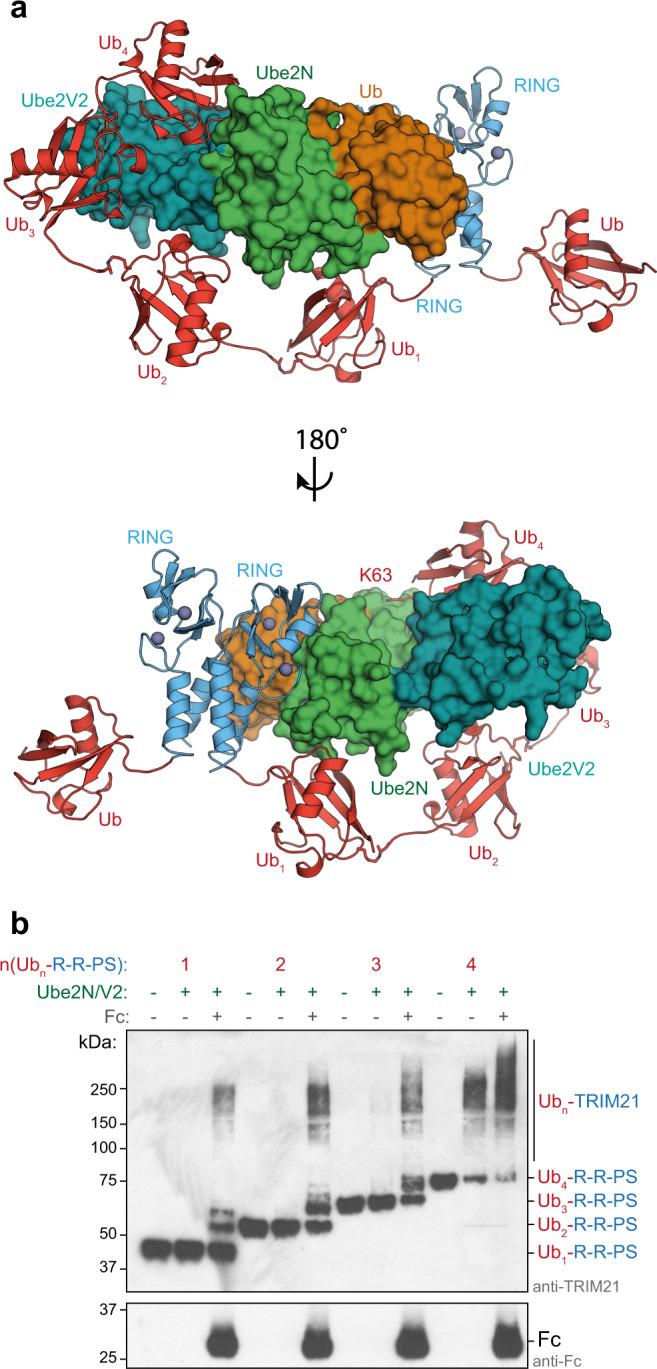
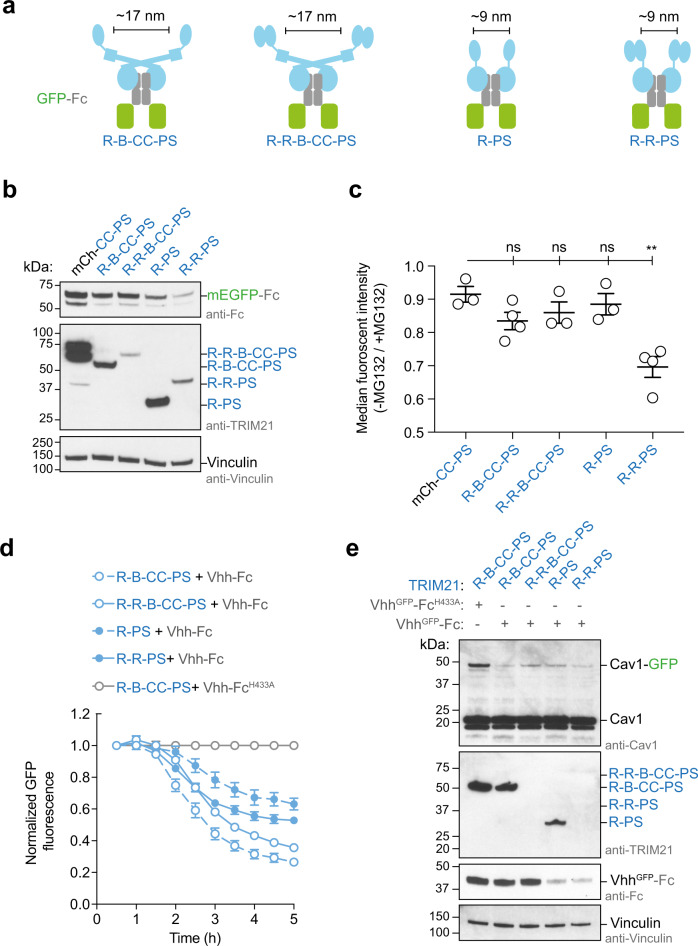
Attachment of ubiquitin (Ub) to proteins is one of the most abundant and versatile of all posttranslational modifications and affects outcomes in essentially all physiological processes. RING E3 ligases target E2 Ub-conjugating enzymes to the substrate, resulting in its ubiquitination. However, the mechanism by which a ubiquitin chain is formed on the substrate remains elusive. Here we demonstrate how substrate binding can induce a specific RING topology that enables self-ubiquitination. By analyzing a catalytically trapped structure showing the initiation of TRIM21 RING-anchored ubiquitin chain elongation, and in combination with a kinetic study, we illuminate the chemical mechanism of ubiquitin conjugation. Moreover, biochemical and cellular experiments show that the topology found in the structure can be induced by substrate binding. Our results provide insights into ubiquitin chain formation on a structural, biochemical and cellular level with broad implications for targeted protein degradation.
泛素(Ub)与蛋白质的连接是所有翻译后修饰中最丰富和最通用的一种,影响到几乎所有生理过程的结果。RING E3 连接酶将 E2-Ub 连接酶靶向到底物上,导致其泛素化。然而,在底物上形成泛素链的机制仍然难以捉摸。在这里,我们展示了底物结合如何诱导一种特定的 RING 拓扑结构,从而能够进行自身泛素化。通过分析一个催化捕获的结构,显示了 TRIM21 RING 锚定的泛素链延伸的起始,并且结合了动力学研究,我们阐明了泛素连接的化学机制。此外,生化和细胞实验表明,结构中发现的拓扑结构可以通过底物结合来诱导。我们的结果提供了在结构、生化和细胞水平上对泛素链形成的深入了解,这对靶向蛋白降解具有广泛的意义。