Niluxsshun Moira Carmalita Dharsika, Masilamani Koneswaran, Mathiventhan Umaramani
Department of Chemistry, Faculty of Science, Eastern University, Vantharumoolai, Chenkalady 30350, Sri Lanka.
Department of Botany, Faculty of Science, Eastern University, Vantharumoolai, Chenkalady 30350, Sri Lanka.
Bioinorg Chem Appl. 2021 Feb 2;2021:6695734. doi: 10.1155/2021/6695734. eCollection 2021.
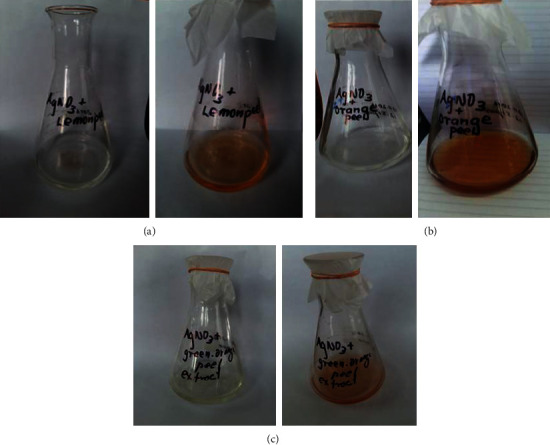
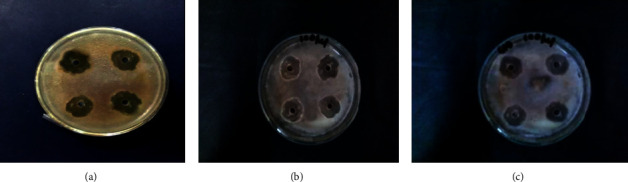
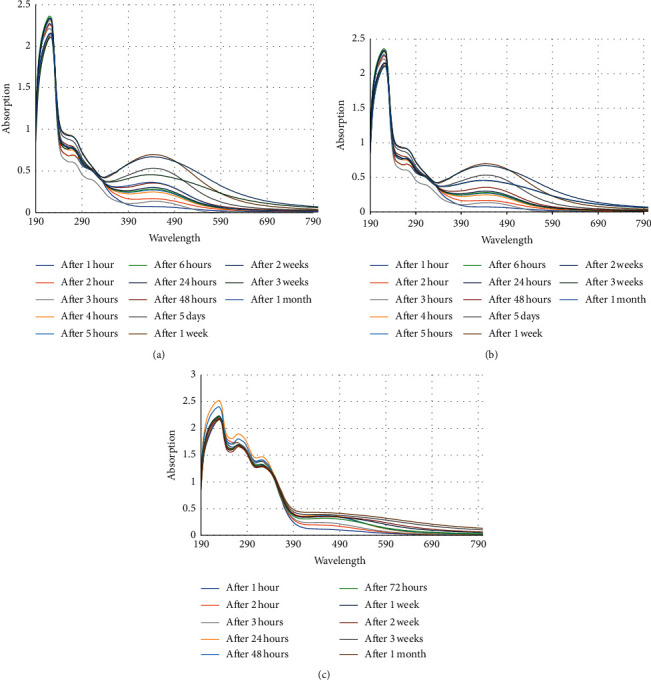
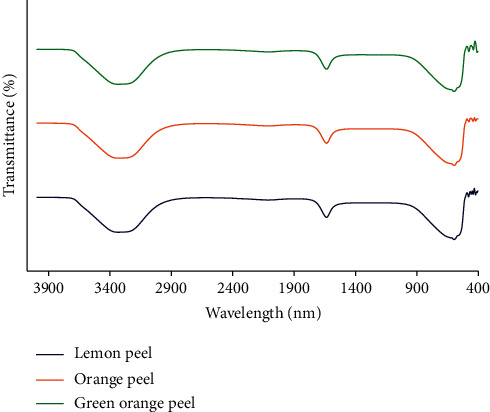
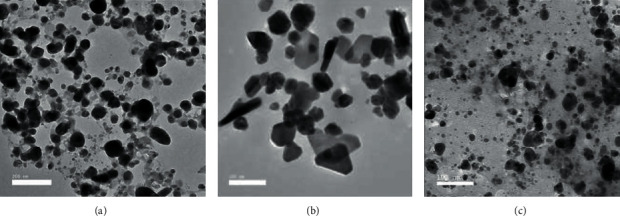
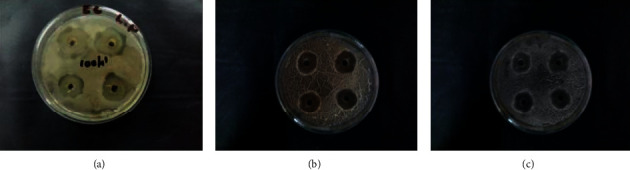
Wide application of nanoparticles motivates the need for synthesising them. Here, a nontoxic, eco-friendly, and cost-effective method has been established for the synthesis of silver nanoparticles using extracts of lemon peel (), green orange peel (), and orange peel (). The synthesised nanoparticles have been characterised using UV-visible absorptionspectroscopy, Fourier transform infrared spectroscopy, and transmission electron microscopy (TEM). The UV-visible absorption spectrum of these synthesised silver nanoparticles shows an absorption peak at around 440 nm. TEM images show different shaped particles with various sizes. Furthermore, the antibacterial activity of silver nanoparticles was appraised by a well-diffusion method and it was observed that the green synthesised silver nanoparticles have an effective antibacterial activity against and . The outcome of this study could be beneficial for nanotechnology-based biomedical applications.
纳米颗粒的广泛应用推动了其合成需求。在此,已建立了一种无毒、环保且经济高效的方法,用于使用柠檬皮、青橙皮和橙子皮提取物合成银纳米颗粒。已使用紫外可见吸收光谱、傅里叶变换红外光谱和透射电子显微镜(TEM)对合成的纳米颗粒进行了表征。这些合成银纳米颗粒的紫外可见吸收光谱在约440nm处显示出一个吸收峰。TEM图像显示出具有不同形状和各种尺寸的颗粒。此外,通过平板扩散法评估了银纳米颗粒的抗菌活性,观察到绿色合成的银纳米颗粒对[具体菌种1]和[具体菌种2]具有有效的抗菌活性。本研究结果可能有利于基于纳米技术的生物医学应用。