Immunocore Ltd., Abingdon, UK.
FEBS J. 2021 Nov;288(21):6159-6173. doi: 10.1111/febs.15780. Epub 2021 Mar 10.
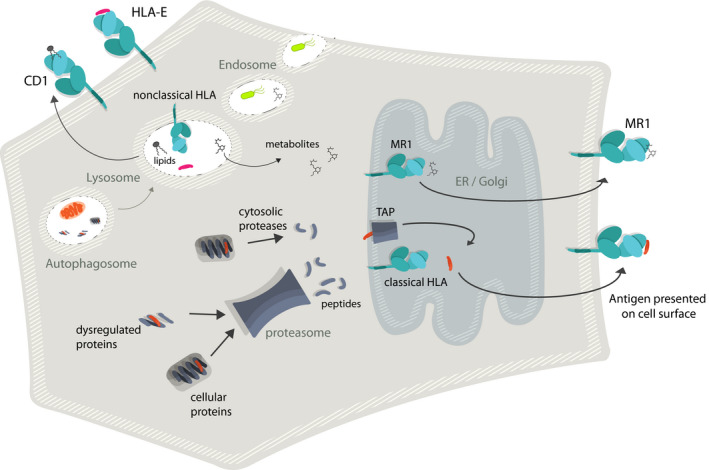
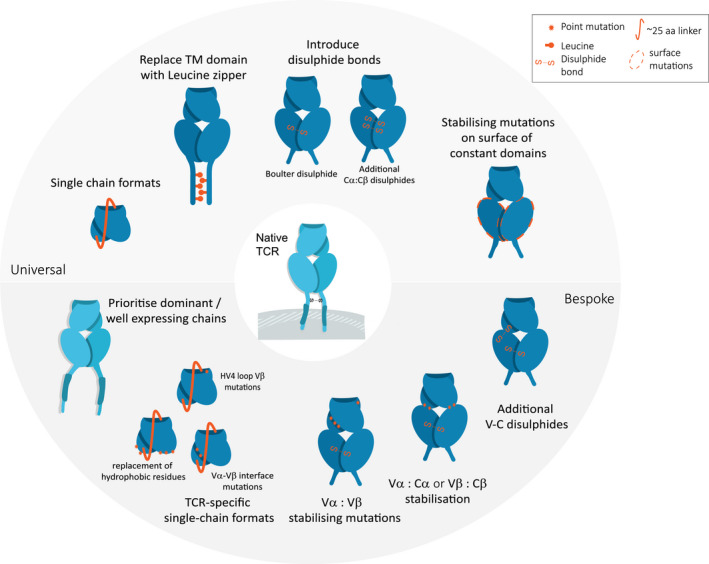
Immunotherapy approaches that target peptide-human leukocyte antigen (pHLA) complexes are becoming highly attractive because of their potential to access virtually all foreign and cellular proteins. For this reason, there has been considerable interest in the development of the natural ligand for pHLA, the T-cell receptor (TCR), as a soluble drug to target disease-associated pHLA presented at the cell surface. However, native TCR stability is suboptimal for soluble drug development, and natural TCRs generally have weak affinities for pHLAs, limiting their potential to reach efficacious receptor occupancy levels as soluble drugs. To overcome these limitations and make full use of the TCR as a soluble drug platform, several protein engineering solutions have been applied to TCRs to enhance both their stability and affinity, with a focus on retaining target specificity and selectivity. Here, we review these advances and look to the future for the next generation of soluble TCR-based therapies that can target monomorphic HLA-like proteins presenting both peptide and nonpeptide antigens.
免疫疗法靶向肽-人类白细胞抗原 (pHLA) 复合物,因为它们有可能接触几乎所有的外来和细胞蛋白,因此变得极具吸引力。出于这个原因,人们对 T 细胞受体 (TCR) 作为一种可溶性药物来靶向细胞表面呈现的与疾病相关的 pHLA 这一 pHLA 的天然配体产生了浓厚的兴趣。然而,天然 TCR 的稳定性不适合可溶性药物的开发,并且天然 TCR 通常对 pHLAs 的亲和力较弱,限制了它们作为可溶性药物达到有效受体占有率的潜力。为了克服这些限制并充分利用 TCR 作为可溶性药物平台,已经应用了几种蛋白质工程解决方案来增强 TCR 的稳定性和亲和力,重点是保留靶特异性和选择性。在这里,我们回顾这些进展,并展望下一代基于可溶性 TCR 的疗法,可以靶向呈现肽和非肽抗原的单态 HLA 样蛋白。