Crean Rory M, MacLachlan Bruce J, Madura Florian, Whalley Thomas, Rizkallah Pierre J, Holland Christopher J, McMurran Catriona, Harper Stephen, Godkin Andrew, Sewell Andrew K, Pudney Christopher R, van der Kamp Marc W, Cole David K
Department of Biology and Biochemistry, University of Bath, Bath, BA2 7AY, UK.
Doctoral Training Centre in Sustainable Chemical Technologies, University of Bath, Bath, BA2 7AY, UK.
Mol Ther Oncolytics. 2020 Jul 31;18:443-456. doi: 10.1016/j.omto.2020.07.008. eCollection 2020 Sep 25.
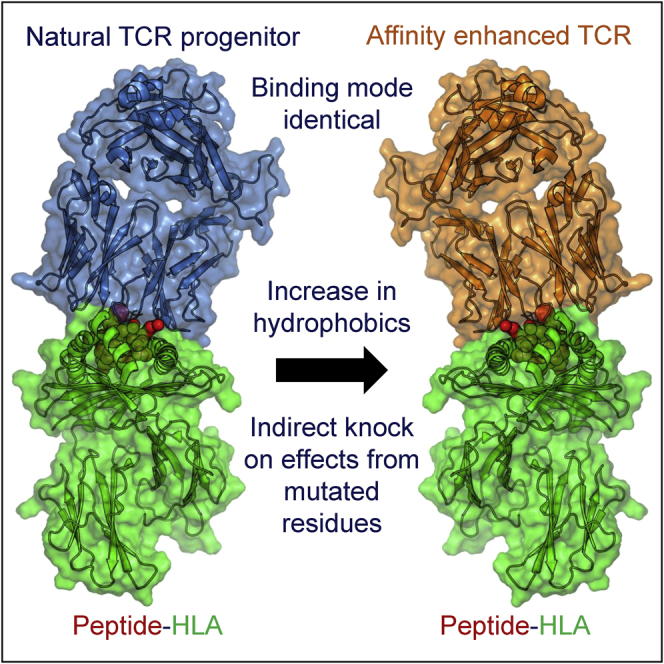
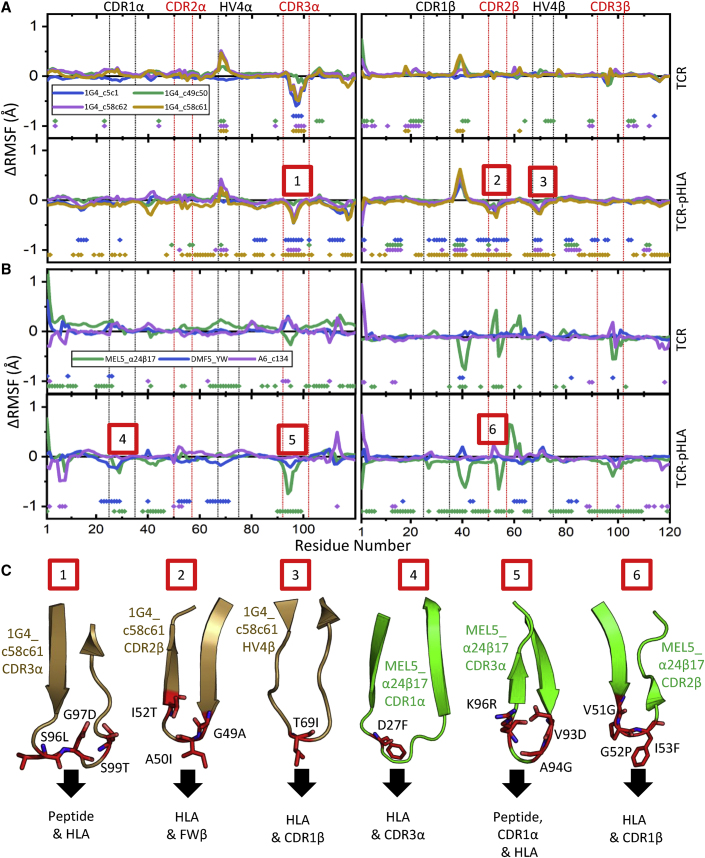
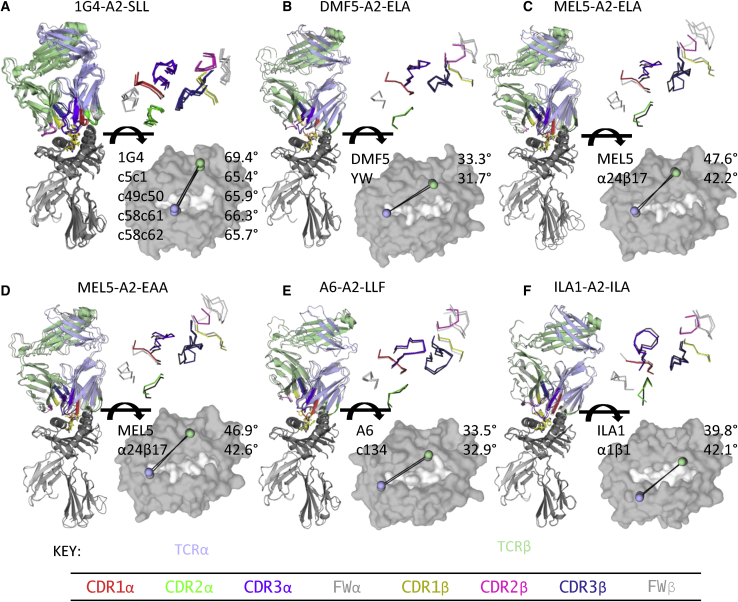
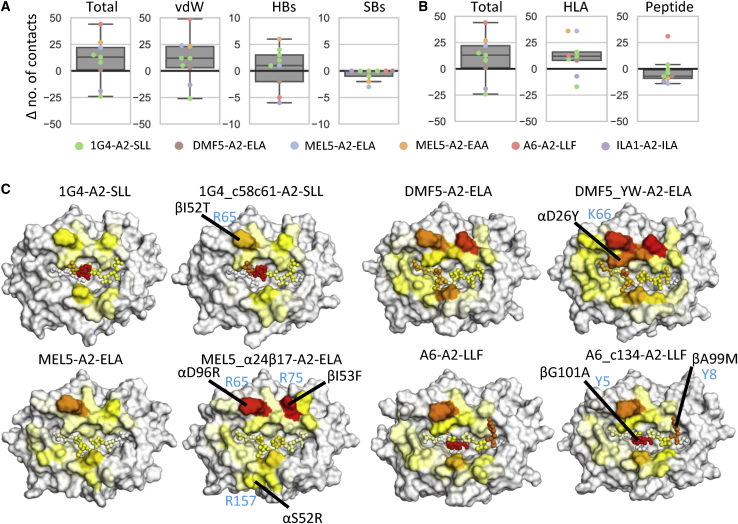
Immuno-oncology approaches that utilize T cell receptors (TCRs) are becoming highly attractive because of their potential to target virtually all cellular proteins, including cancer-specific epitopes, via the recognition of peptide-human leukocyte antigen (pHLA) complexes presented at the cell surface. However, because natural TCRs generally recognize cancer-derived pHLAs with very weak affinities, efforts have been made to enhance their binding strength, in some cases by several million-fold. In this study, we investigated the mechanisms underpinning human TCR affinity enhancement by comparing the crystal structures of engineered enhanced affinity TCRs with those of their wild-type progenitors. Additionally, we performed molecular dynamics simulations to better understand the energetic mechanisms driving the affinity enhancements. These data demonstrate that supra-physiological binding affinities can be achieved without altering native TCR-pHLA binding modes via relatively subtle modifications to the interface contacts, often driven through the addition of buried hydrophobic residues. Individual energetic components of the TCR-pHLA interaction governing affinity enhancements were distinct and highly variable for each TCR, often resulting from additive, or knock-on, effects beyond the mutated residues. This comprehensive analysis of affinity-enhanced TCRs has important implications for the future rational design of engineered TCRs as efficacious and safe drugs for cancer treatment.
利用T细胞受体(TCR)的免疫肿瘤学方法正变得极具吸引力,因为它们有可能通过识别细胞表面呈现的肽-人类白细胞抗原(pHLA)复合物来靶向几乎所有细胞蛋白,包括癌症特异性表位。然而,由于天然TCR通常以非常弱的亲和力识别癌症衍生的pHLA,人们一直在努力提高它们的结合强度,在某些情况下提高了数百万倍。在本研究中,我们通过比较工程化增强亲和力TCR与其野生型祖先的晶体结构,研究了人类TCR亲和力增强的潜在机制。此外,我们进行了分子动力学模拟,以更好地理解驱动亲和力增强的能量机制。这些数据表明,通过对界面接触进行相对细微的修饰,通常通过添加埋藏的疏水残基,可以在不改变天然TCR-pHLA结合模式的情况下实现超生理结合亲和力。控制亲和力增强的TCR-pHLA相互作用的各个能量成分是不同的,并且每个TCR的变化很大,这通常是由突变残基之外的累加或连锁效应导致的。对亲和力增强的TCR的这种全面分析对未来合理设计工程化TCR作为治疗癌症的有效和安全药物具有重要意义。