Department of Oral and Maxillofacial Surgery, The First Affiliated Hospital, Sun Yat-Sen University, Guangzhou, People's Republic of China.
Department of Stomatology, Maoming People's Hospital, Maoming, People's Republic of China.
Cancer Sci. 2021 Jun;112(6):2173-2184. doi: 10.1111/cas.14866. Epub 2021 May 1.
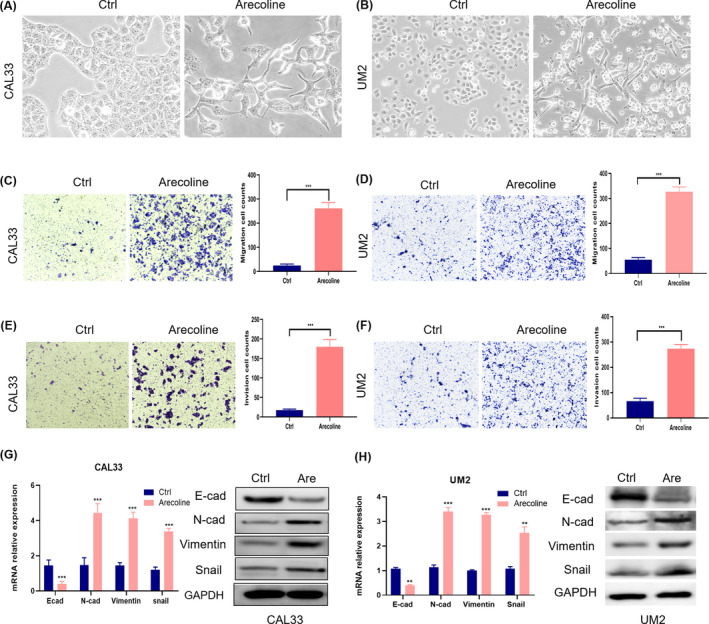
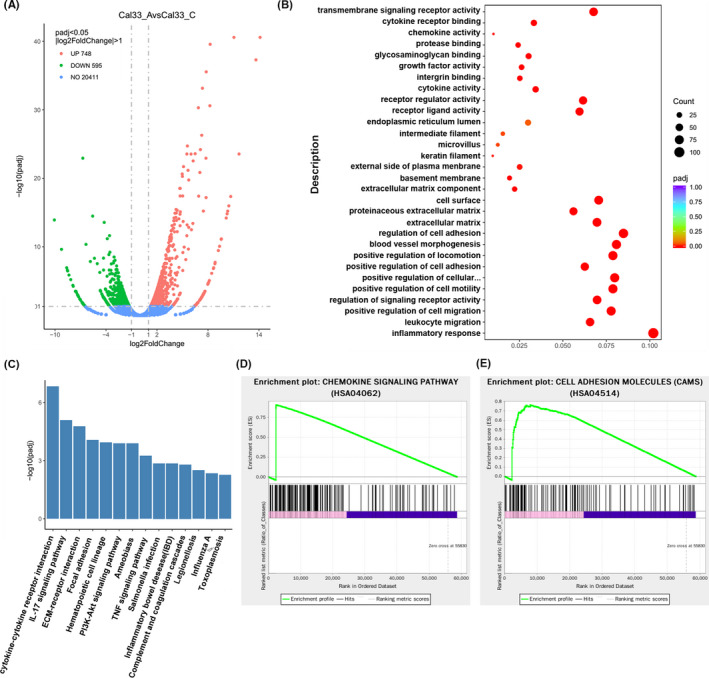
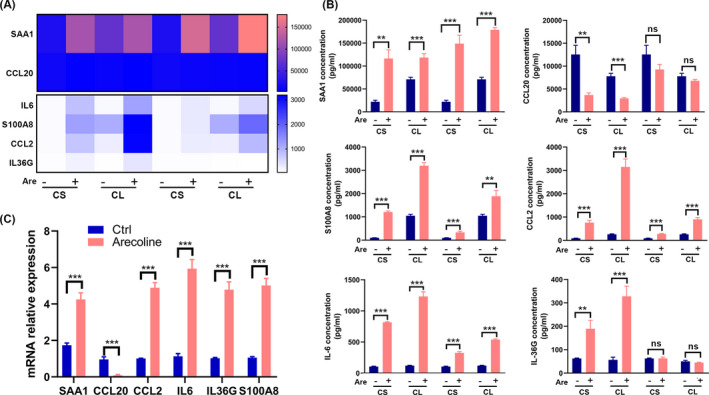
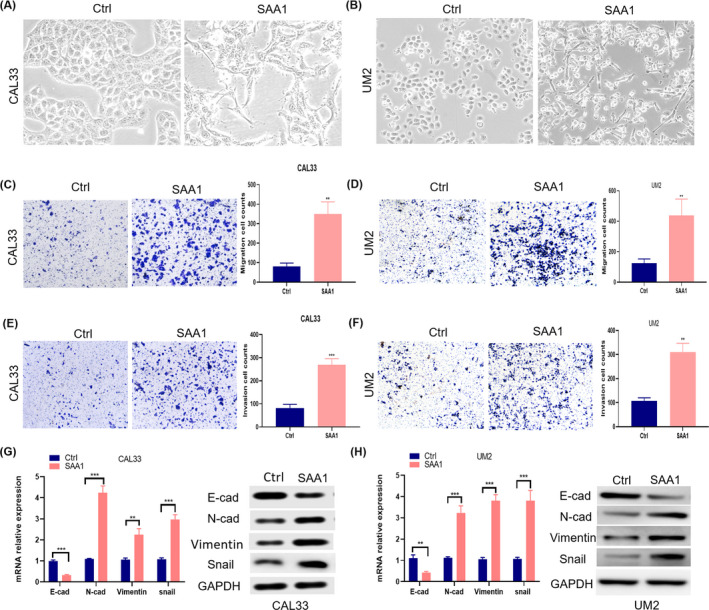
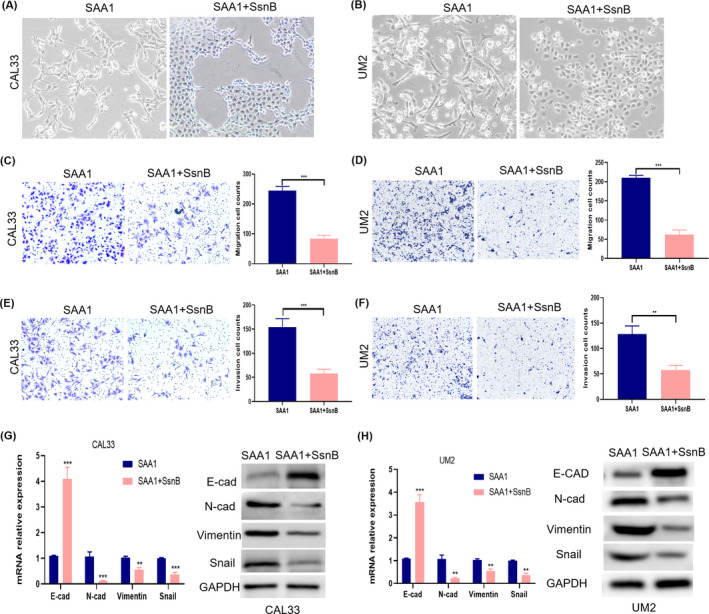
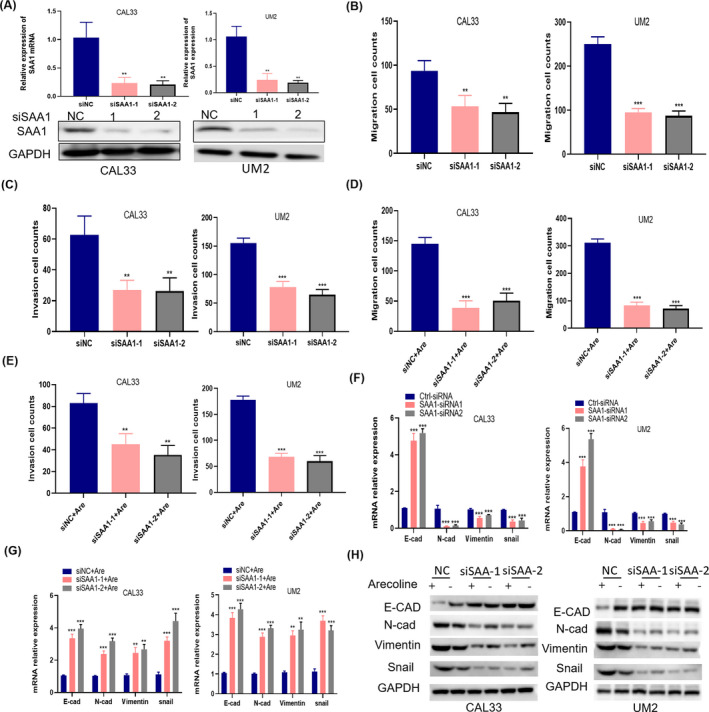
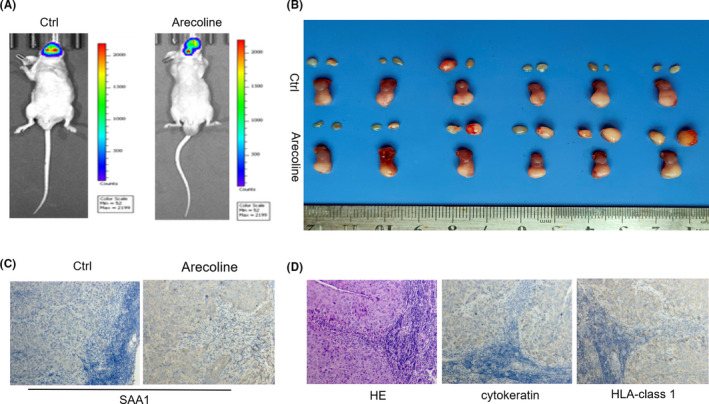
Arecoline, the main alkaloid of areca nut, is well known for its role in inducing submucosal fibrosis and oral squamous cell carcinoma (OSCC), however the mechanism remains unclear. The aim of this study was to establish an arecoline-induced epithelial-mesenchymal transformation (EMT) model of OSCC cells and to investigate the underlying mechanisms. CAL33 and UM2 cells were induced with arecoline to establish an EMT cell model and perform RNA-sequence screening. Luminex multiplex cytokine assays, western blot, and RT-qPCR were used to investigate the EMT mechanism. Arecoline at a concentration of 160 μg/ml was used to induce EMT in OSCC cells, which was confirmed using morphological analysis, transwell assays, and EMT marker detection. RNA-sequence screening and Luminex multiplex cytokine assays showed that many inflammatory cytokines (such as serum amyloid A1 [SAA1], interleukin [IL]-6, IL-36G, chemokine [CCL]2, and CCL20) were significantly altered during arecoline-induced EMT. Of these cytokines, SAA1 was the most highly upregulated. SAA1 overexpression induced EMT and promoted the migration and invasion of CAL33 cells, while SAA1 knockdown attenuated arecoline-induced EMT. Moreover, arecoline enhanced cervical lymph node metastasis in an orthotopic xenograft model of the tongue established using BALB/c nude mice. Our findings revealed that arecoline induced EMT and enhanced the metastatic capability of OSCC by the regulation of inflammatory cytokine secretion, especially that of SAA1. Our study provides a basis for understanding the mechanism of OSCC metastasis and suggests possible therapeutic targets to prevent the occurrence and development of OSCC associated with areca nut chewing.
槟榔碱是槟榔的主要生物碱,其在诱导黏膜下纤维化和口腔鳞状细胞癌(OSCC)中作用显著,但其机制尚不清楚。本研究旨在建立槟榔碱诱导的 OSCC 细胞上皮间质转化(EMT)模型,并探讨其潜在机制。采用槟榔碱诱导 CAL33 和 UM2 细胞建立 EMT 细胞模型,并进行 RNA 测序筛选。采用 Luminex 多重细胞因子检测、Western blot 和 RT-qPCR 检测 EMT 机制。采用浓度为 160μg/ml 的槟榔碱诱导 OSCC 细胞发生 EMT,通过形态分析、Transwell 实验和 EMT 标志物检测进行验证。RNA 测序筛选和 Luminex 多重细胞因子检测显示,槟榔碱诱导 EMT 过程中许多炎症细胞因子(如血清淀粉样蛋白 A1[SAA1]、白细胞介素[IL]-6、IL-36G、趋化因子[CCL]2 和 CCL20)发生明显改变,其中 SAA1 表达上调最为显著。SAA1 过表达诱导 EMT 并促进 CAL33 细胞的迁移和侵袭,而 SAA1 敲低则减弱槟榔碱诱导的 EMT。此外,槟榔碱增强了 BALB/c 裸鼠舌原位移植模型中 OSCC 的颈部淋巴结转移。我们的研究结果表明,槟榔碱通过调节炎症细胞因子的分泌诱导 EMT,并增强 OSCC 的转移能力,特别是 SAA1 的表达。本研究为理解 OSCC 转移机制提供了依据,并为预防与咀嚼槟榔相关的 OSCC 的发生和发展提供了可能的治疗靶点。