Department of Pharmaceutics, School of Pharmacy, Harbin Medical University, Harbin, 150086, People's Republic of China.
Department of Pharmacy, The Second Affiliated Hospital, Harbin Medical University, Harbin, 150086, People's Republic of China.
Int J Nanomedicine. 2021 Feb 16;16:1221-1229. doi: 10.2147/IJN.S294626. eCollection 2021.
Pulmonary arterial hypertension (PAH) is characterized by abnormal proliferation of vascular endothelial and smooth muscle cells and causes occlusion of pulmonary arterioles that eventually results in right heart failure and death. The platelet-derived growth factor (PDGF) plays a prominent role in abnormal remodeling of pulmonary resistance vessels. Imatinib mesylate (IM), a PDGF-receptor tyrosine kinase inhibitor, was able to ameliorate PAH by reversing pulmonary vascular remodeling.
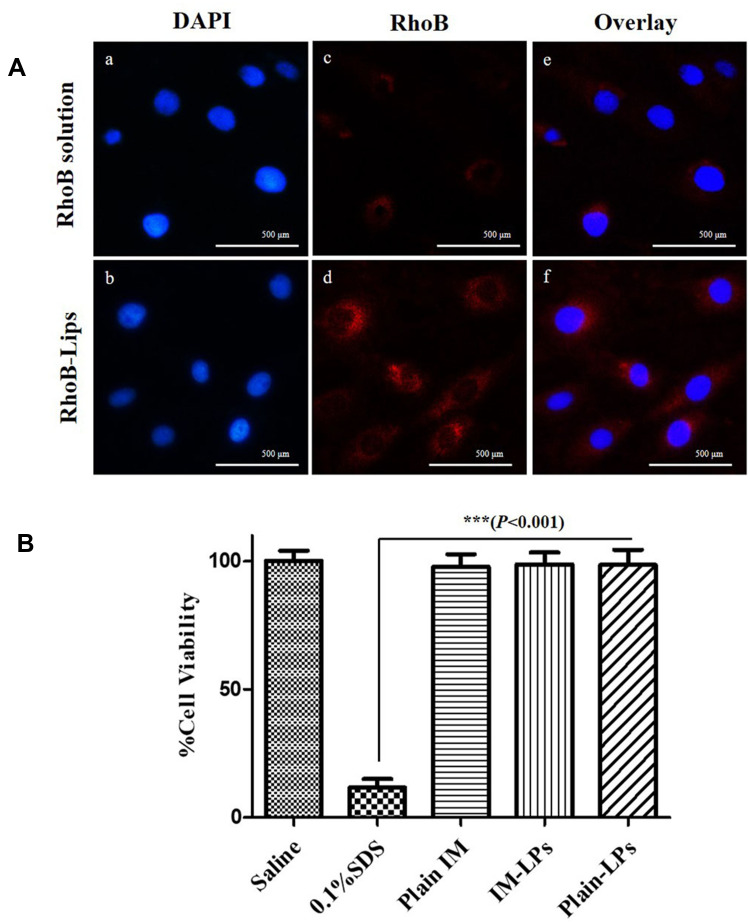
In the present study, IM-loaded liposomes (IM-LPs) were developed and administered via the pulmonary route to delay the drug release and improve patient compliance for the treatment of PAH. The IM-LPs were prepared by the transmembrane gradient method with the spherical vesicles. The compatibility of the IM-LPs was studied by determining the viability of pulmonary arterial smooth muscle cells (PASMCs). Particle uptake by rat PASMCs was evaluated by incubating the particles with rat PASMCs. Pharmacokinetic studies were performed in male SD rats.
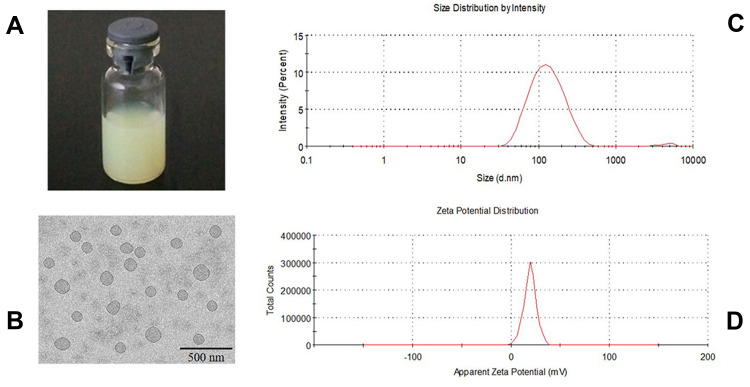
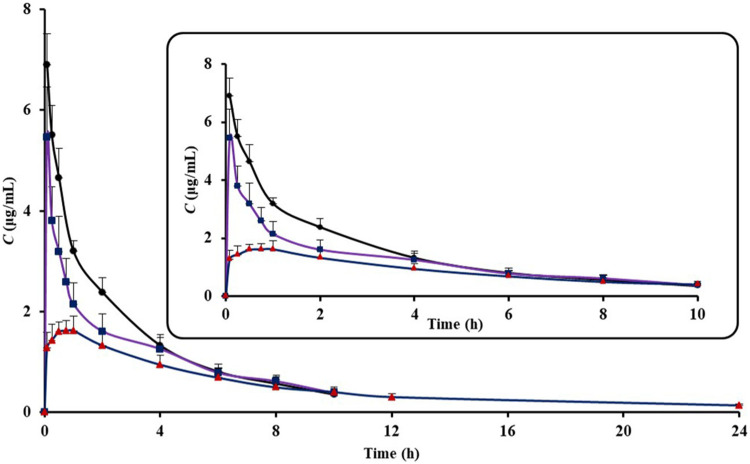
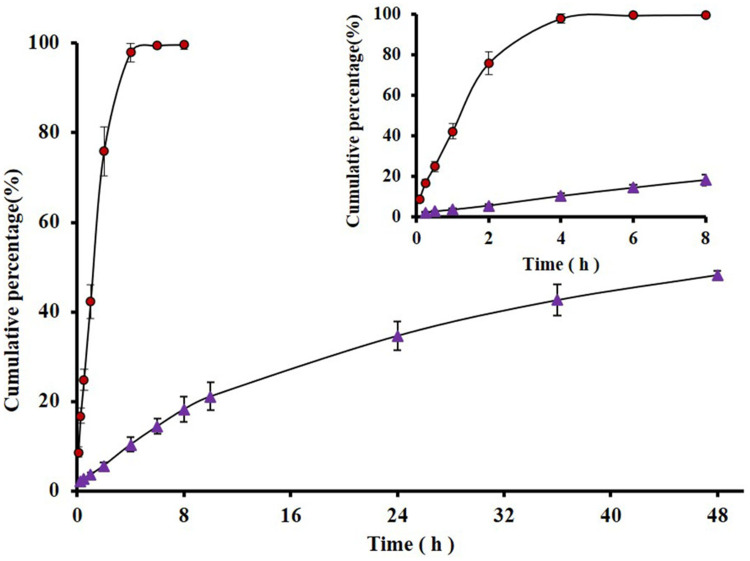
The IM-LPs showed an average size of 101.6 ± 50.80 nm with a zeta potential value of 19.66 ± 0.55 mV, a PDI of 0.250 and 81.96% ± 0.98% drug entrapment efficiency, meanwhile displayed a sustained release profile. Liposomes obviously increased intracellular accumulation of Rhodamine B by PASMCs using the fluorescence microscopic. Following intratracheal administration to rats, IM-LPs not only extended the half-life of IM, but also prolonged retention of IM compared with plain IM solution after intratracheal and intravenous administration.
The study show potential applications of the LPs for pulmonary delivery of IM and the method for the development of LPs in sustained release of IM for better therapeutic outcomes. Conclusively, the prepared IM-LPs were well designed in nanosized ranges and may be a promising formulation for pulmonary delivery of IM.
肺动脉高压(PAH)的特征是血管内皮和平滑肌细胞的异常增殖,并导致肺小动脉闭塞,最终导致右心衰竭和死亡。血小板衍生生长因子(PDGF)在肺阻力血管的异常重塑中起重要作用。甲磺酸伊马替尼(IM)是一种 PDGF 受体酪氨酸激酶抑制剂,通过逆转肺血管重塑能够改善 PAH。
本研究通过肺途径给予载伊马替尼脂质体(IM-LPs)以延迟药物释放并提高患者对 PAH 治疗的依从性。采用膜梯度法制备载伊马替尼脂质体,制得的脂质体为球形囊泡。通过测定肺动脉平滑肌细胞(PASMCs)的活力来研究 IM-LPs 的相容性。通过将粒子与大鼠 PASMCs 孵育来评估大鼠 PASMCs 对粒子的摄取。在雄性 SD 大鼠中进行药代动力学研究。
IM-LPs 的平均粒径为 101.6 ± 50.80nm,zeta 电位值为 19.66 ± 0.55mV,PDI 为 0.250,载药量为 81.96%±0.98%,具有缓释特性。脂质体明显增加了 PASMCs 中 Rhodamine B 的细胞内积累,荧光显微镜下可见。与普通 IM 溶液相比,IM-LPs 经气管内给药后,不仅延长了 IM 的半衰期,而且延长了 IM 在气管内和静脉内给药后的保留时间。
本研究表明,脂质体具有经肺递送 IM 的潜力,并且该方法可用于开发 IM 的脂质体以实现更好的治疗效果。总之,所制备的 IM-LPs 设计合理,粒径在纳米范围内,可能是一种有前途的 IM 肺部给药制剂。