Li Xiaolin, Gao Ying, Zhang Chi, Zhang Qingsu, Xin Xiyan, Tan Zhongjian, Zhang Binlong, Fan Ruiwen, Huang Xing, Xu Minjie, Shu Xin, Yan Heming, Li Changming, Kong Qiao, Li Shuren, Chang Jingling
Department of Neurology, Dongzhimen Hospital, Beijing University of Chinese Medicine, Beijing 100700, China.
Institute for Brain Disorders, Beijing University of Chinese Medicine, Beijing 100700, China.
Evid Based Complement Alternat Med. 2021 Feb 12;2021:8880590. doi: 10.1155/2021/8880590. eCollection 2021.
Poststroke aphasia (PSA) is a disabling condition that decreases the quality of life, and the duration of the disease harms the quality of life of PSA patients. Acupuncture has been widely employed for PSA. There is some evidence for the immediate treatment efficacy of acupuncture for PSA; however, long-term results after acupuncture may be poorer.
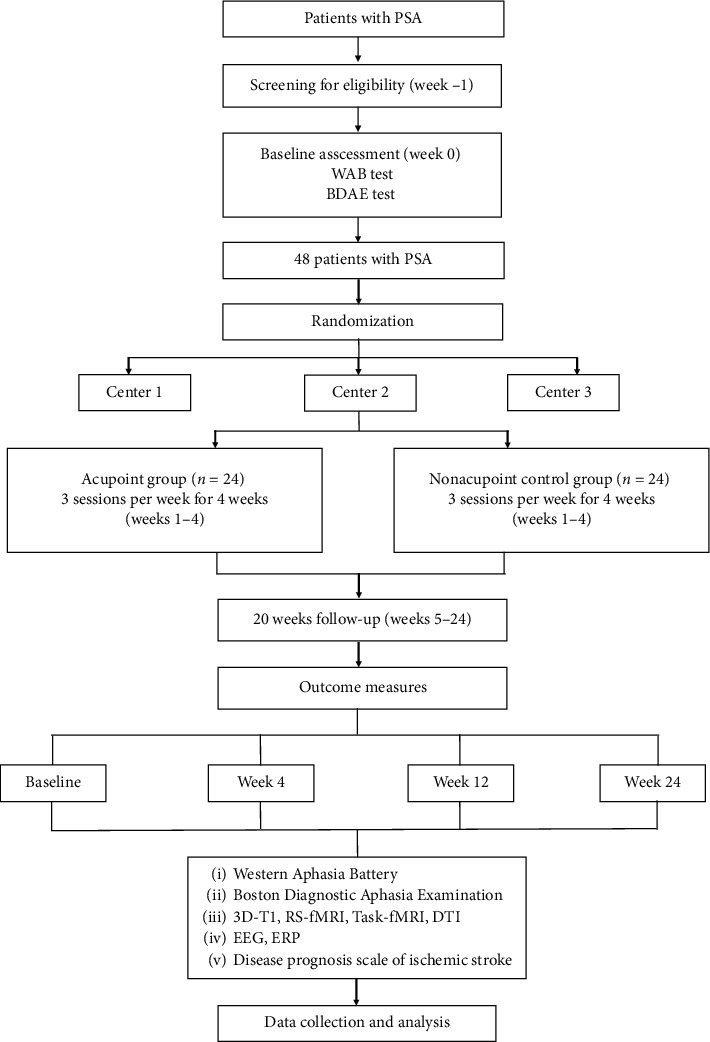
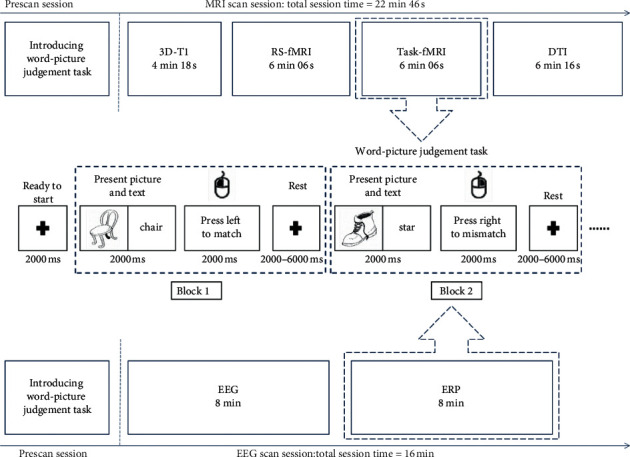
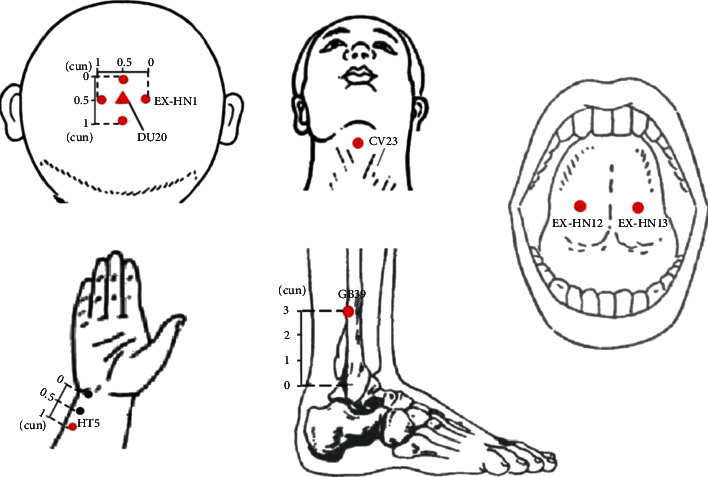
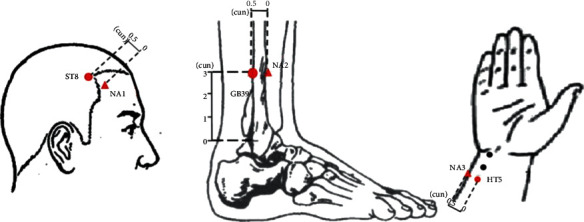
This is a multicentre, randomized, blinded, nonacupoint (NA) acupuncture controlled, multimodal neuroimaging clinical trial. A total of 48 subjects with subacute PSA will be randomly assigned to an acupoint group or an NA control group. The acupoint group will receive acupuncture with normal needling at DU20, EX-HN1, HT5, GB39, EX-HN12, EX-HN13, and CV23. The NA control group will receive acupuncture in locations not corresponding to acupuncture points as sham acupoints. Both groups will receive identical speech and language therapy thrice a week for four weeks. The primary outcome will be the change in the aphasia quotient (AQ) score measured by the Western Aphasia Battery (WAB) test during the 12th week after randomization. Participants will be blindly assessed at prerandomization (baseline) and 4 weeks, 12 weeks, and 24 weeks after randomization. The secondary outcomes include the Boston Diagnostic Aphasia Examination (BDAE) score, the Disease Prognosis Scale score for ischaemic stroke, etc. Magnetic resonance imaging (MRI) and electroencephalogram (EEG) will also be performed at 4-time intervals as secondary outcomes. All scores and image evaluations will be taken at the same point as the linguistic evaluation. The multilevel evaluation technique will be used to assess the long-term efficacy of acupuncture therapy. MRI scans and EEG will be used to assess acupuncture-related neuroplasticity changes. . The results from our trial will help to supply evidence for the long-term acupuncture effects for PSA over a long follow-up period. It will provide valuable information for future studies in the field of PSA treatment. The trial was registered at the Chinese Clinical Trial Registry on 16 March 2020 (ChiCTR2000030879).
脑卒中后失语(PSA)是一种致残性疾病,会降低生活质量,且病程会损害PSA患者的生活质量。针灸已被广泛用于治疗PSA。有证据表明针灸对PSA有即时治疗效果;然而,针灸后的长期效果可能较差。
这是一项多中心、随机、双盲、非穴位(NA)针刺对照、多模态神经影像学临床试验。共有48例亚急性PSA患者将被随机分配到穴位组或NA对照组。穴位组将在督脉20、印堂、心经5、胆经39、颞三针、脑三针和任脉23进行常规针刺。NA对照组将在非穴位位置进行针刺作为假穴位。两组均每周接受三次相同的言语和语言治疗,持续四周。主要结局将是随机分组后第12周通过西方失语成套测验(WAB)测量的失语商(AQ)评分的变化。参与者将在随机分组前(基线)以及随机分组后4周、12周和24周进行盲法评估。次要结局包括波士顿诊断性失语检查(BDAE)评分、缺血性脑卒中疾病预后量表评分等。磁共振成像(MRI)和脑电图(EEG)也将作为次要结局在4个时间点进行检查。所有评分和图像评估将在与语言评估相同的时间点进行。将使用多水平评估技术评估针灸治疗的长期疗效。MRI扫描和EEG将用于评估与针灸相关的神经可塑性变化。我们试验的结果将有助于为PSA的长期针灸效果提供长期随访证据。它将为PSA治疗领域的未来研究提供有价值的信息。该试验于2020年3月16日在中国临床试验注册中心注册(ChiCTR2000030879)。