Wang Fengyun, Qiang Xinhua, Jiang Suhua, Shao Jingsong, Fang Bin, Zhou Lixin
Department of Critical Care Medicine, The First People's Hospital of Foshan, Lingnan Avenue North 81, Shiwan, Chancheng, Foshan, 528000, China.
Department of Pediatric Intensive Care Units, The First People's Hospital of Foshan, Foshan, China.
BMC Infect Dis. 2021 Feb 25;21(1):208. doi: 10.1186/s12879-021-05889-z.
Hand, foot, and mouth disease (HFMD) is an acute infectious disease caused by human enterovirus 71 (EV71), coxsackievirus, or echovirus, which is particularly common in preschool children. Severe HFMD is prone to cause pulmonary edema before progressing to respiratory and circulatory failure; thus hemodynamic monitoring and fluid management are important to the treatment process.
We did a review of young patients who had been successfully treated in our department for severe HFMD, which had been caused by EV71. A total of 20 patients met the inclusion criteria. Eight cases were monitored by the pulse indicator continuous cardiac output (PiCCO) technique, and fluid management was administered according to its parameters. With regard to the treatment with PiCCO monitoring, patients were divided into two groups: the PiCCO group (8 patients) and the control group (12 patients). The groups were then compared comprehensively to evaluate whether PiCCO monitoring could improve patients' clinical outcomes.
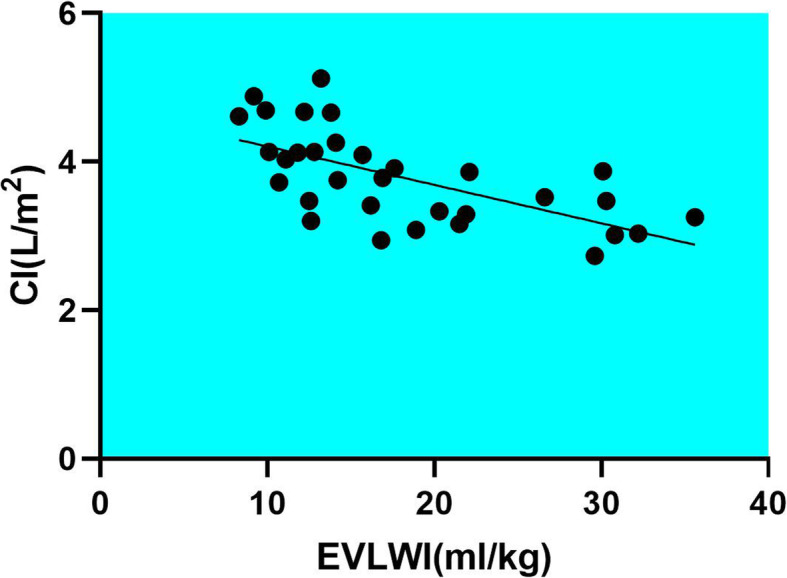
After analysis, the findings informed that although PiCCO failed to shorten the length of ICU stay, reduce the days of vasoactive drug usage, or lower the number of cases which required mechanical ventilation, PiCCO did reduce the incidence of fluid overload (p = 0.085) and shorten the days of mechanical ventilation (p = 0.028). After effective treatment, PiCCO monitoring indicated that the cardiac index (CI) increased gradually(p < 0.0001), in contrast to their pulse (P, p < 0.0001), the extra vascular lung water index (EVLWI, p < 0.0001), the global end diastolic volume index (GEDVI, p = 0.0043), and the systemic vascular resistance index (SVRI, p < 0.0001), all of which decreased gradually.
Our study discovered that PiCCO hemodynamic monitoring in young children with severe HFMD has some potential benefits, such as reducing fluid overload and the duration of mechanical ventilation. However, whether it can ameliorate the severity of the disease, reduce mortality, or prevent multiple organ dysfunction remain to be further investigated.
手足口病(HFMD)是一种由肠道病毒71型(EV71)、柯萨奇病毒或埃可病毒引起的急性传染病,在学龄前儿童中尤为常见。重症手足口病在进展为呼吸和循环衰竭之前容易引发肺水肿;因此,血流动力学监测和液体管理对治疗过程至关重要。
我们回顾了在我科成功治疗的由EV71引起的重症手足口病的年轻患者。共有20例患者符合纳入标准。8例患者采用脉搏指示连续心输出量(PiCCO)技术进行监测,并根据其参数进行液体管理。对于采用PiCCO监测的治疗,患者分为两组:PiCCO组(8例)和对照组(12例)。然后对两组进行综合比较,以评估PiCCO监测是否能改善患者的临床结局。
经过分析,结果表明虽然PiCCO未能缩短重症监护病房(ICU)住院时间、减少血管活性药物使用天数或降低需要机械通气的病例数,但PiCCO确实降低了液体超负荷的发生率(p = 0.085)并缩短了机械通气天数(p = 0.028)。有效治疗后,PiCCO监测显示心脏指数(CI)逐渐升高(p < 0.0001),而其脉搏(P,p < 0.0001)、血管外肺水指数(EVLWI,p < 0.0001)、全心舒张末期容积指数(GEDVI,p = 0.0043)和全身血管阻力指数(SVRI,p < 0.0001)均逐渐降低。
我们的研究发现,PiCCO血流动力学监测对重症手足口病幼儿有一些潜在益处,如减少液体超负荷和机械通气时间。然而,它是否能改善疾病严重程度、降低死亡率或预防多器官功能障碍仍有待进一步研究。