Department of Industrial and Environmental Biotechnology, National Institute of Genetic Engineering and Biotechnology (NIGEB), P. O. BOX: 14155-6343, Tehran, 1497716316, Iran.
Sari Agriculture Science and Natural Resource University (SANRU), Genetics and Agricultural Biotechnology Institute of Tabarestan (GABIT), Sari, Iran.
J Nanobiotechnology. 2021 Feb 25;19(1):59. doi: 10.1186/s12951-021-00806-7.
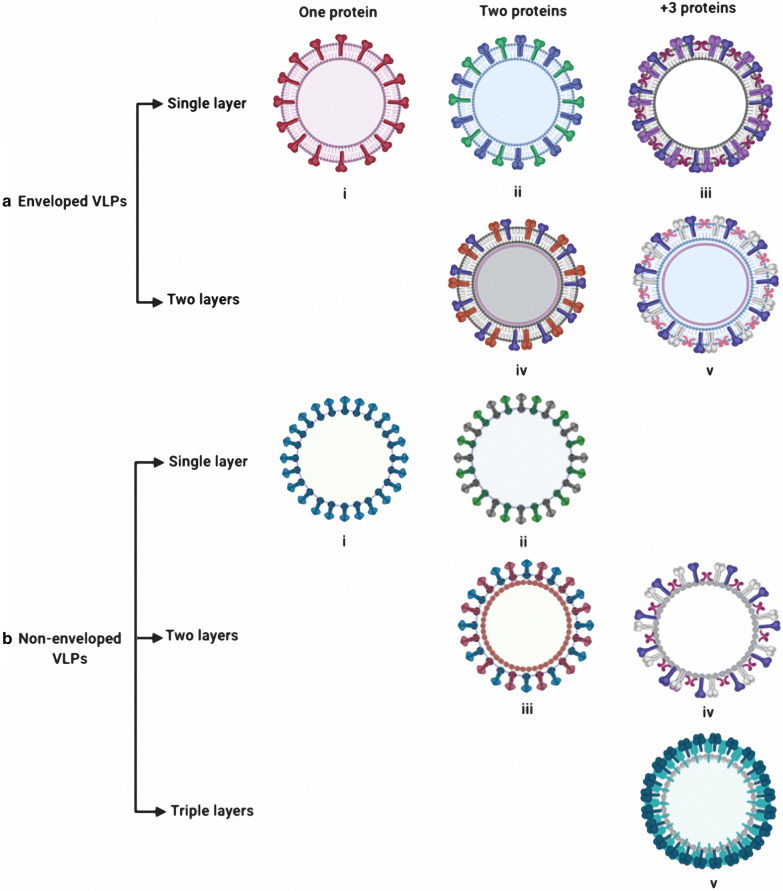
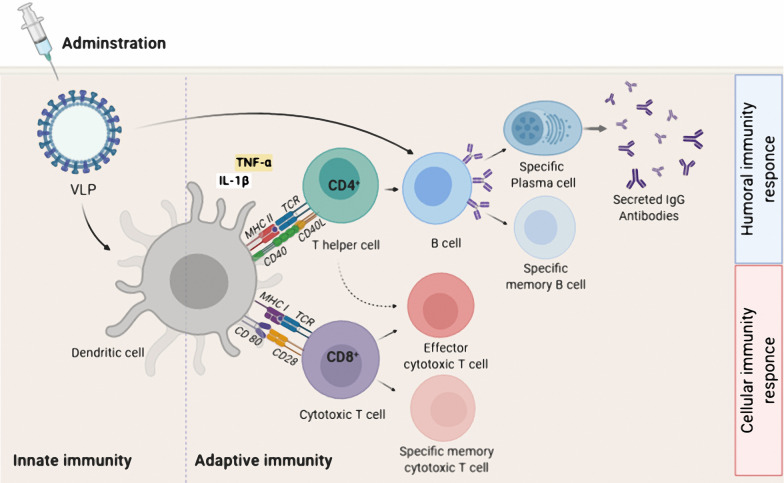
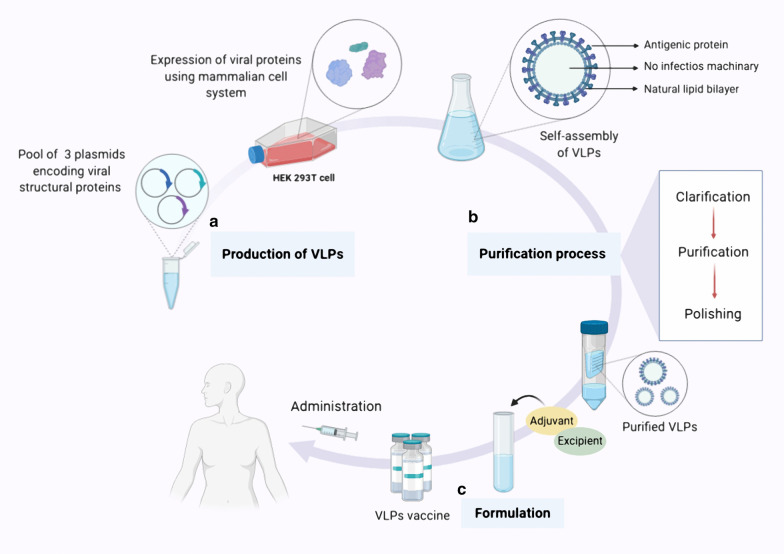
Virus-like particles (VLPs) are virus-derived structures made up of one or more different molecules with the ability to self-assemble, mimicking the form and size of a virus particle but lacking the genetic material so they are not capable of infecting the host cell. Expression and self-assembly of the viral structural proteins can take place in various living or cell-free expression systems after which the viral structures can be assembled and reconstructed. VLPs are gaining in popularity in the field of preventive medicine and to date, a wide range of VLP-based candidate vaccines have been developed for immunization against various infectious agents, the latest of which is the vaccine against SARS-CoV-2, the efficacy of which is being evaluated. VLPs are highly immunogenic and are able to elicit both the antibody- and cell-mediated immune responses by pathways different from those elicited by conventional inactivated viral vaccines. However, there are still many challenges to this surface display system that need to be addressed in the future. VLPs that are classified as subunit vaccines are subdivided into enveloped and non- enveloped subtypes both of which are discussed in this review article. VLPs have also recently received attention for their successful applications in targeted drug delivery and for use in gene therapy. The development of more effective and targeted forms of VLP by modification of the surface of the particles in such a way that they can be introduced into specific cells or tissues or increase their half-life in the host is likely to expand their use in the future. Recent advances in the production and fabrication of VLPs including the exploration of different types of expression systems for their development, as well as their applications as vaccines in the prevention of infectious diseases and cancers resulting from their interaction with, and mechanism of activation of, the humoral and cellular immune systems are discussed in this review.
病毒样颗粒(VLPs)是由一种或多种具有自我组装能力的不同分子组成的病毒衍生结构,其形式和大小模仿病毒颗粒,但缺乏遗传物质,因此不能感染宿主细胞。在各种活细胞或无细胞表达系统中,病毒结构蛋白的表达和自我组装可以发生,然后可以组装和重建病毒结构。VLPs 在预防医学领域越来越受欢迎,迄今为止,已经开发了广泛的基于 VLP 的候选疫苗,用于针对各种传染性病原体进行免疫接种,其中最新的是针对 SARS-CoV-2 的疫苗,其功效正在评估中。VLPs 具有高度的免疫原性,能够通过不同于传统灭活病毒疫苗诱导的途径,引发抗体和细胞介导的免疫反应。然而,这种表面展示系统仍然存在许多挑战,需要在未来解决。作为亚单位疫苗分类的 VLPs 分为包膜和非包膜亚型,本文均进行了讨论。VLPs 最近因其在靶向药物输送和基因治疗中的成功应用而受到关注。通过修饰颗粒表面,使它们能够进入特定的细胞或组织,或者增加它们在宿主中的半衰期,开发更有效和靶向的 VLP 形式,可能会扩大它们在未来的应用。本文综述了 VLPs 的生产和制造方面的最新进展,包括探索不同类型的表达系统来开发它们,以及它们作为疫苗在预防传染病和癌症方面的应用,这些应用是基于它们与体液和细胞免疫系统的相互作用以及激活机制。